How to get a numbered ticket for the “Pochi” railway model sale
Details about Kyoto’s famous Kinshi-don and where to find it
Kyoto’s bread culture and recommended bakeries in the Shijo area
A model itinerary for an early morning Kyoto adventure
Saturday Morning — Heading to Shijo Before Dawn!
Up before the shops on a Saturday: a ticket for the Pochi railway model sale on Kyoto’s Shijo-dori, then kinshi-don under a giant omelette at Kyogoku Kaneyo.
The Mascots were fidgeting with excitement — “Are we getting something?” But the shop we were heading to was still firmly closed. While the Mascots looked on in bewilderment, this was all part of a carefully laid plan.
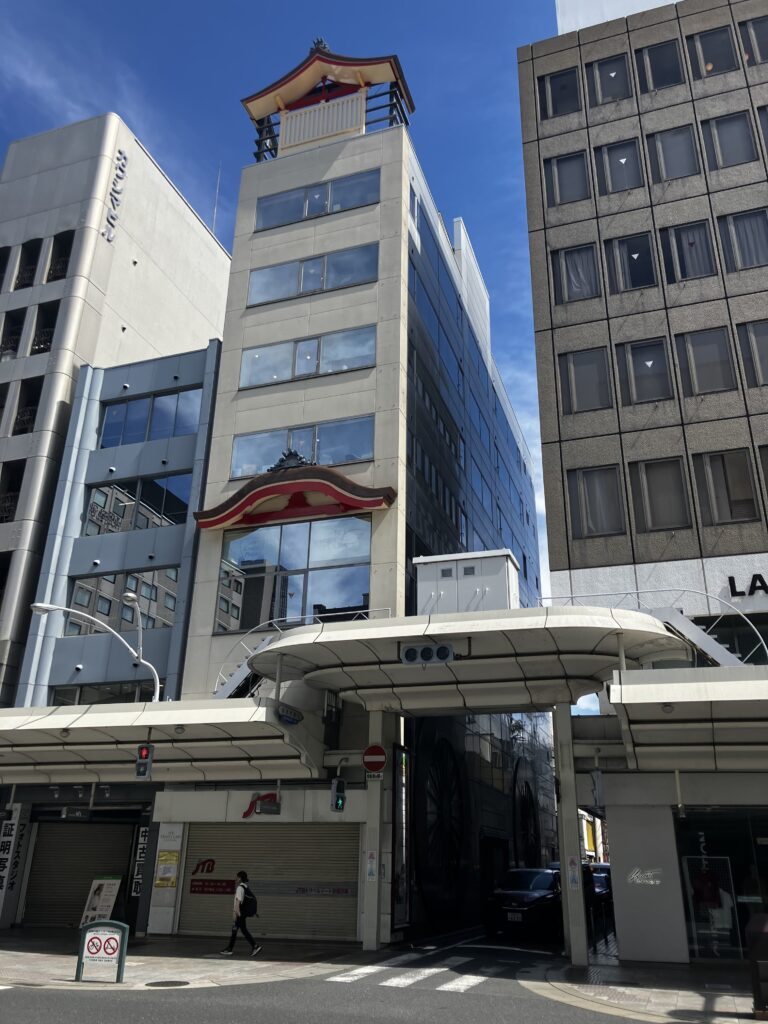
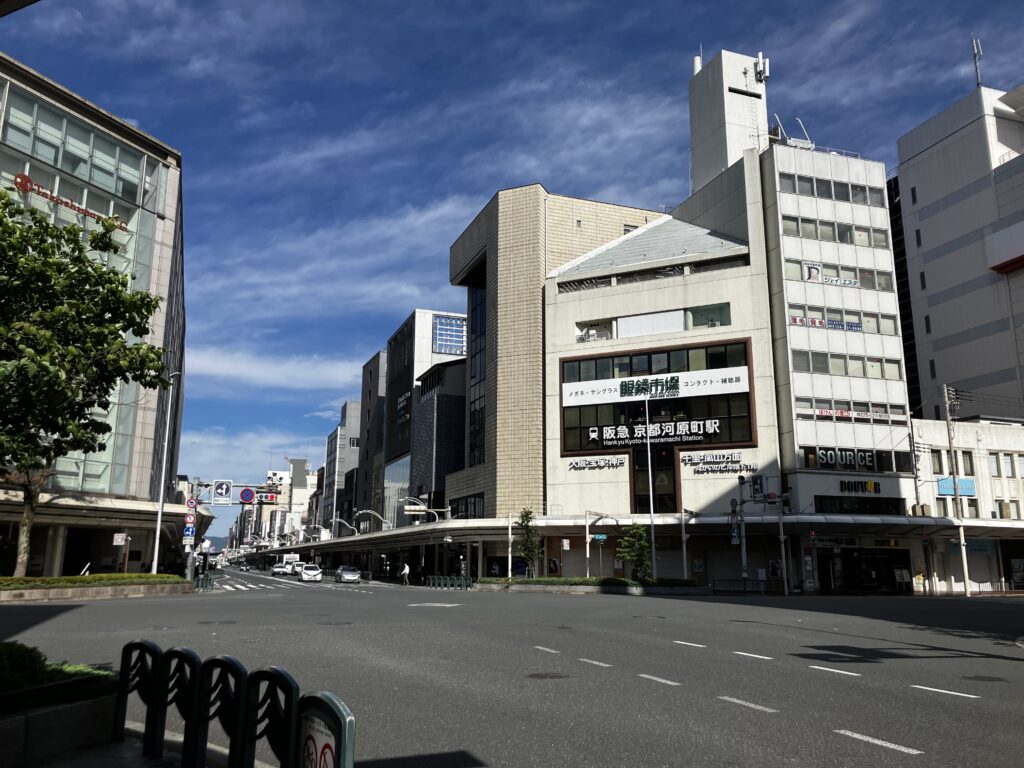
The Shijo Area of Kyoto is easily accessible from Hankyu Kyoto Line’s Kyoto-Kawaramachi Station and JR Kyoto Station, with plenty of sightseeing, dining, and shopping on offer. Early morning on Shijo-dori, with almost no one around, offers a rare and precious glimpse of Kyoto’s quiet, peaceful side.
Securing a Numbered Entry Ticket Before Opening — That Was the Whole Plan!
The shop opens at 10 AM — but numbered entry tickets are distributed before opening, which is why we set out so early in the morning (laughs).
With our ticket successfully secured, all that was left was to relax in a nearby café until opening time. A morning café in Kyoto is a truly special experience in itself.
Tips for Getting Your Numbered Ticket
The more popular the event, the earlier you’ll need to arrive
Check the official SNS accounts in advance for ticket distribution times
Once you have your ticket, a nearby café is the perfect place to wait
Time for the “Pochi” Railway Model Sale! Sneaking Off While the Mascots Sleep
When the time came, we made our way to the “Pochi” railway model sale.
But just at that moment, the Mascots surrendered to sleepiness and dozed off inside the bag. “Now’s our chance!” — and so, carefully avoiding waking them, we quietly slipped off to the battleground (laughs).
We successfully secured the trains we had our eyes on — an absolute dream for any railway model enthusiast!
“Pochi” Railway Models is a well-known shop specialising in the buying and selling of second-hand railway models. Their sales events often feature rare and limited-edition vehicles, drawing railway fans from all across Japan.
Next Stop: Kinshi-don at the Legendary “Kyogoku Kaneyo”
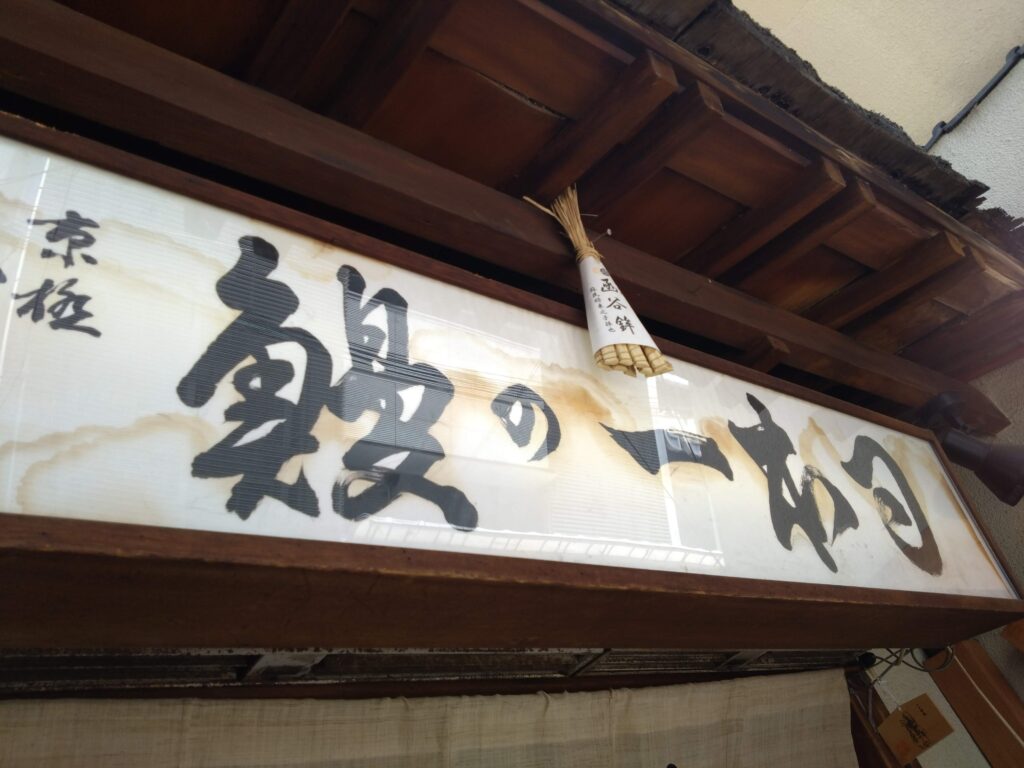
With the model sale thoroughly enjoyed, it was time for a proper meal. Our destination was Kyogoku Kaneyo — a Kyoto institution, unmistakable by its famous signboard.
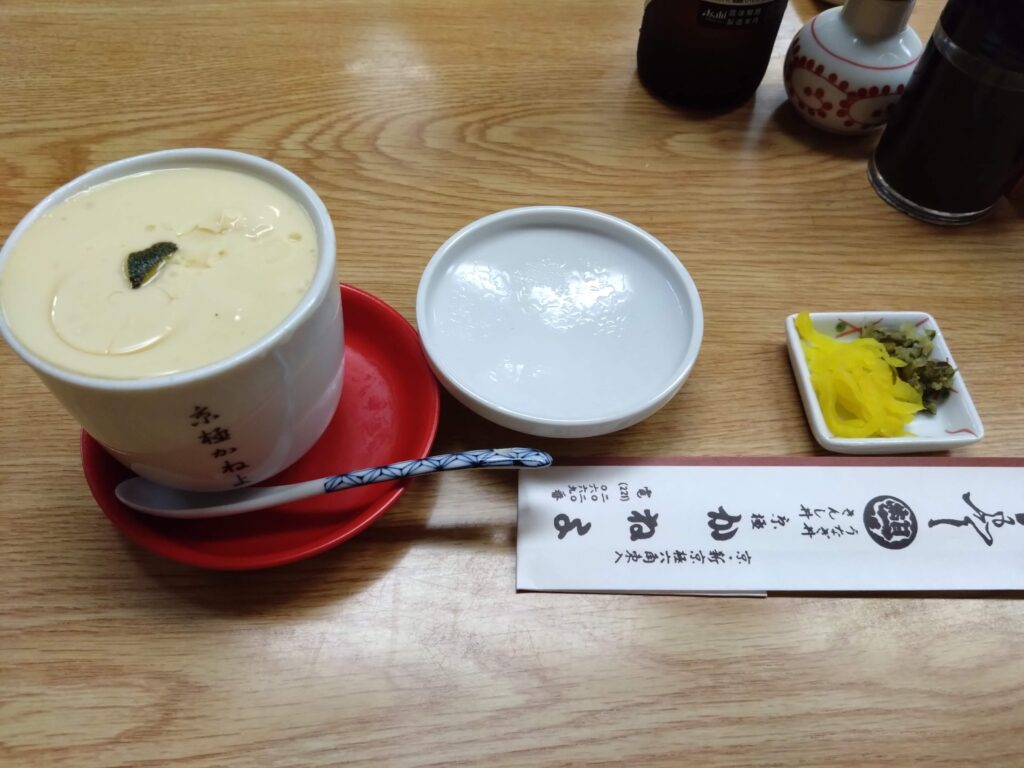
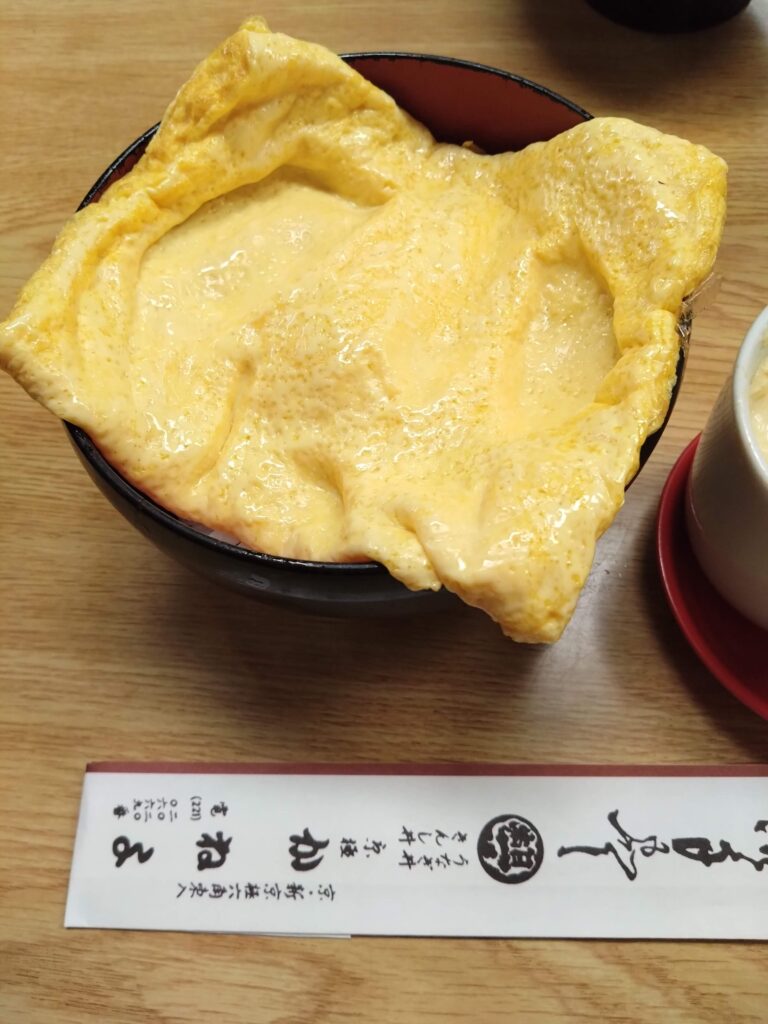
Here we enjoyed the Kinshi-don — a uniquely Kyoto dish in which a single, generous sheet of fluffy omelette is laid over an unagi (eel) rice bowl, so large it spills over the edge and hides the eel entirely. Paired with a beautifully dashi-flavored chawanmushi (steamed egg custard), the refined, elegant flavors were everything we had hoped for.
Kinshi-don is one of Kyoto’s most beloved local dishes. A bowl of unagi rice topped with egg — at Kyogoku Kaneyo, one large omelette rather than shredded strips — it carries the gentle, sophisticated flavors that define Kyoto cuisine.
Kyogoku Kaneyo has been serving guests for over 100 years and remains a firm favourite with both tourists and locals alike. Lunchtime can get busy, so arriving early is recommended!
One Last Treat Before Heading Back to Osaka
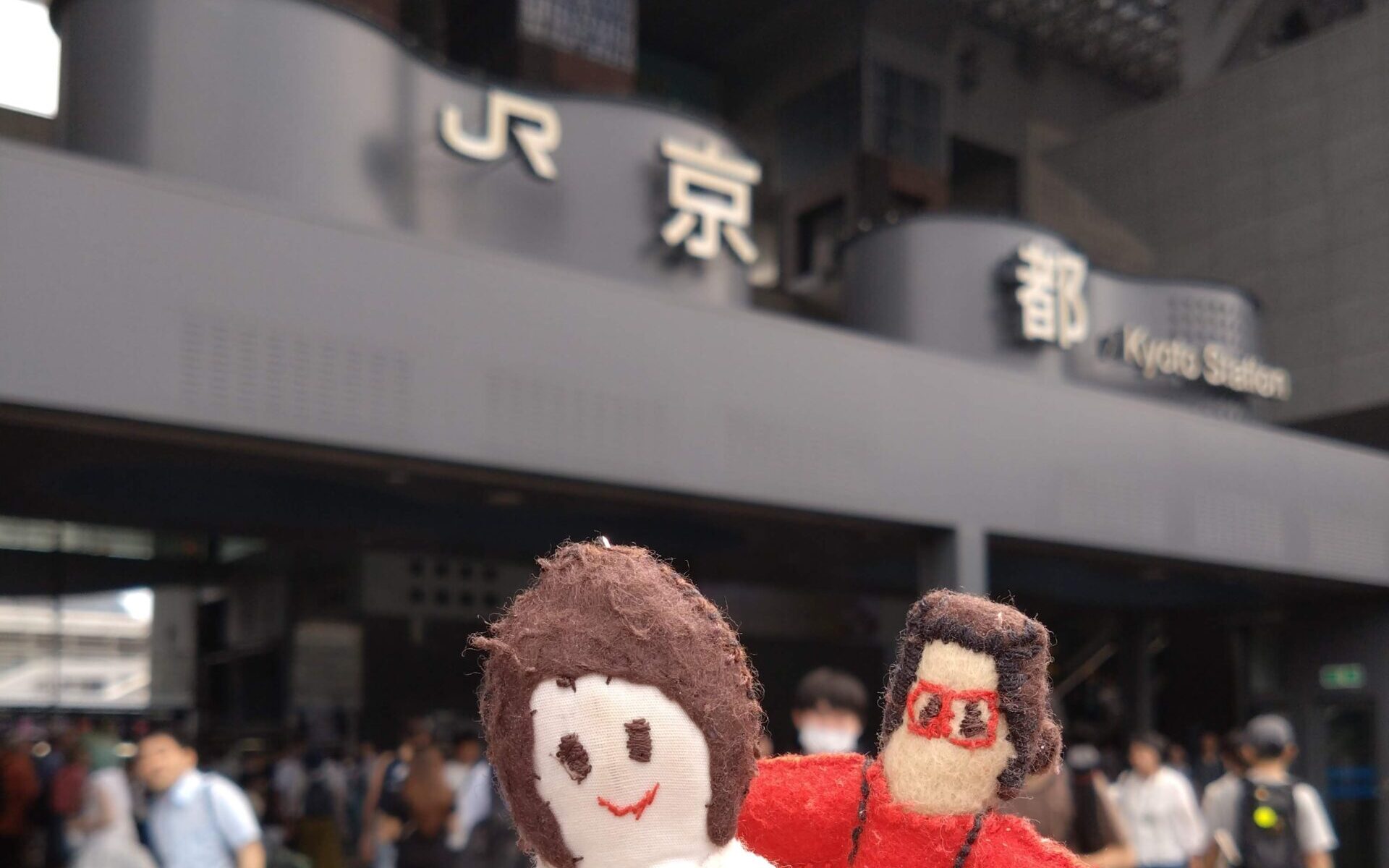
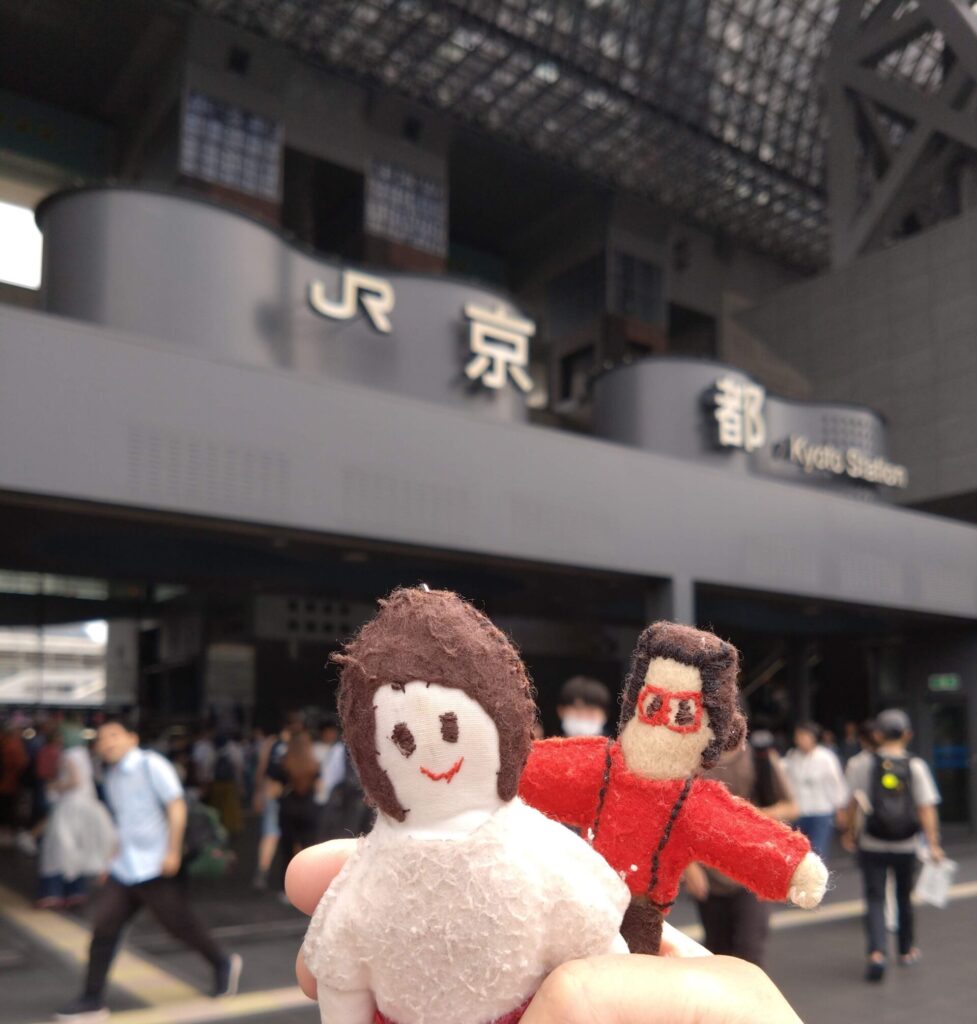
Back at Kyoto Station for a commemorative photo, we prepared for the return journey to Osaka — but not before stopping at one of Kyoto’s famous bakeries for a little something extra.
Kyoto is known as one of Japan’s most competitive cities for bakeries, and the Mascots were absolutely delighted to have secured a shio-pan (salt bread) for the journey home (laughs).
Kyoto’s bread culture ranks among the very best in Japan. The Shijo and Kawaramachi area is home to many popular bakeries, and food-hopping between them is a wonderful way to spend an afternoon. Make sure to add a bakery stop to your Kyoto itinerary!
Model Itinerary for an Early Morning Kyoto Adventure
Time
Activity
Early Morning
Head to Shijo-dori to secure a numbered ticket
Morning
Wait at a nearby café until opening time
From 10 AM
Enjoy the “Pochi” railway model sale
Noon
Kinshi-don & chawanmushi lunch at Kyogoku Kaneyo
Afternoon
Commemorative photo at Kyoto Station / bakery stop
Evening
Return to Osaka
Summary | Early Rising Is the Secret to a Perfect Kyoto Morning!
Spot
Highlights
“Pochi” Railway Model Sale
A must-visit event requiring a numbered ticket — fans travel from across Japan
Kinshi-don (Kyogoku Kaneyo)
Over 100 years of history — unagi rice under one enormous omelette
Kyoto Bakeries
Salt bread is a must — the perfect treat for the journey home
Kyoto rewards early risers — start your day before the crowds and you can pack an enormous amount into a single day. Popular spots and events often require numbered tickets or advance reservations, so always check ahead before you go!
How to ride the Uzushio Limited Express and access the museum
Highlights and must-see exhibits at Otsuka Museum of Art
Important warnings about the Ikenotani Station transfer
Why checking timetables in advance is absolutely essential in Shikoku
First Ride on the Kotoku Line! Why We Chose the Uzushio Limited Express
The Kotoku Line connects Takamatsu and Tokushima — and this was our very first time riding it. The train we chose was the Limited Express “Uzushio.”
At Takamatsu Station, a member of staff helpfully walked us through the return journey options. Given that trains run only once per hour, we were truly grateful for that advice — as we would come to appreciate very deeply later in the day.
Limited Express Uzushio is operated by JR Shikoku between Takamatsu and Tokushima. Running on diesel multiple units (DMUs), this line has limited departures, making advance timetable checks absolutely essential. Miss your train and you could be waiting up to an hour for the next one.
Our Destination: Otsuka Museum of Art | 20 Minutes by Bus from Naruto Station
Our destination was the Otsuka Museum of Art, located approximately 20 minutes by bus from Naruto Station.
“It’s just reproductions, right?” — you might be thinking. But this is truly no ordinary museum. It brings together ceramic-plate reproductions of masterpieces from around the world, offering experiences like no other:
View all seven of Van Gogh’s Sunflowers paintings side by side in one visit
See The Last Supper — both the pre-restoration and post-restoration versions — displayed together in the same room
Experience Michelangelo’s Sistine Chapel ceiling reproduced at full scale
I actually visited here once during my student days, and seeing the Sistine Chapel ceiling here for the first time made the experience of seeing the real thing in Rome years later all the more moving. As a place to prepare yourself before encountering the originals, this museum is simply unmatched.
Otsuka Museum of Art is one of the largest ceramic art museums in the world, located in Naruto City, Tokushima Prefecture. It features approximately 1,000 Western masterpieces from over 190 museums across 26 countries, all faithfully reproduced at original scale on ceramic panels — including the full Sistine Chapel. Admission: ¥3,300 for adults. Allow a minimum of 3–4 hours for your visit.
Soak Your Tired Feet at Naruto Station’s Free Foot Bath
After a thoroughly satisfying museum visit, we stopped at the free foot bath right in front of Naruto Station to rest our weary legs. The warm water was an absolute blessing after hours of walking.
It’s completely free to use, so make sure to stop by whenever you’re passing through Naruto Station. Your feet will thank you!
Beware of Ikenotani Station! A 20-Minute Wait in the Rain
The painful lesson of the return journey came at Ikenotani (池谷) Station — a transfer point that caught us completely off guard.
Standing in the pouring rain, we waited a full 20 minutes for the next Uzushio Limited Express toward Takamatsu. In Shikoku, where trains are infrequent, missing a connection can mean a very long wait.
Important Warning — Ikenotani Station Transfer: This is the junction between the Kotoku Line and the Naruto Line, but waiting facilities are very limited. On rainy days especially, this transfer requires careful planning. Always check the timetable in detail before you travel.
Why Checking Timetables in Advance Is Non-Negotiable in Shikoku
Despite securing a seat in the unreserved car, we didn’t make it back to Takamatsu Station until after 6:30 PM.
Compared to the mainland, train services in Shikoku are significantly less frequent. Miss a connection and you could be stranded for a very long time. If you have plans later in the day, meticulous timetable planning is absolutely essential.
Key Planning Tips for Shikoku Travel
Check transfer waiting times at every station in advance
Always confirm the time of the last limited express of the day
Build generous buffer time into your itinerary
Have a plan for waiting in bad weather
Mascots Take on the Oni Stone Statue at Takamatsu Station!
Back at Takamatsu Station, the Mascots immediately set their sights on the Oni (demon) stone statue in front of the station — made from the prized local Aji Stone. They insisted on climbing up for a photo, scrambled their way up… and then couldn’t get back down. Classic Mascots (laughs).
Meanwhile, at Naruto Station, they posed quietly and obediently at the feet of the local mascot Uzuhime-chan. Apparently even the Mascots are a little intimidated by demons (laughs). The contrast in their expressions makes for one of the best photos of the entire trip.
Aji Stone (庵治石) is a premium granite quarried in Kagawa Prefecture. Known for its exceptionally fine grain and beautiful lustre, it is often called the “Diamond of Granite” and is one of Japan’s most prized natural stones.
Summary | Otsuka Museum of Art Is an Absolute Must on Any Shikoku Itinerary
Item
Details
Access
Takamatsu → Uzushio Ltd. Express → Naruto Station → Bus approx. 20 min
Key Warning
Ikenotani Station transfer / trains once per hour
Foot Bath
In front of Naruto Station (free)
Admission
¥3,300 for adults
Recommended Time
Minimum 3–4 hours
Top Tip
Check timetables thoroughly the day before you travel!
Otsuka Museum of Art has far more to offer than a single day can do justice to. For a truly relaxed experience, we recommend staying overnight in Naruto or Tokushima and taking two days to fully explore the collection.
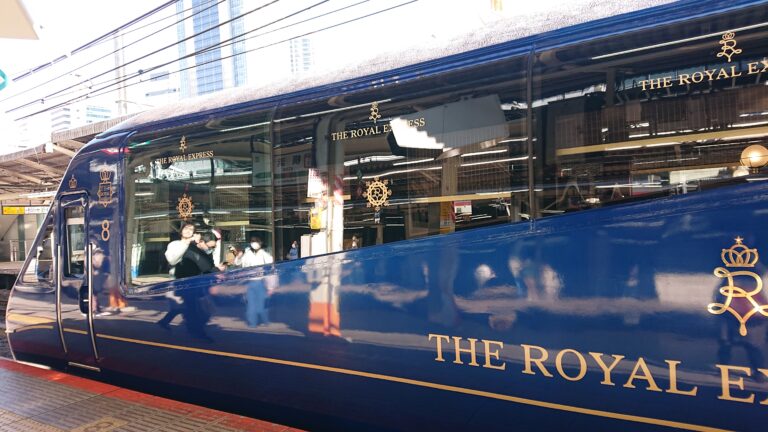
Two ballots, a PCR test and half a year of waiting: The Royal Express from Yokohama to Izukyu-Shimoda, with a meal and live piano and violin, for 39,000 yen.
What this article covers
What it actually takes to get aboard The Royal Express — including the time we lost the ballot
The real cost and contents of the meal-inclusive boarding plan
What you’re given on board: the meal, the live music, the free drinks
The extra hoop we had to jump through during the pandemic
A News Item: The Royal Express Is Coming to Tokai
Recently we came across a news item reporting that The Royal Express would be running in the Tokai region.
That Royal Blue body, running through Tokai. Reading it brought back the time we actually rode it — and that’s what this article is about.
The Royal Express is a luxury sightseeing train operated by Tokyu Corporation. Known for its sleek Royal Blue livery and its onboard service, it runs as a tour train in Izu, Hokkaido and elsewhere. You cannot board it with an ordinary ticket — it is sold only as part of a travel package, which matters a great deal if you’re planning a trip to Japan around it.
Getting Aboard Took Half a Year — Including One Failed Ballot
We rode on 21 January 2022. Getting to that date was a long business.
Our first application went in on 6 August 2021, for a departure on 22 October. And then — we lost the ballot.
Because this is a tour train, applying does not mean riding. Capacity is 17 parties, and popular dates fill immediately.
Unwilling to let it go, we applied again on 18 October, this time for a departure the following January. And that one came through. Nearly six months had passed since our first attempt.
From “we have to ride this” to actually riding it took half a year. If you’re planning to try, it’s worth going in expecting that you may need more than one attempt — and worth knowing that a second application is entirely normal.
A Chaotic Run-Up: the PCR Test
This was a pandemic-era departure, which meant a PCR test was required shortly before travel. That part caused a certain amount of panic.
Booking the test, waiting for the result, and the knowledge that a positive result would undo everything — after waiting half a year, we weren’t calm about any of it until the last moment.
Looking back, the sheer amount of effort we put in purely to get on this train has become part of the memory of the trip.
The Meal-Inclusive Plan: What It Costs and What You Get
We booked the meal-inclusive boarding plan (one way).
The plan, as it was at the time Class: Platinum Class (Cars 5, 6 and 7) Route: JR Yokohama → Izukyu-Shimoda Duration: about 3 hours 20 minutes Price: ¥39,000 per person Meal: a set course, served with live music Drinks: free-flow Capacity: 17 parties / junior high school age and above
The meal came as a choice of Western, Japanese or creative Japanese courses. We chose the Western course, supervised by Shunkotei.
¥39,000 for a 3 hour 20 minute journey. Put like that it sounds steep, but it stops sounding steep once you understand that what you’re buying isn’t transport — it’s three hours with a meal and a live performance in it. When we pulled into Shimoda, our main feeling was that it had gone too quickly.
Passenger Badges — an Immediate Hit with the Mascots
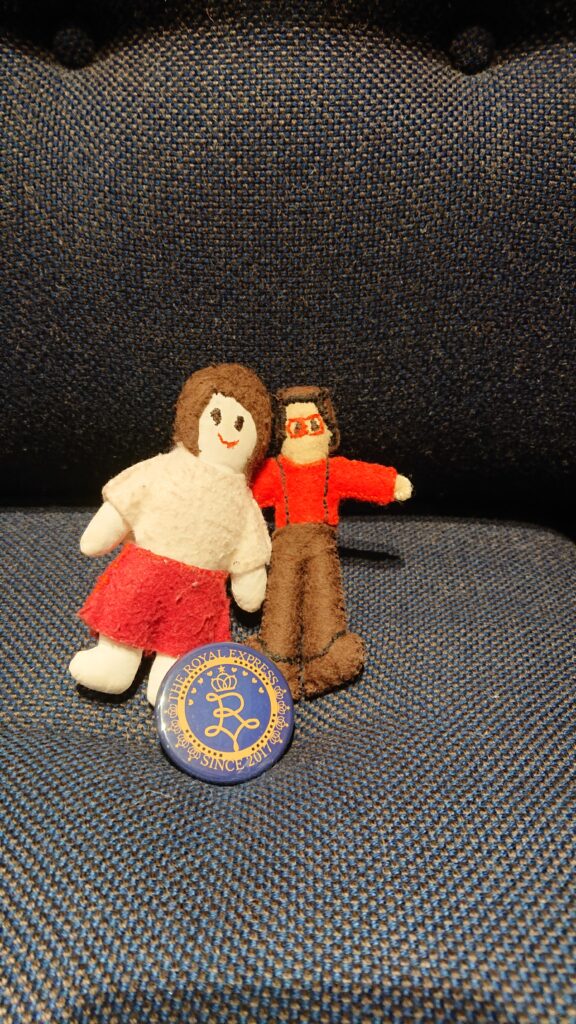
On boarding, the first thing handed to us was a passenger identification badge.
This went down enormously well with the mascots. From the moment the badges appeared they were beside themselves, and no amount of quiet encouragement had the slightest effect.
That a badge alone could produce this much delight was a surprise. The small ceremonial touches start lifting the mood before the train has even moved.
All Aboard — and the Mascots Go Wild
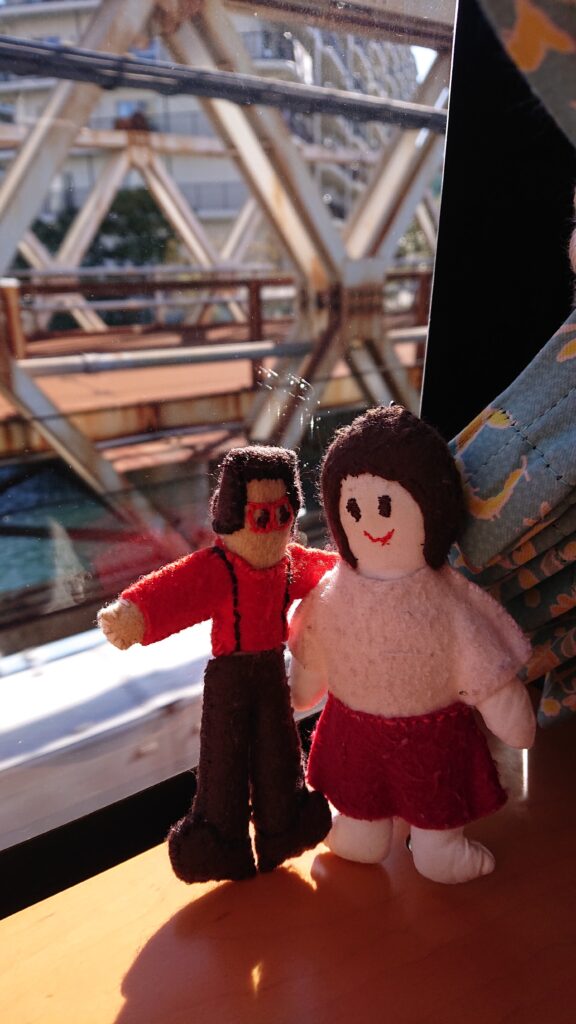
Stepping into an interior finished throughout in Royal Blue, the mascots were immediately, audibly thrilled.
It’s a calm, wood-toned space with the tables properly set. Because this is a tour train, there is no tour conductor travelling with you — The Royal Express’s own crew look after the carriage.
Live Piano and Violin On Board
One of the centrepieces of this plan is the live music.
We heard both piano and violin performed live in the carriage. Musicians playing a few feet in front of you, on a moving train — it isn’t an experience you can easily find elsewhere.
A meal in front of you, scenery sliding past the window, and music being played live. “Travel time” is not the right phrase for those three hours and twenty minutes.
A Rare Sight: The Mascots’ Wistful, Quiet Moment
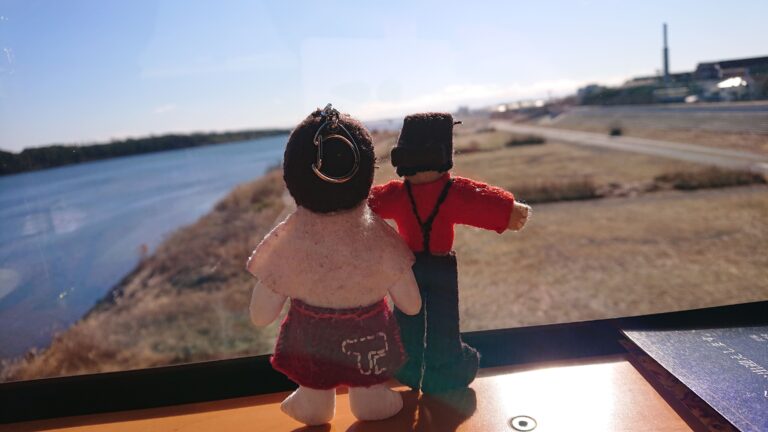
Even these thoroughly excitable mascots had a moment of something like wistfulness.
Sitting and watching the scenery go by, they looked quite unlike their usual selves — a rare photograph. Drawing out an expression like that is something only a journey like this manages.
Mascots Will Be Mascots
The wistfulness didn’t last. By the end of the journey they were, inevitably, playing with a ball — making it entirely clear they hadn’t finished enjoying themselves.
Even a luxury train turns into something rather homely with the mascots along.
If You Want to Ride The Royal Express
You cannot board with an ordinary ticket. You must apply through a travel package.
Three things we’d pass on from our own experience:
Capacity is small, and you can lose the ballot. We did, once
Losing doesn’t end it. Apply for the next departure — if you’re prepared to wait half a year, there’s a way through
Operating dates are irregular. The official site and social media need checking regularly
Course contents and prices vary by operating period. Always check the current details before applying — what we describe here is how it stood in early 2022.
Summary | What ¥39,000 Buys for 3 Hours and 20 Minutes
Date
21 January 2022
Route
JR Yokohama → Izukyu-Shimoda (approx. 3 hr 20 min)
Class
Platinum Class (Cars 5, 6, 7)
Price
¥39,000 per person (meal-inclusive boarding plan)
Meal
Western course, supervised by Shunkotei
Music
Live piano and violin
Drinks
Free-flow
Booking
Lost the ballot on 6 August 2021; applied again 18 October and won
Requirement at the time
PCR test before departure
We lost a ballot, applied again, took a PCR test, and finally got three hours and twenty minutes aboard.
And now there’s news that it will be running in the Tokai region. If the chance comes round again, we won’t hesitate this time.
There are other trains where the ride itself is the destination. The Tango Kuromatsu is one of them.
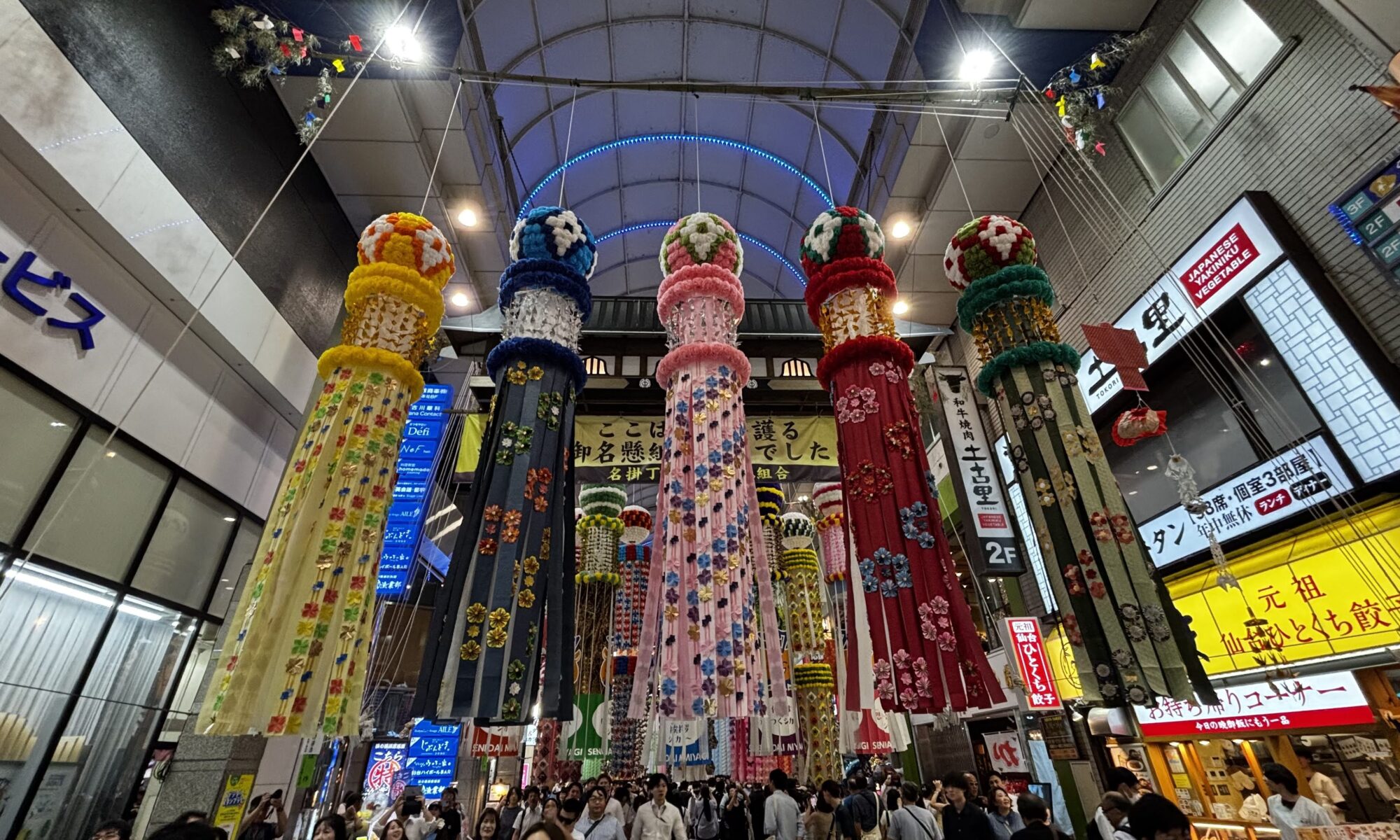
Reaching Sendai at 18:17 on the Tanabata Festival’s final day, after the decorations were said to come down, we found them still up until around 21:00.
What this article covers
How late the Sendai Tanabata decorations are actually up on the final day (we checked in person)
Journey time from Tokyo to Sendai on the Hayabusa, with real departure and arrival times
How the station, our hotel and the festival arcade sit in relation to each other, and how long the walks take
Sendai food — grilled nodoguro, and a hotel late-night soba (with an allergy warning)
Leaving Tokyo at 16:44, on the Final Afternoon
Our “Tohoku Summer Trip 2025” began in Sendai, the City of Trees.
Sendai is home to the Sendai Tanabata Festival, held every year from 6 to 8 August. The only day we could get there was the last one, Friday 8 August — and everything we could find beforehand said the decorations came down around 6pm.
So why the final day, and why a late-afternoon departure? Because we had spent that morning at Tokyo Big Sight.
We were there for the railway convention we’d been forced to abandon the previous year because of a typhoon — a whole year’s wait, finally repaid. We stayed from 10am until 3pm, tore ourselves away, and hurried to Tokyo Station.
The train we threw ourselves onto was the Hayabusa No. 63, leaving Tokyo at 16:44.
Our journey Hayabusa No. 63, Tokyo 16:44 → Sendai 18:17 (1 hr 33 min, 351.8 km) Seats: Car 8, seats 19D and 19E (reserved)
Which meant that by the time we reached Sendai we were already seventeen minutes past the supposed finish. We spent most of the ride half resigned to missing it, agreeing that we’d run the moment we were off the platform.
The Sendai Tanabata Festival is one of the three great festivals of the Tohoku region, held annually from 6 to 8 August. Enormous handmade streamers fill the shopping arcades, drawing visitors from across the country, and a fireworks display is held on the eve of the festival.
The Festival Had Already Started Inside the Station
Coming through the ticket gates, we rather deflated — in a good way. The station concourse was already full of Tanabata decorations.
Streamers in red, blue and yellow hung from the ceiling, and the Shinkansen gates were framed by festival displays. The atmosphere had reached us before we’d even left the building.
So much for hurrying. We stopped right there.
The Hotel Was Five Minutes from the Station — First, a Wish
Rather than heading straight for the arcades, we checked in first, at the Richmond Hotel Premier Sendai Ekimae, about a five-minute walk from the station. Carrying luggage through crowded arcades seemed like a poor idea.
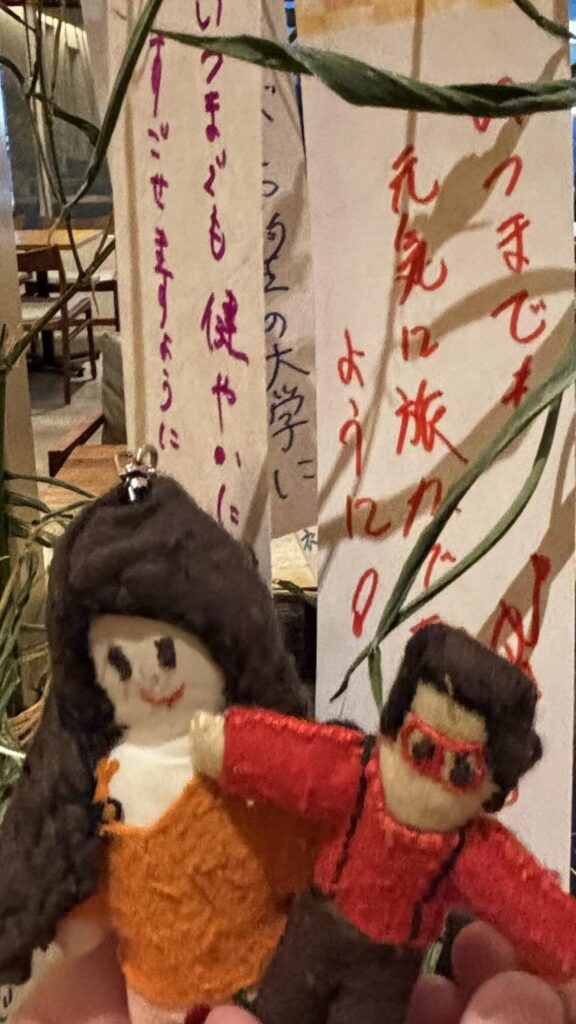
The hotel had set up a traditional Tanabata display of its own — bamboo hung with tanzaku, the paper strips you write a wish on. It had probably been decades since either of us last wrote one. We kept it simple and wished for a safe journey.
A hotel that makes something of the season adds more to a trip than you’d expect.
Into the Hapina Nakakecho Arcade — Still Plenty to See at Nearly 7pm
We headed for the Hapina Nakakecho shopping arcade. Walking and looking up at the decorations along the way, it took about ten minutes. By the time we arrived it was nearly 7pm.
A full hour past the “around 6pm” we’d been told. And yet — the decorations were still very much there.
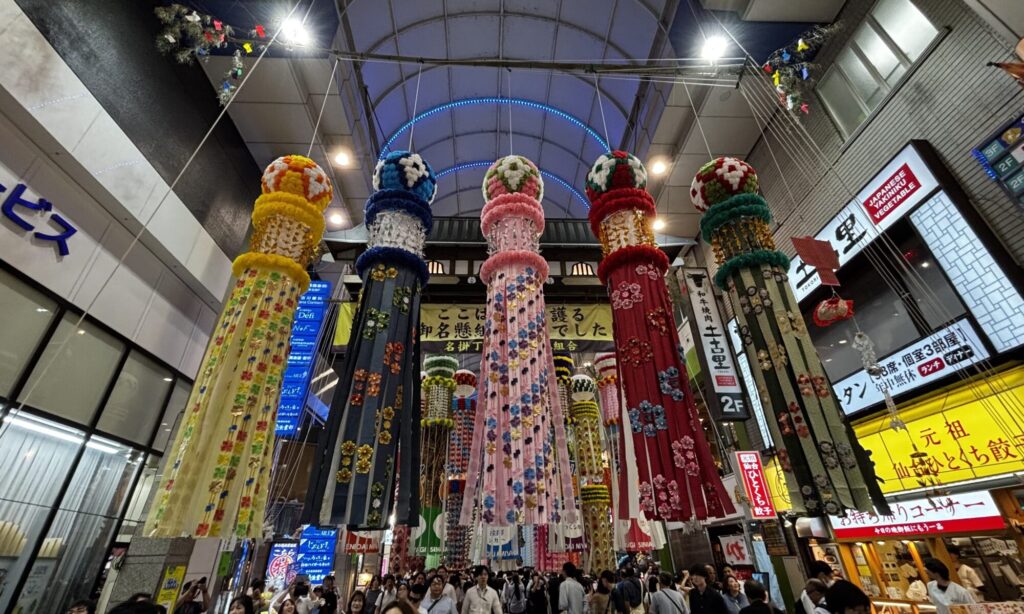
Stepping into the arcade, the streamers fill the space above you entirely. Each one is handmade by an individual shop, and the invention on display is remarkable. Our eyes drifted upwards and our walking pace collapsed. There are so many places you want to photograph that making forward progress becomes difficult.
There were plenty of other visitors, too. Well past 7pm, people were still wandering and taking photographs.
It was only when we walked back to the hotel after dinner that the decorations were finally beginning to come down.
How late can you see them on the final day? (measured on 8 August 2025) From what we saw, the decorations were still fully photographable until around 9pm on the last day — considerably later than the “around 6pm” we’d found beforehand. If you’re arriving on the final evening and thinking of giving up, it’s worth going anyway.
We’d thought of ourselves as “just making it.” In truth there was rather more room than that. We hope that’s useful to anyone else currently panicking about the time.
A few practical notes
The venue is a covered arcade, so rain isn’t a problem
Each arcade has its own themes and character
Evenings are busy — if you want a photograph without people in it, you’ll need patience
Finding Dinner Was the Hard Part
With the decorations seen, we went looking for dinner. This turned out to be the real challenge of the evening.
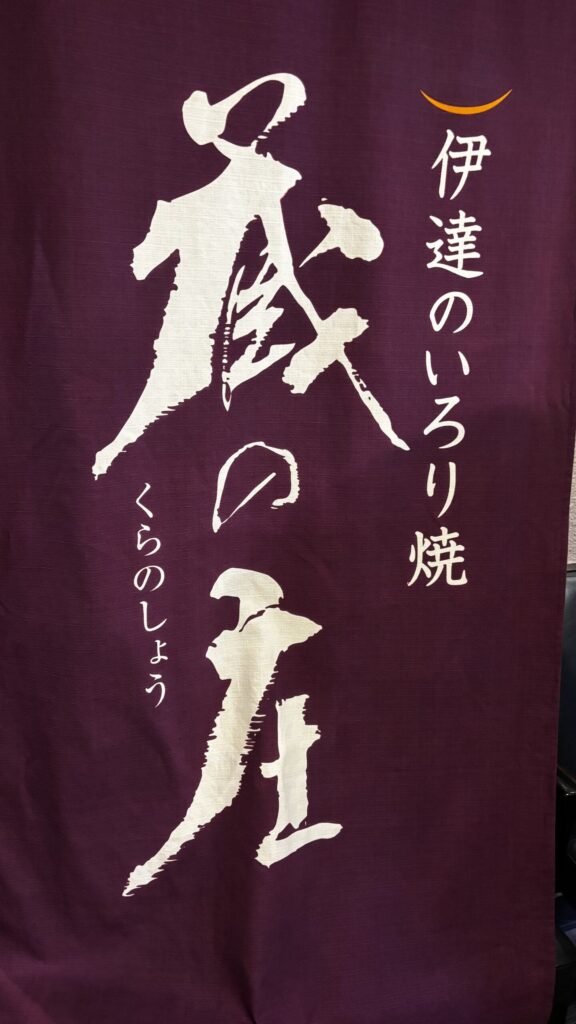
It was the last night of the festival, and every restaurant had a queue. The lines were long enough that we hesitated even at chain restaurants we’d normally walk past. After a hungry circuit of the area, we were drawn in by two characters on a sign — 伊達 (Date), the name of the samurai clan that founded Sendai — and stepped into a place called Kura no Sho (Date no Irori-yaki).
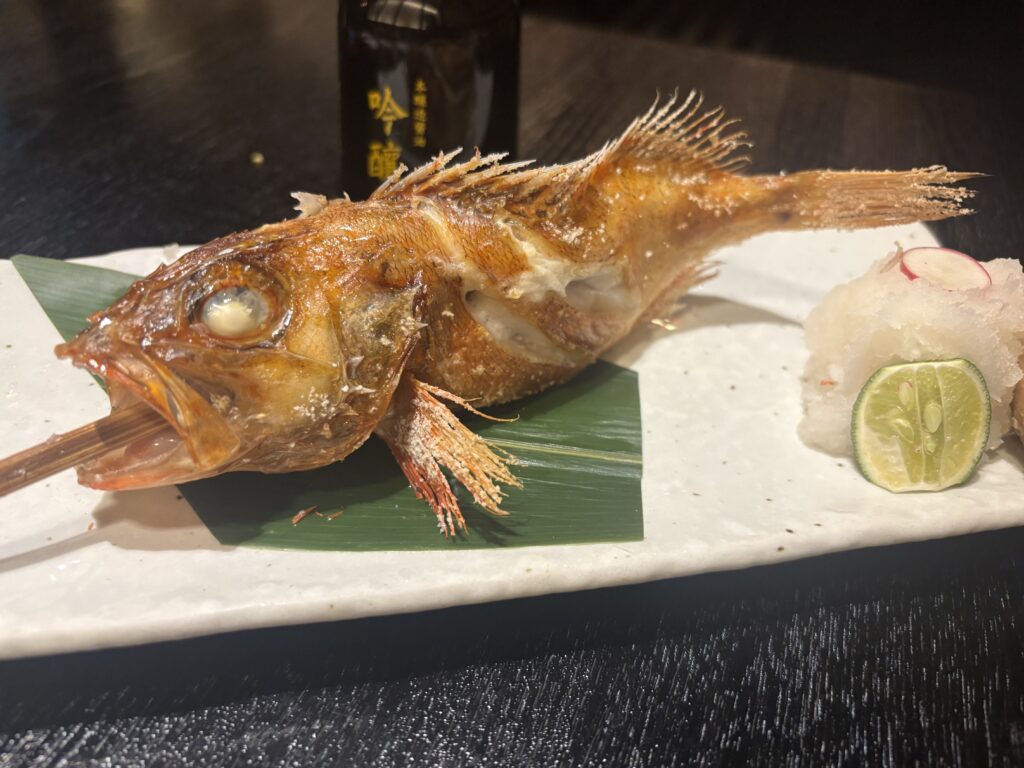
It was the right call. What we found there was grilled nodoguro.
The flesh is rich and falls apart in soft flakes, and the salt was judged perfectly — it dissolves in your mouth. It arrives whole, head to tail, the skin crisped over a charcoal grill. Put your chopsticks in and the flesh simply gives way. We both went quiet for a while.
Nodoguro (blackthroat seaperch) is a prized fish caught mainly along the Sea of Japan coast. It’s so rich that it’s sometimes called “the toro of white fish,” and grilling it with nothing but salt really is the best way to eat it.
Back at the Hotel: Kamo Nanban Soba
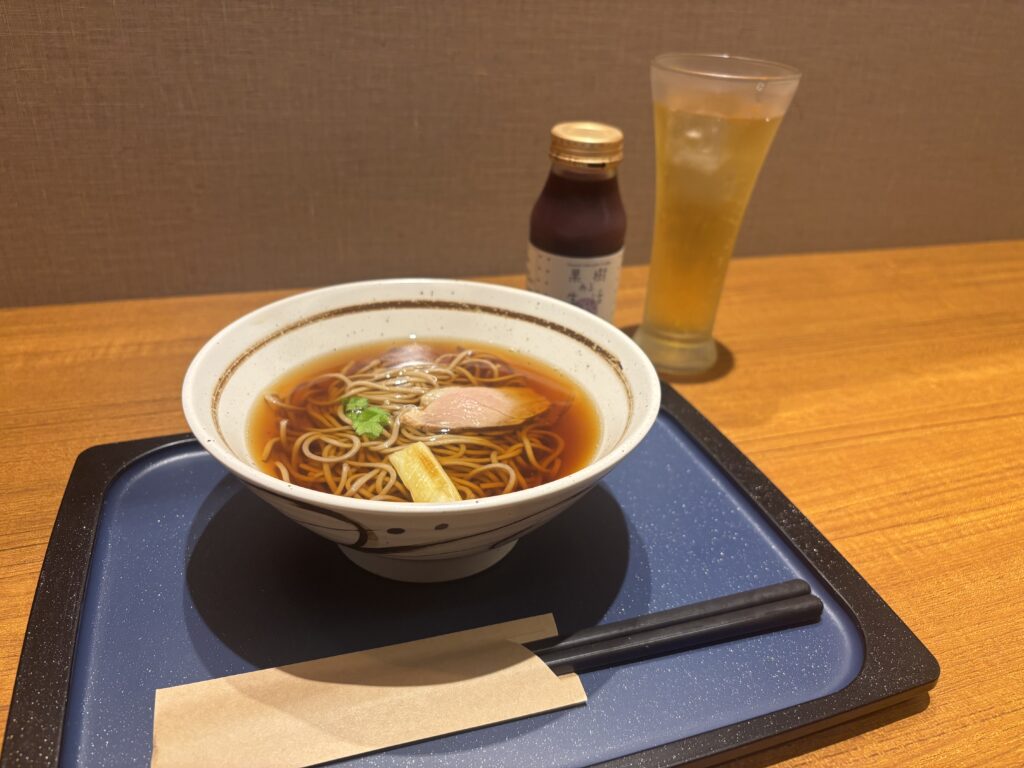
We were, in theory, completely full. Then we got back to the hotel and found the late-night service running. What we were given was kamo nanban soba — duck and leek soba. Not ramen: proper Japanese soba. We worked through the warm broth as the Sendai night wore on.
The Richmond Hotel Premier Sendai Ekimae also offers free soft-serve ice cream and one free alcoholic drink. Between a late-night noodle bowl and dessert, there’s little need to overdo it out in town.
If you have a buckwheat allergy, please read this. Some Japanese hotel chains offer a free late-night noodle service known as yonaki soba, which despite the name is usually ramen — that is, wheat noodles. What we were served here was genuine soba, made from buckwheat. The names are similar; the ingredients are not. Buckwheat allergy can be severe. If it affects you, please check what’s actually being served before accepting it.
The Next Day: North to Kakunodate on the Komachi
Having had our fill of the Sendai evening, we headed further north the following day, boarding the Akita Shinkansen Komachi for Kakunodate.
Summary | Arriving on the Final Evening Still Works
Getting there
Hayabusa No. 63, Tokyo 16:44 → Sendai 18:17 (1 hr 33 min, 351.8 km)
Festival dates
6–8 August, annually
Decorations on the final day
Still photographable until around 9pm (confirmed 8 August 2025)
Where we stayed
Richmond Hotel Premier Sendai Ekimae, about 5 min from the station
Hotel to the arcade
About 10 min on foot to Hapina Nakakecho
What to see
Handmade streamers in the arcades; displays inside Sendai Station
What to eat
Grilled nodoguro (Kura no Sho); kamo nanban soba at the hotel
Hotel extras
Late-night soba, soft-serve ice cream, one free drink
Booking note
Rooms go early during the festival — and restaurants queue on the final night
Next stop
Kakunodate, by Komachi
Arriving on the final evening turned out to be perfectly workable. Finishing work and throwing yourself onto a Shinkansen is a more realistic plan than it sounds.
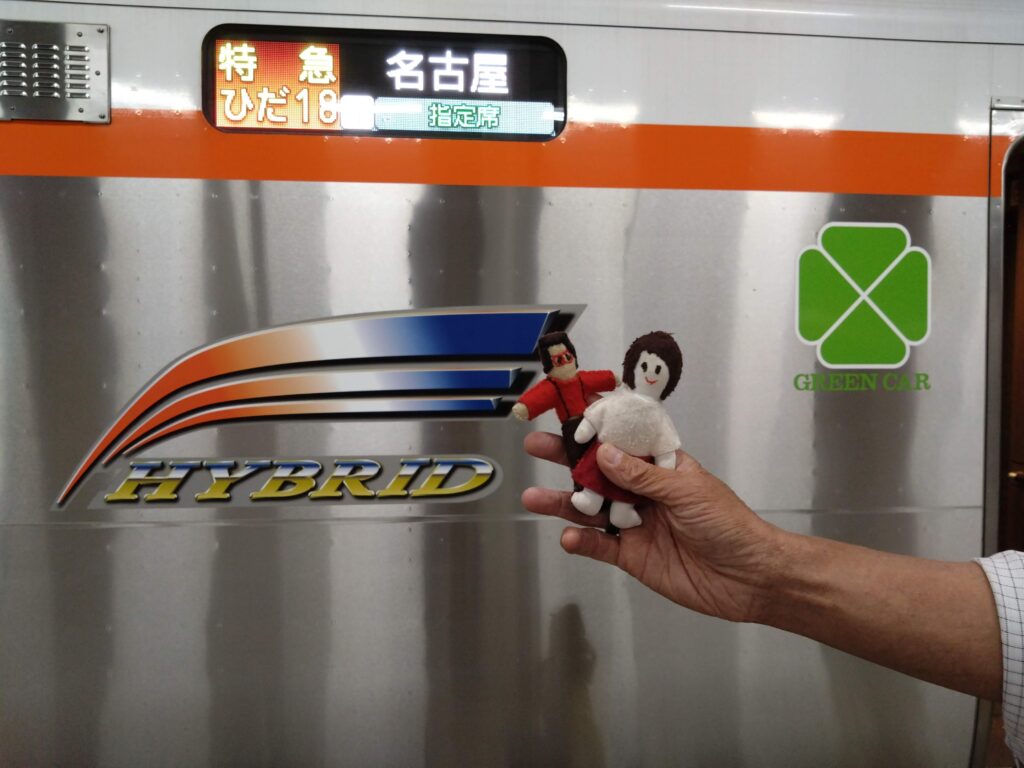
15 August 2024. We were supposed to be in Tokyo. Instead a typhoon sent us west — into our first Gran Class, a Green Car on the Hida, and a refund.
This is what happened the day after an emergency meeting in Kanazawa, where we decided to run west rather than into a typhoon making landfall in Kanto.
Forced into rearranging everything, we held an emergency meeting, mascots included.
“If we’re changing the plan anyway, let’s make it a luxurious one.”
From that moment the mood of the trip lifted considerably. Typhoons aren’t all bad, we thought.
Our First Gran Class — for 22 Minutes, With No Food or Drink Service
Conclusion number one of the emergency meeting was to book Gran Class, the class above Green Car and the highest on the Shinkansen.
We booked it with some enthusiasm. The reality was rather different from what we’d pictured.
On the rails Hokuriku Shinkansen Hakutaka No. 560 — Kanazawa 10:58 → Toyama 11:20 (22 minutes) Seats: Car 12, seats 5B and 5C Gran Class (no food or drink service) As of August 2024
First, it lasted 22 minutes. We settled in, tested the seat, took a few photographs — and were in Toyama.
And as the booking screen had stated, this service’s Gran Class was the “no food or drink” configuration. No attendant on board, and no drinks or sweets of any kind. Gran Class as a seat, and nothing else.
The seat itself really was in another league. The leather powered recliner goes back a long way, the spacing is generous, and the car was remarkably quiet. There were only a handful of other passengers.
But the parts you usually read about — the attendant service, the drinks, the dessert — we experienced none of them on this occasion.
Worth knowing before you book Gran Class Gran Class comes in two configurations: with food and drink service, and seat-only (no food or drink). Which one you get depends on the individual train. The Hakutaka No. 560 we rode was seat-only. The booking screen shows which configuration applies, so if you’re expecting the full service, check that line carefully. The same name can mean two quite different things.
We were, frankly, a little deflated. That said, this particular disappointment gets properly resolved a year later — see the end of this article.
Second Decision: Green Car on the Limited Express Hida
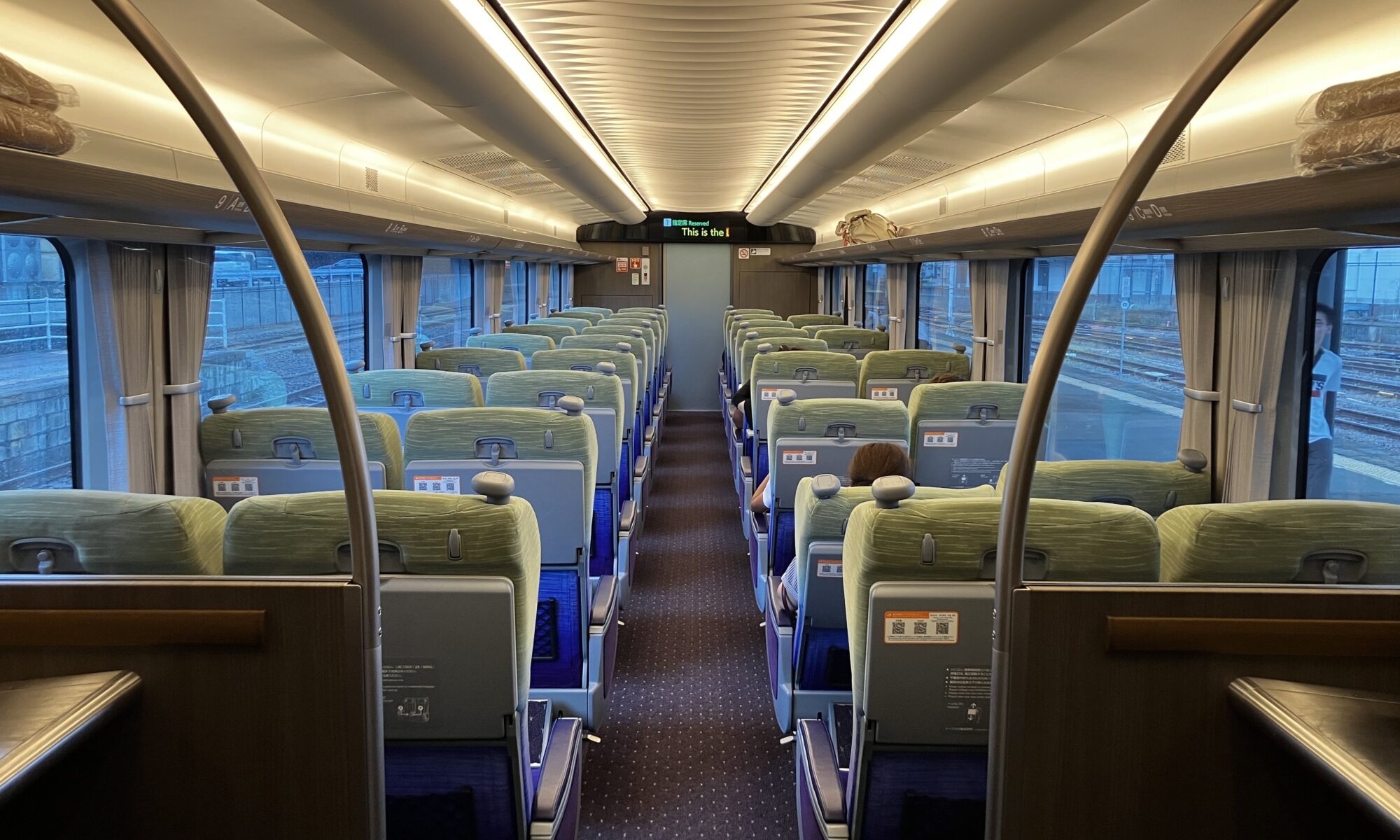
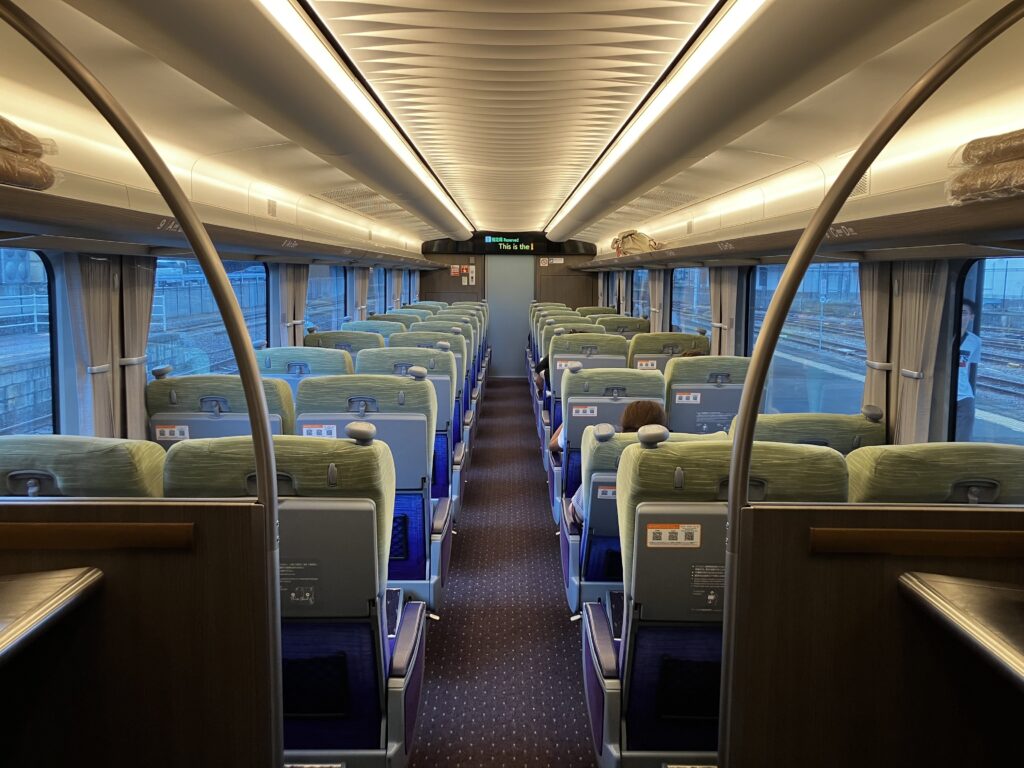
Conclusion number two was to book the Green Car on the Limited Express Hida, running from Toyama through Takayama toward Nagoya. Here too the carriage was nearly empty and we had space to spread out.
Watching the summer landscape of Gifu slide past the window, the anxiety about the typhoon seemed to drift away.
The Limited Express Hida is operated by JR Central between Nagoya and Hida-Takayama / Toyama.
An Unexpected Stop at Gifu — the Typhoon Catches Up
Then, as we approached Gifu Station, the Hida came to a stop. Services had been suspended because of the typhoon.
Halted with Nagoya almost in sight, we had no choice but to change at Gifu onto the Meitetsu line and continue to Nagoya from there.
An unplanned Meitetsu ride — a bonus stage, of sorts.
Meitetsu (Nagoya Railroad) is a private railway serving Aichi and Gifu. Meitetsu Gifu to Meitetsu Nagoya takes about 30 minutes by limited express. Worth knowing as an alternative when JR services stop.
A Wonderful Surprise — the Green Car Fare Was Refunded
“We got to enjoy the Green Car as far as Gifu, so fair enough,” we thought — and then the Green Car charge was refunded to us, because we hadn’t reached Nagoya.
What we’d planned as an indulgence turned into a bargain. The typhoon’s disruption ended up as a pleasant surprise.
What to Remember When Travelling by Train During a Typhoon
Refund rules If a limited express or Shinkansen service is suspended, or you don’t reach your destination, the limited express and Green Car charges are refunded. Don’t panic — ask at a station counter. In our case we didn’t apply for anything; the refund simply came through afterwards.
Use substitute transport When services are suspended, you can often transfer to another operator’s line. Our switch to Meitetsu is one example. On sections where a private railway runs parallel to JR, knowing your options means you can keep moving.
And sometimes, the answer is to travel away from it The decision we made in Kanazawa the night before — to abandon Tokyo — was ultimately what saved the trip. Rather than heading toward the storm, rearranging your plans to move away from it is the more reliable approach.
Summary | Turning Travel Chaos into Something Memorable
Journey
Details
Hakutaka No. 560, Gran Class
Kanazawa 10:58 → Toyama 11:20 (22 min, no food or drink service)
Limited Express Hida, Green Car
Toyama / Takayama → suspended at Gifu
Meitetsu
Gifu → Nagoya (the unexpected bonus)
And the Green Car charge came back to us.
A typhoon’s disruption turned into a summer trip we won’t forget. Plans changing is part of travel.
What happened afterwards
The Gran Class experience that ended here after 22 minutes with no service was repeated properly in the summer of 2025 — Morioka to Tokyo, two hours and fifteen minutes, with the full service this time.
A hot towel to start, sparkling wine, Aomori apple and nuts, a pound cake. Everything we missed on this occasion was there. Homework handed in, a year late.
Captivated by the Rice Fields the Komachi Runs Through
What unfolds outside the window of the Akita Shinkansen Komachi is rice paddy, as far as you can see. Akita is the home of Akita Komachi, one of Japan’s best-known rice brands — and true to the name, the sight of the Komachi streaking through those golden ears of rice lifts the mood of the whole trip.
The Akita Shinkansen is unusual even among Shinkansen lines, because part of its route runs on conventional railway tracks. You get Shinkansen speed and small-town railway atmosphere in the same journey, and the result is a flavor you won’t find on an ordinary Shinkansen. If you’re a railway fan, this is a line to ride at least once.
Komachi Trivia The Komachi connects Tokyo and Akita. As far as Morioka it runs coupled to the Hayabusa; at Morioka the two are uncoupled and the Komachi carries on alone to Akita. To make that through service possible, the conventional-line section between Morioka and Akita was regauged from 1,067 mm to the 1,435 mm standard gauge the Shinkansen uses. The trains, in turn, are built with narrower bodies so they fit the tighter clearances of those older lines. This arrangement is known as a “mini-Shinkansen,” and it’s a genuinely interesting piece of engineering.
Getting to Kakunodate
Kakunodate is reachable directly from Tokyo on the Akita Shinkansen Komachi.
From
Journey time
Train
Tokyo Station
approx. 2 hr 50 min
Akita Shinkansen Komachi
Morioka Station
approx. 1 hr
Akita Shinkansen Komachi
Akita Station
approx. 45 min
Akita Shinkansen Komachi
Kakunodate is a small station, but it’s the gateway to a town known for its samurai residences and its cherry blossoms. The main sights are all within walking distance of the station.
Our Base in Kakunodate: Hotel B4T Kakunodate, Right by the Station
For this trip we stayed at Hotel B4T Kakunodate, just a short walk from Kakunodate Station.
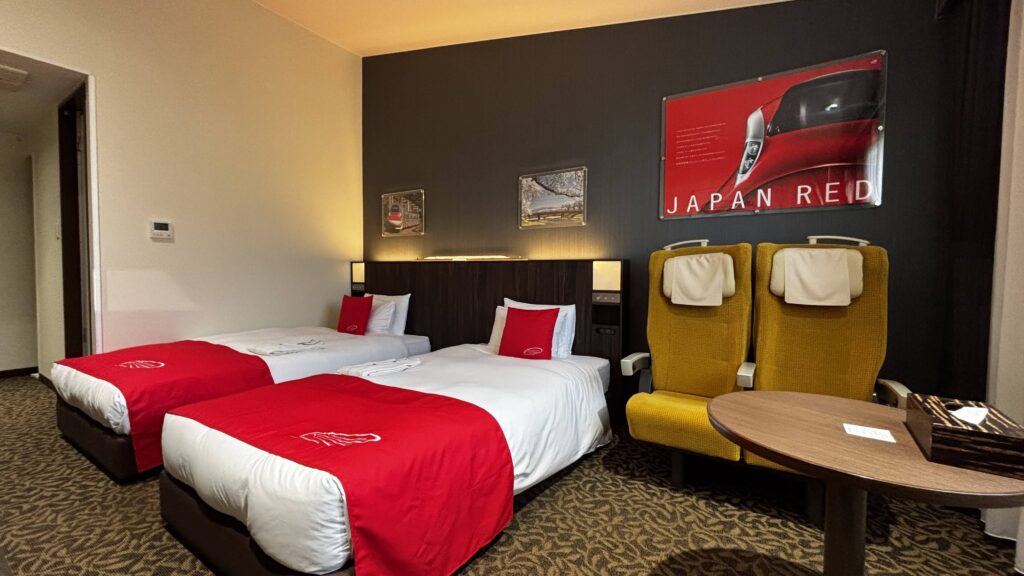
This is not an ordinary hotel. For a railway fan, it has something hard to resist: guest rooms themed around the Komachi.
A note on the name: this property was rebranded in February 2026, from Hotel Folkloro Kakunodate to Hotel B4T Kakunodate. If you know it by the old name, it’s the same hotel.
The Door of the Komachi Room
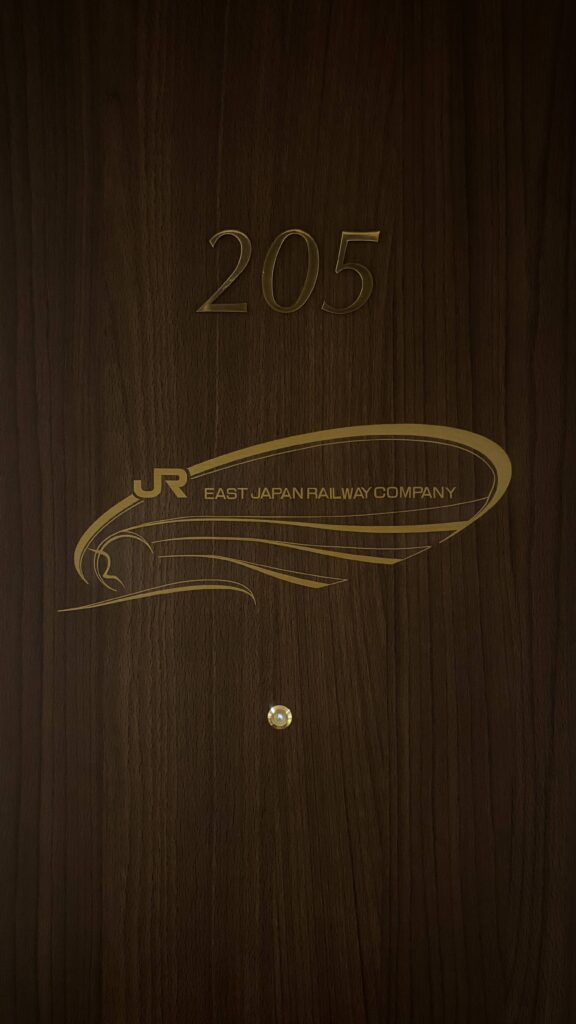
The door to the room carries the Komachi’s emblem, and simply walking down the corridor is enough to lift your spirits. It’s not something you see at a typical hotel, and we ended up taking far too many photos of a door.
From the moment you check in, you feel like you’re on a railway journey. That attention to small details is what makes this hotel a pleasure.
The Room Key Is Yours to Take Home
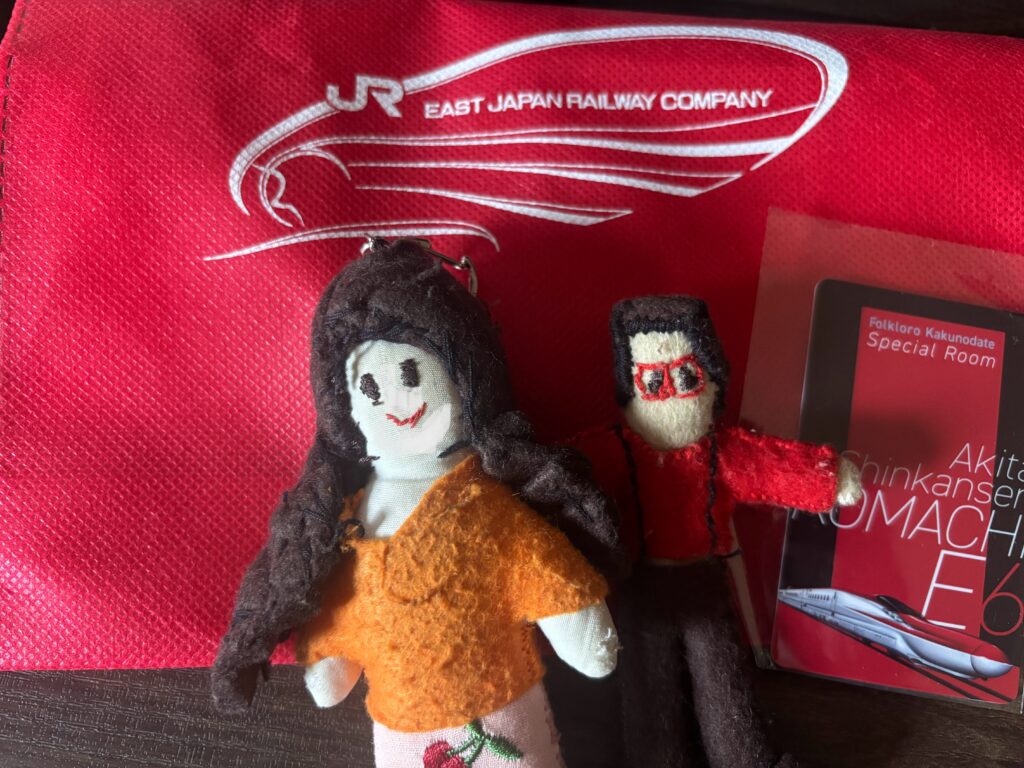
Better still, you’re officially allowed to keep the room key. Line the key up with the amenities, take a photo, and you have a souvenir of the trip in physical form.
Small touches like this do a lot for how satisfying a stay feels. It’s the kind of keepsake an ordinary hotel simply can’t offer.
A Front-Row Seat: Watching the Komachi from Your Room
What moved us most, though, was the view from the room. Kakunodate Station spreads out beyond the window, and you can lie on the bed and watch the Komachi standing at the platform — a front-row seat built for railway fans.
Every time a train pulled in, we found ourselves drawn to the window. As for exactly what you’ll see, that’s worth discovering for yourself — it’s one of the pleasures reserved for guests.
There’s Plenty to See in Kakunodate
Staying at Hotel B4T Kakunodate also puts you within easy reach of the town’s sights.
Bukeyashiki-dori (the samurai residence street) A street lined with samurai houses dating back to the Edo period, designated by the national government as an Important Preservation District for Groups of Traditional Buildings. The contrast between the black wooden fences and the weeping cherry trees is especially striking.
One of Japan’s finest cherry blossom destinations Kakunodate is known as the “Little Kyoto of Michinoku,” and it’s a celebrated spot for blossoms. In late April, roughly 400 weeping cherry trees and 160 Somei-Yoshino cherry trees come into bloom. Visitors arrive from across the country during peak season, so booking accommodation well in advance is essential.
Autumn is beautiful too Come October, the trees along the samurai district turn red and gold, and the town takes on a quieter seasonal charm. It’s far less crowded than cherry blossom season, which makes autumn a good choice if you’d rather take your time.
Who This Hotel Suits
Anyone fond of the Akita Shinkansen Komachi
Travelers who want to see Kakunodate’s samurai district and cherry blossoms
Anyone curious about staying somewhere with a railway theme
Travelers looking for a trip with a bit of occasion to it
Couples planning an anniversary trip
Kakunodate is at its busiest during cherry blossom season (late April) and the autumn colors (October), and rooms become hard to find. We’d recommend booking early.
A Model Course for Akita
When
What to do
Day 1, morning
Tokyo Station to Kakunodate on the Komachi (approx. 2 hr 50 min)
Day 1, afternoon
Walk the samurai residence street
Day 1, evening
Check in at Hotel B4T Kakunodate and enjoy the Komachi view
Day 2, morning
A morning stroll through Kakunodate; cherry blossoms or autumn colors
Day 2, afternoon
Onward to Morioka or Akita on the Komachi
Summary | The Komachi and Kakunodate — A Pilgrimage for Railway Fans
Access
A short walk from Kakunodate Station
Highlights
Komachi-themed rooms; the room key as a souvenir
The view
The Komachi standing at Kakunodate Station
Best seasons
Cherry blossoms (late April) and autumn colors (October)
Best suited to
Railway fans; anyone using Kakunodate as a base for Akita
It really was a lovely place to stay. Do consider building it into a trip on the Akita Shinkansen Komachi.
Redemption at Last — This Year, We Finally Made It!
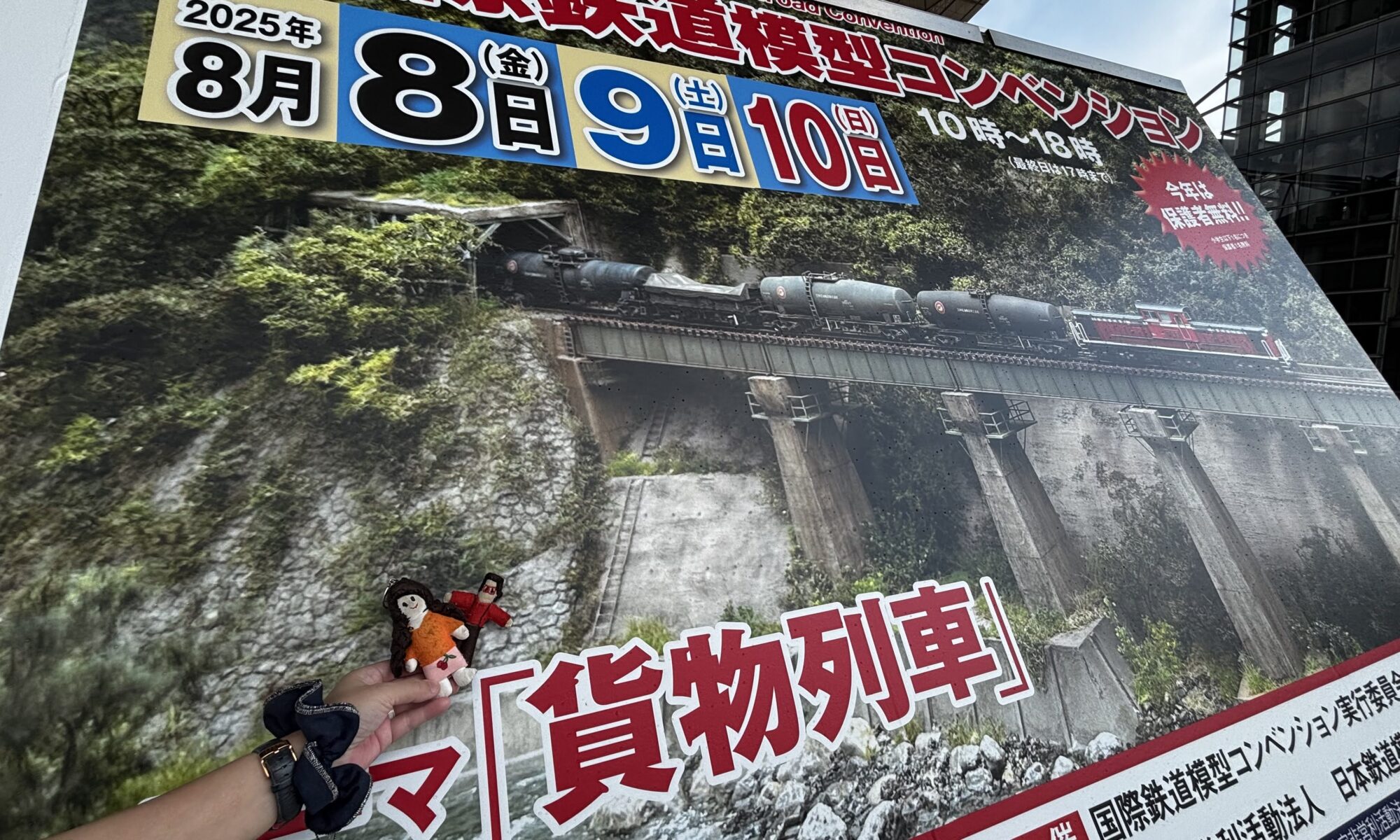
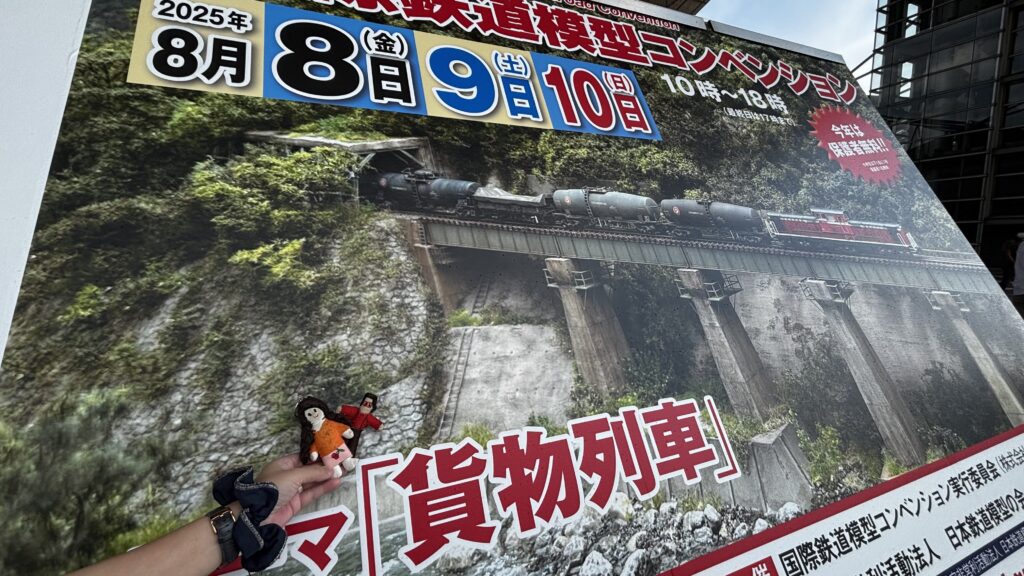
8 August 2025, Tokyo Big Sight. We finally made it to the railway convention we’d had to abandon the previous year because of a typhoon.
The summer before, we were in Kanazawa. The plan for the following day was to travel to Tokyo for this very event — but it coincided with a typhoon making landfall in the Kanto region. We held an emergency meeting the night before, gave up on Tokyo, and turned back west toward Nagoya via Toyama and Takayama instead.
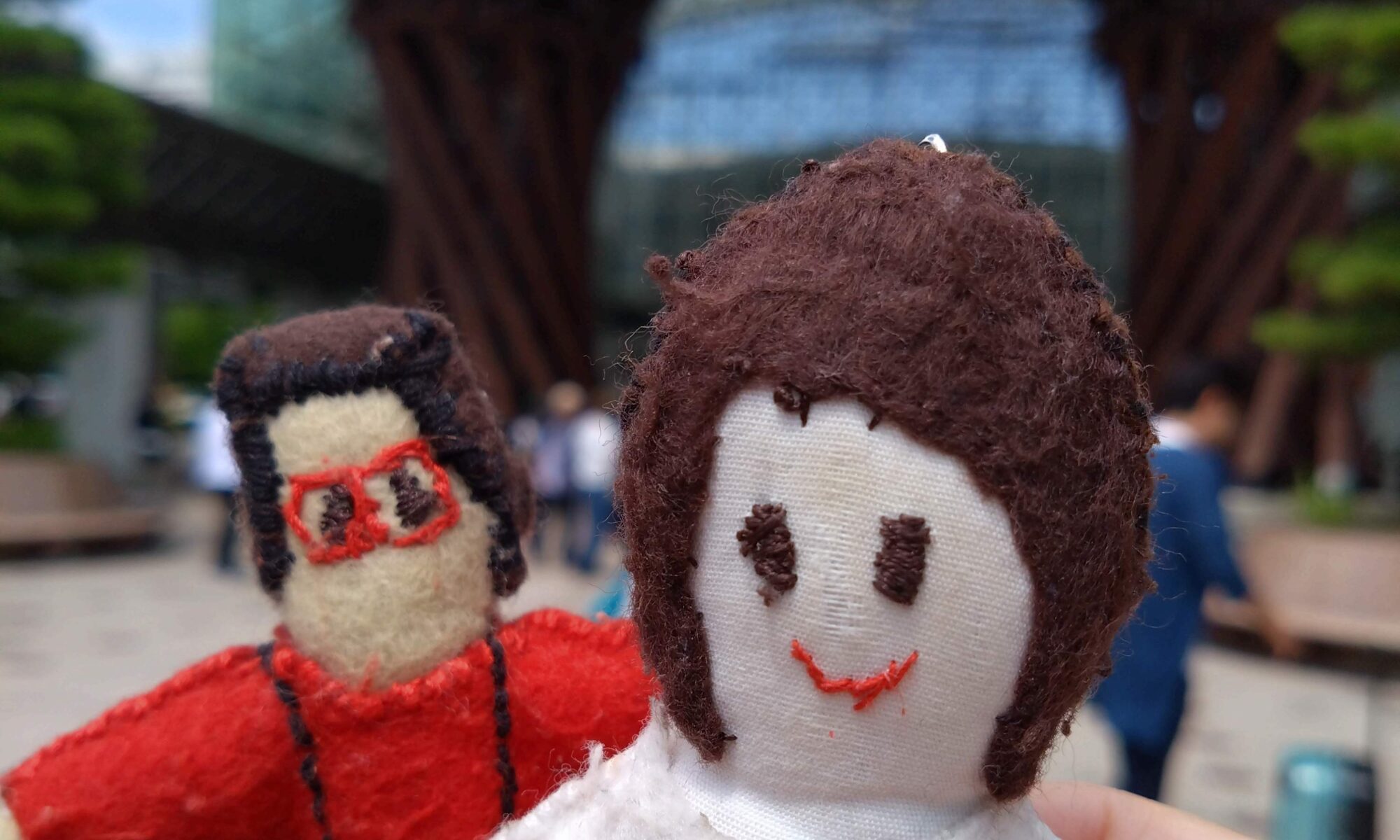
We carried that disappointment around for a year. And this year’s theme turned out to be freight trains — which settled it. The mascots were more than ready.
What is the Railway Convention? A major event bringing together railway models, goods, and exhibitions — a must-attend gathering for railway enthusiasts from across Japan. Held at Tokyo Big Sight, it’s an event by railway fans, for railway fans, with the focus firmly on display and community rather than sales.
Getting to Tokyo Big Sight
Access to the venue is straightforward and convenient.
By Train
Yurikamome Line: 3-minute walk from Kokusai-Tenjijo-Seimom Station
Rinkai Line: 7-minute walk from Kokusai-Tenjijo Station
When Is It Held? The Railway Convention takes place once a year. Keep an eye on the official website and social media for announcements about dates and details.
So Many Types of Railway Fans! Overwhelmed by the Depth of the Hobby
Stepping into the venue, the vast floor of Tokyo Big Sight was packed wall-to-wall with railway-related displays.
What struck us most was the sheer diversity. “Railway fan” turns out to be an umbrella term covering a remarkable range of passions:
Shinkansen enthusiasts — collecting models and materials on every generation of bullet train
Steam locomotive devotees — deeply passionate about the mechanics and history of SL trains
Tram fans — dedicated to the charming tram networks found across Japan
Freight train followers — exploring the overlooked world of cargo rail
Station building admirers — visiting and documenting unique station architecture nationwide
Rather than a sales event, the atmosphere was that of an exhibition that goes far beyond the level of a hobby — you could feel the love and dedication radiating from every display. This was a place where the true depth of the railway enthusiast’s world could be felt in person.
Rediscovering the Appeal of Freight Trains — This Year’s Theme
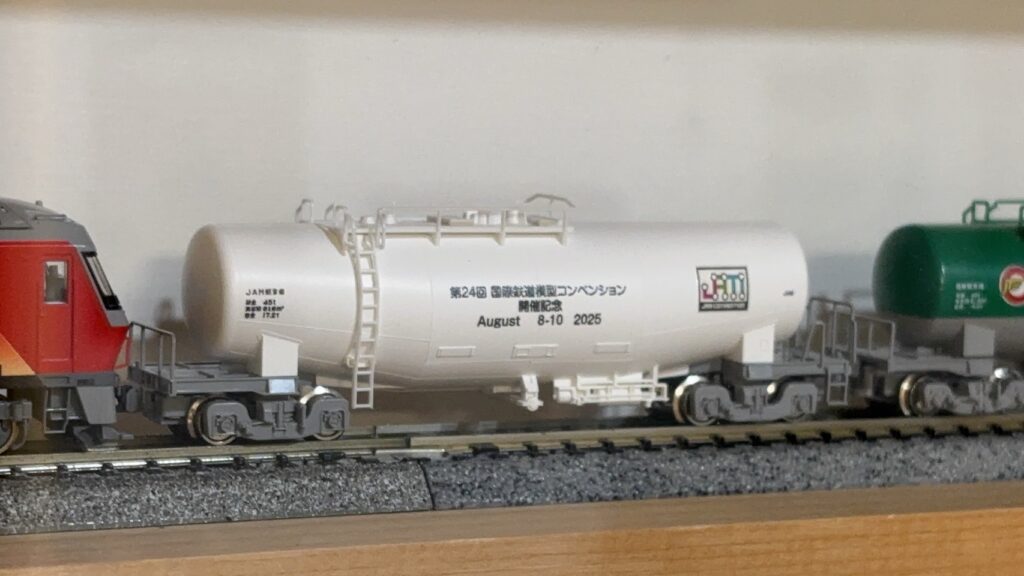
This year’s theme was “Freight Trains” — a side of railway culture that doesn’t always get the spotlight it deserves. Yet freight trains are the unsung heroes of Japan’s logistics network.
Freight Train Fun Facts
JR Freight operates cargo services across Japan’s rail network
Types include container trains, tank wagons, and vehicle transport trains
Many freight trains run late at night or in the early hours — making them rare and exciting targets for railway photographers
Thanks to this convention, we discovered a whole new dimension to enjoying railways — the world of freight!
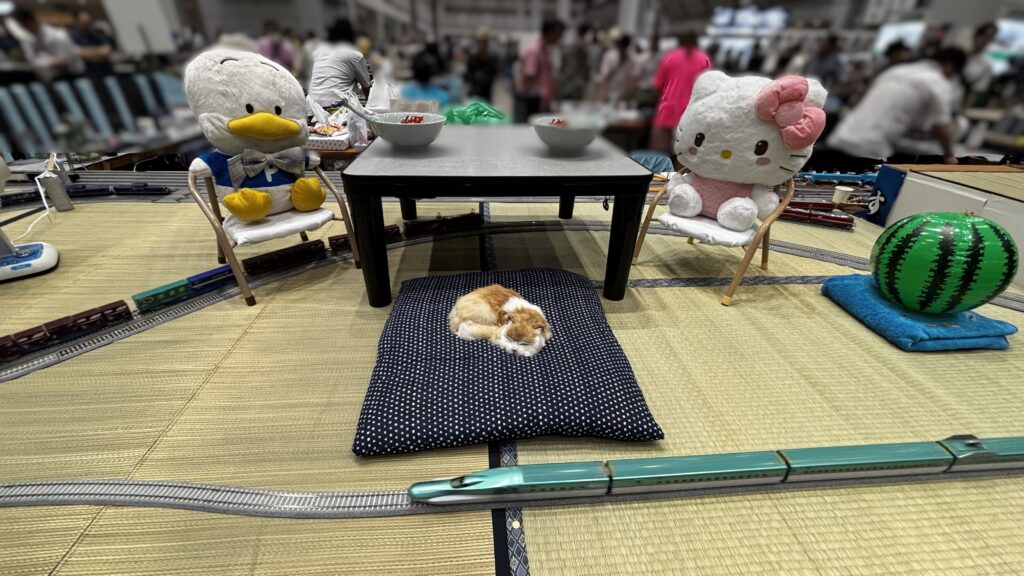
The Exhibit We Loved Most: The Real “Ozashiki Train”!
Among all the displays, the one that captured the Mascots’ hearts completely was this one.
A “tatami room train” — a miniature layout built on a traditional Japanese tatami mat, with freight trains and limited express vehicles running across it.
There’s something wonderfully heartwarming about watching tiny trains glide across a tatami floor. You could almost picture the joy of the person who put it together — every detail spoke of genuine affection for the hobby.
It was a moment that reminded us: there are no rules when it comes to enjoying model trains. Intricate dioramas, humorous displays — the freedom of expression is exactly what makes this world so endlessly fascinating.
“Ozashiki Train” traditionally refers to a tourist train with a Japanese-style tatami interior. But this display offered a wonderfully playful reinterpretation — running models on top of a tatami mat. Pure creative genius!
The Beautiful Diversity of “Loving Something”
The most lasting impression from this year’s convention wasn’t any single exhibit — it was the remarkable diversity of the people who love railways.
People meticulously crafting intricate models. People whose joy comes purely from watching trains run. Photographers. Collectors. Historians. All united by a shared love of railways, yet each finding their own completely unique way to express it.
With freight trains as the theme, we also gained a new appreciation for a corner of railway culture that rarely gets its moment in the sun. Broadening your gaze beyond the trains you ride to include the ones that keep Japan moving — it opens up a whole new world of railway enjoyment.
Thinking About Starting Model Trains?
After walking through the convention, it’s hard not to feel inspired to try model railways yourself! For beginners, N gauge is the recommended starting point.
Why N Gauge?
Compact size — doesn’t take up much space
Wide price range — accessible for beginners
Huge variety of vehicles available
Highly expandable — you can grow your layout gradually
Summary | The Railway Convention Is a Must for Every Railway Fan
Item
Details
Event Name
Railway Convention 2025
Venue
Tokyo Big Sight
This Year’s Theme
Freight Trains
Access
3-min walk from Kokusai-Tenjijo-Seimom Station (Yurikamome)
Highlights
Displays that go far beyond hobby level
Top Exhibit
The tatami-mat train layout
Recommended For
Railway fans, model enthusiasts, families
This year’s convention — our long-awaited redemption visit — exceeded every expectation. The depth of passion in the railway community, and the sheer joy of people sharing what they love, made for an unforgettable experience. We can’t wait to see what theme next year’s convention will bring! the 2026 convention, on the Shinkansen
We spent five solid hours at the venue, from 10am to 3pm. And then we hurried straight to Tokyo Station — because that same evening, we were carrying on north.
We threw ourselves onto the Hayabusa No. 63, departing Tokyo at 16:44, bound for Sendai. It was the final day of the Sendai Tanabata Festival.
If you’re travelling in from a distance, carrying straight on with a trip after the convention works rather well. Catch an evening Shinkansen, as we did, and you can be a long way from Tokyo by nightfall.
14 August 2024. Our summer trip began early in the morning at Nagoya Station. Day one was meant to be a straightforward run up to Kanazawa and nothing more. Then, that evening, a typhoon turned the whole plan upside down.
Leaving Nagoya at 7:51 — and a Surprising Fact About the Shirasagi No. 1
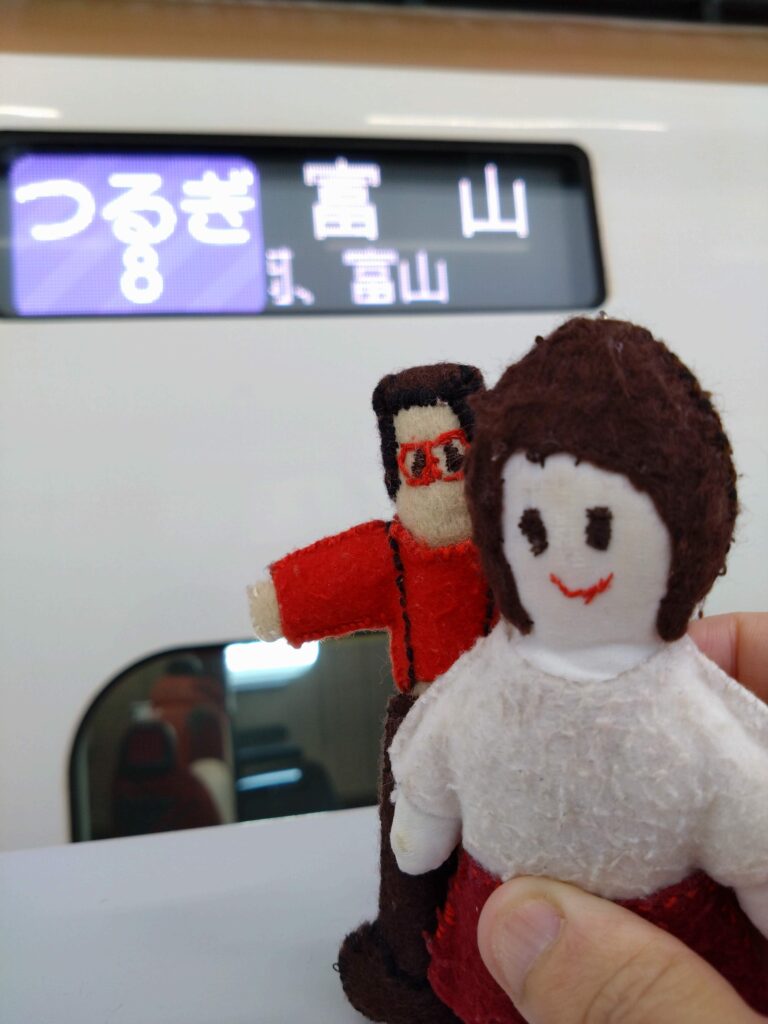
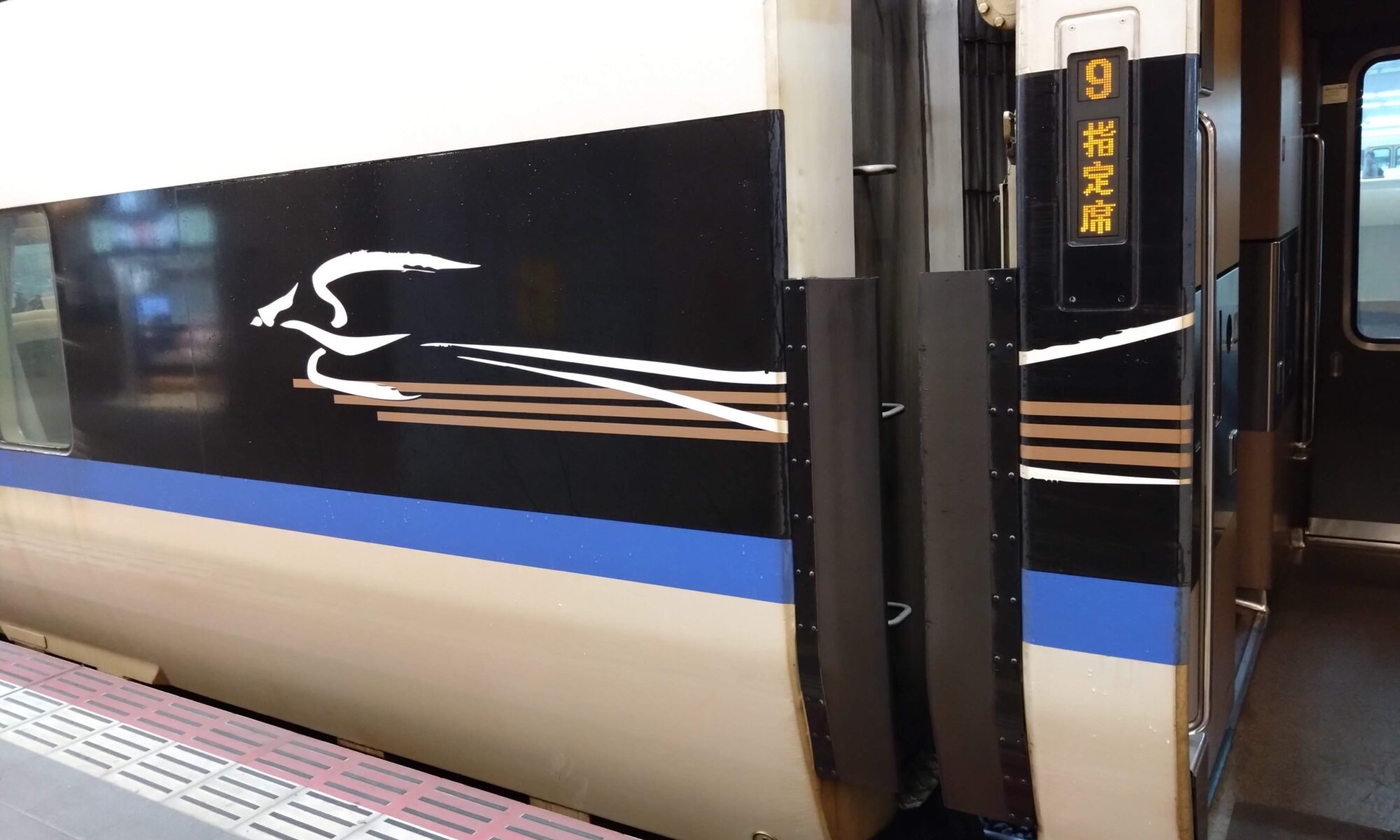
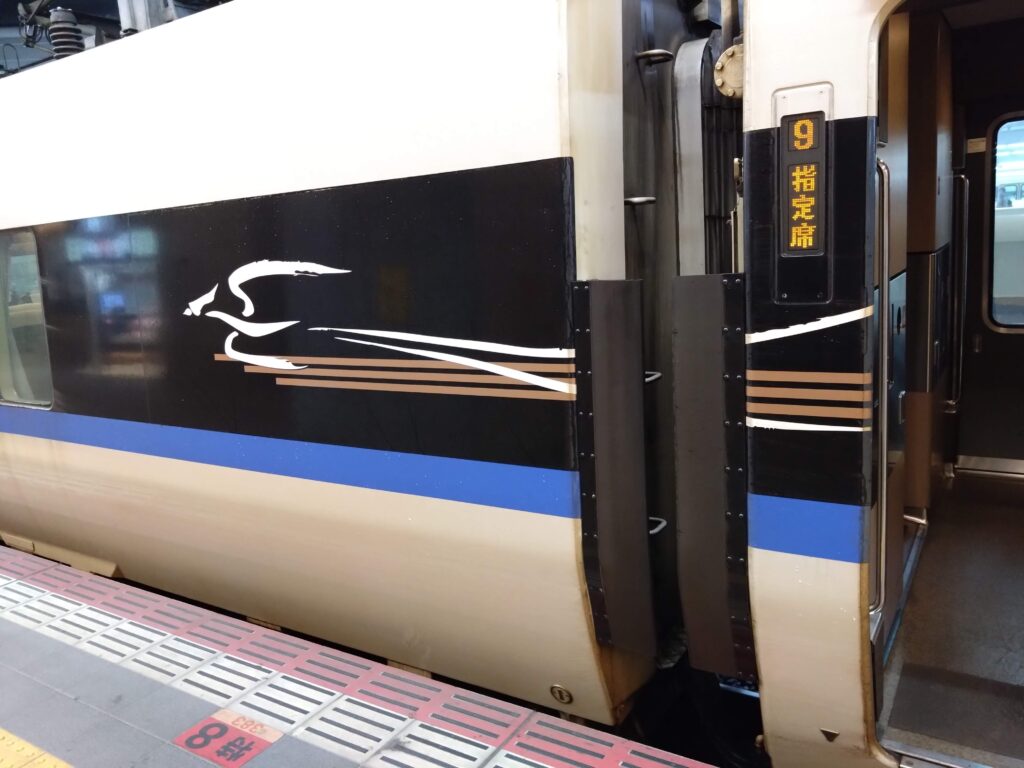
The first train of the trip was the Limited Express Shirasagi No. 1, departing Nagoya at 7:51.
“Number 1 must mean it’s the first run of the day,” we assumed. It turns out that isn’t the case. This set had already made a run that morning as a “Home Liner” commuter service before taking up its duty as the Shirasagi.
So “No. 1” doesn’t mean the train hasn’t been anywhere yet. We boarded the freshly turned-out Shirasagi No. 1 and set off along the shore of Lake Biwa toward Tsuruga.
Day one, on the rails Limited Express Shirasagi No. 1 — Nagoya 7:51 → Tsuruga 9:27 (Car 4, seats 1A and 1B) ‹ 19-minute connection at Tsuruga › Hokuriku Shinkansen Tsurugi No. 8 — Tsuruga 9:46 → Kanazawa 10:43 (Car 7, seats 9D and 9E) ¥18,960 for two adults = ¥9,480 per person (¥4,970 limited express charge + ¥4,510 base fare) As of August 2024
Turning the Seats Around by Hand at Maibara
Partway through the run, at Maibara Station, a small task landed on us.
The train reverses direction here, which means passengers turn their own seats around. On local rapid services this is a familiar sight, but the chance to do it on a limited express is increasingly rare.
The mascots were thrilled to try it for the first time. Once the seats were swung round and we sat back down, the scenery that had been receding behind us was suddenly rushing toward us. Same train, but from here on it felt like a different vehicle entirely.
Changing to the Tsurugi No. 8 at Tsuruga
The connection at Tsuruga was 19 minutes — unhurried, with time to move without rushing.
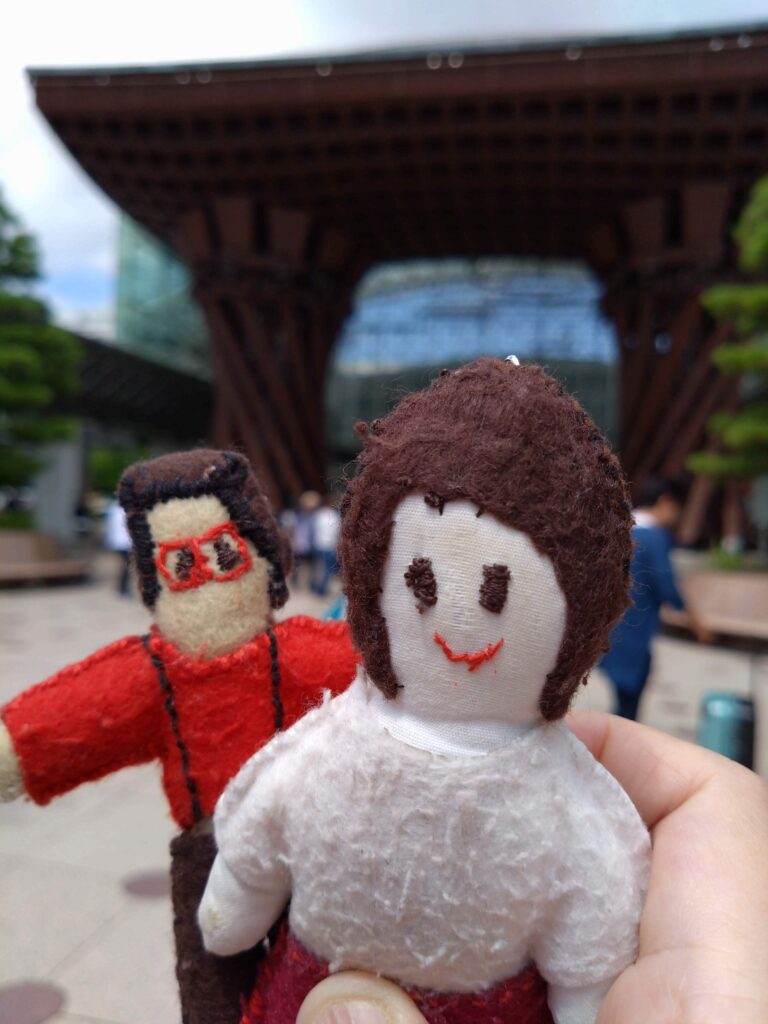
The Tsurugi runs on the Hokuriku Shinkansen between Tsuruga and Toyama, a service introduced when the line was extended in March 2024. We were riding it in the summer of its first year. We reached Kanazawa at 10:43, roughly three hours out of Nagoya.
Kanazawa: Gold Leaf, Salt Bread and the Castle
Applying gold leaf at Sakuda, in Higashiyama
Kanazawa means gold leaf. We had booked a gold leaf application workshop at Sakuda in Higashiyama for 1pm.
Working under a craftsman’s guidance, you apply the leaf yourself. It is thin enough that a single breath will send it flying, so you find yourself breathing shallowly without meaning to. It takes real concentration, and finishing a piece is genuinely satisfying.
Kenrokuen: we gave up because of the heat
An honest admission. We had intended to visit Kenrokuen, one of Japan’s three great gardens.
The August heat in Kanazawa was beyond anything we had planned for. There was no shade on the walk, our willpower ran out, and we simply gave up — turning back with one of the country’s most famous gardens within reach.
Instead we headed for Higashi Chaya District, the old teahouse quarter, which lies in the same direction as the Higashiyama workshop, so we could walk straight on from there.
And then a local craft beer at a Kanazawa pudding shop. That cold glass was the most effective thing that happened all day. Because the plan fell apart, this is the part we remember most clearly.
If you’re walking around Kanazawa in midsummer, we’d suggest building more indoor stops into your plan than you think you need. Japanese summer heat is not something to underestimate.
Salt bread from Kanazawa German Bakery
At Kanazawa German Bakery in the Kanazawa Hyakubangai Rinto shopping area inside the station, we came across shiopan — salt bread. Simple, but the balance of salt is just right, and we ended up buying more to take home. Being inside the station, it’s easy to grab on your way out.
Kanazawa Castle
Under a clear August sky, the contrast between the stone walls and white plaster was superb. Kanazawa’s strength is that gold leaf workshops, food and historic sites all sit within walking distance of one another.
A Typhoon, an Emergency Meeting, and Giving Up on Tokyo
Then, that evening, word came that a typhoon was likely to make landfall in the Kanto region.
The plan for the following day had been to travel to Tokyo. The purpose was a railway event at Tokyo Big Sight, and the whole itinerary had been built around it.
We held an emergency meeting in our Kanazawa hotel — comparing the typhoon’s track and timing against the rail suspension notices. The conclusion:
“We give up on Tokyo. Let’s eat fish in Toyama, eat Hida beef, and come back to Nagoya via Takayama.”
Rather than heading east, we would run west, away from it. Letting go of an event we’d looked forward to was a disappointment, but far better than being stranded in Kanto. A determinedly positive decision, in true mascot style.
The revised route Kanazawa →(Hokuriku Shinkansen Hakutaka No. 560)→ Toyama →(Limited Express Hida)→ Takayama → Nagoya
How that decision played out the next day is covered in the typhoon day article. In short: we ended up riding Gran Class for the first time, and our train was halted at Gifu.
Summary | Day One’s Trains
Train
Section and times
Limited Express Shirasagi No. 1
Nagoya 7:51 → Tsuruga 9:27
Hokuriku Shinkansen Tsurugi No. 8
Tsuruga 9:46 → Kanazawa 10:43
Day one was a quiet one — travel and sightseeing, nothing more. Trips don’t always go to plan, but it’s equally true that abandoning the plan is what led us somewhere else. Behind the Kenrokuen we gave up on were a teahouse district and a cold beer.
The Tokyo railway event we abandoned here, we went back for in the summer of 2025. And from there we carried on into Tohoku, where this time we rode Gran Class for more than two hours. Homework, finally handed in a year late.
The Thunderbird covers Osaka to Kyoto in 27 minutes, booked 13 minutes ahead for 450 yen. Two visits to the Kyoto Railway Museum, two very different crowds.
What this article covers
What we actually paid to travel Osaka–Kyoto on a limited express
Buying a limited express ticket thirteen minutes before departure
How long to allow at the Kyoto Railway Museum, and when to claim the SL ride ticket
A weekday between holidays versus the middle of Golden Week — how different the crowds really are
Why Take the Thunderbird from Osaka to Kyoto at All?
Osaka to Kyoto takes about thirty minutes on an ordinary train. We chose the Limited Express Thunderbird anyway.
The mascots insisted on it. Riding a Tsuruga-bound limited express just as far as Kyoto felt slightly absurd — but a good number of overseas visitors were doing exactly the same thing, which told us something about the Thunderbird’s appeal.
First visit — the journey (1 May 2024, Wednesday) Limited Express Thunderbird No. 21 — Osaka 12:12 → Kyoto 12:39 (27 minutes) Seats: Car 9, seats 16C and 16D (ordinary car) WESTER Point Ticketless: ¥450 + 200 points per person This is the limited express charge only — a separate base fare ticket is also required
We Bought the Ticket Thirteen Minutes Before Departure
This is the part worth passing on.
The payment went through at 11:59. The train left at 12:12. Thirteen minutes.
People will tell you to book limited express seats well in advance. For this particular journey, we bought it on a phone after arriving at the station — and with points applied, it came to ¥450 per person.
You can decide on a whim to take the express and still make it. Since realising that, the trip to Kyoto has felt a little more indulgent.
The second visit (below) was much the same: purchased 43 minutes before departure.
A note for visitors from overseas The WESTER Point Ticketless fare we used requires a JR West WESTER account and accumulated points, so it isn’t something most short-term visitors can take advantage of. The transferable point is this: on the Osaka–Kyoto stretch, the Thunderbird does not need booking weeks ahead. Seats were available shortly before departure on both of our visits. If you’re deciding on the day, you have options.
Getting to the Kyoto Railway Museum
It’s about a twenty-minute walk from Kyoto Station — but only two minutes on foot from JR Umekoji-Kyotonishi Station. With luggage, or on a hot day, the second option is far better.
Claim the SL Steam Locomotive Ticket the Moment You Arrive
What got the mascots most excited was the SL Steam Locomotive ride — carriages pulled by a genuine steam engine. It’s a short run, but it holds adults just as firmly.
The ride requires a separate numbered ticket. We claimed ours immediately on entering, which turned out to be the right call.
We have form here. At another railway museum we left it until after looking round the exhibits, and by then the tickets for the equivalent attraction were long gone.
At a railway museum, get the numbered ticket first. The exhibits will wait. The tickets won’t.
The Model Railway Diorama Show
An intricately built townscape with trains running through it. The mascots pressed their faces to the glass — “That train’s moving! It looks real!”
There are also driving simulators, though we didn’t try those on this visit. Something for next time.
We Stayed Four Hours, Including Lunch
We ate at the museum restaurant and spent four hours there in total.
The building has three floors, and the highlights are spread widely.
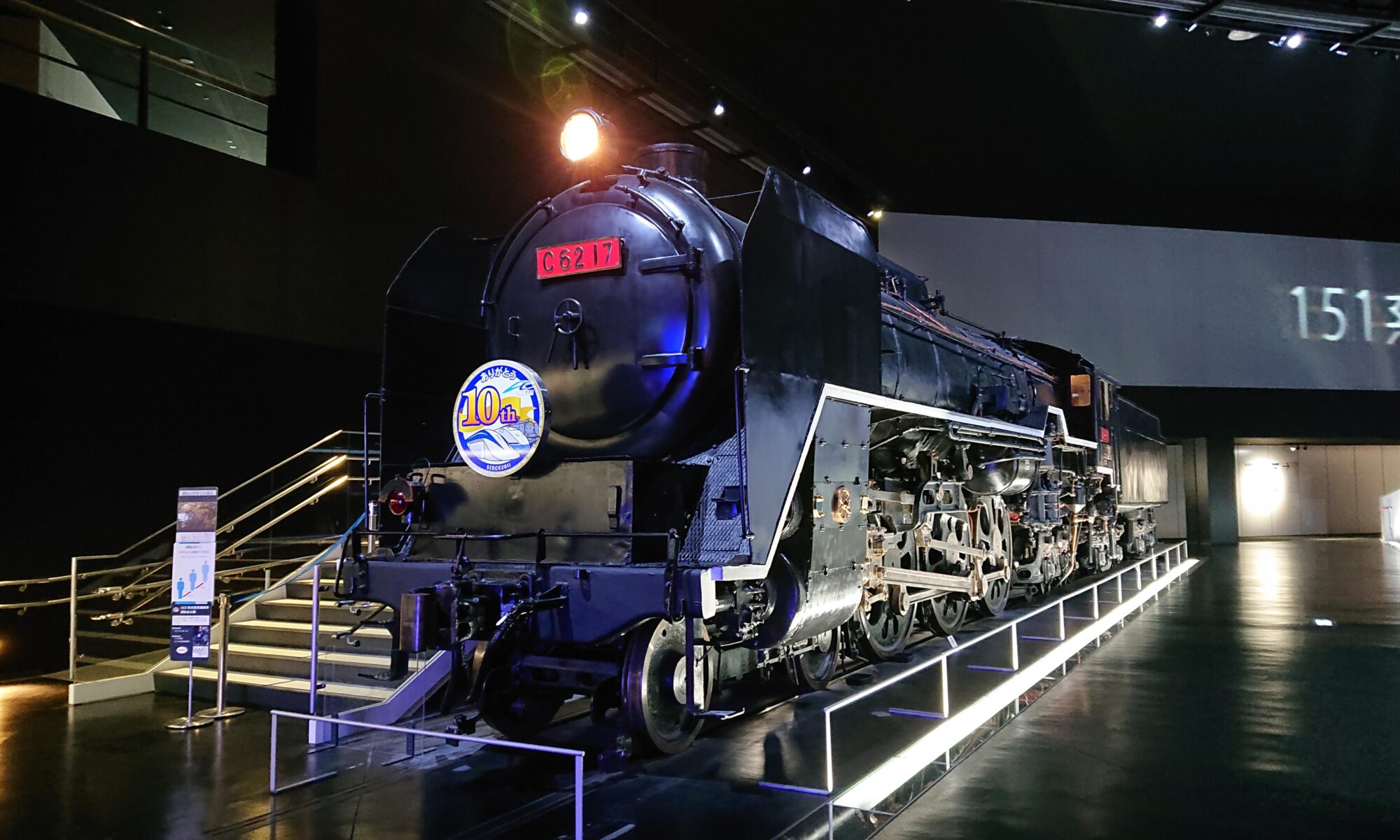
1F Promenade and Main Hall — a C62 steam locomotive among others, with some vehicles you can board and sit in the driver’s seat
2F Vehicle & System — how railways work and how they developed, with plenty of hands-on displays
3F Observation Terrace — views over Kyoto and Umekoji Park, and you can watch real trains running
The roundhouse — over twenty preserved vehicles arranged around a turntable. This is the showpiece
Two hours for a quick visit; four if you want to take your time. That’s a fair way to plan it.
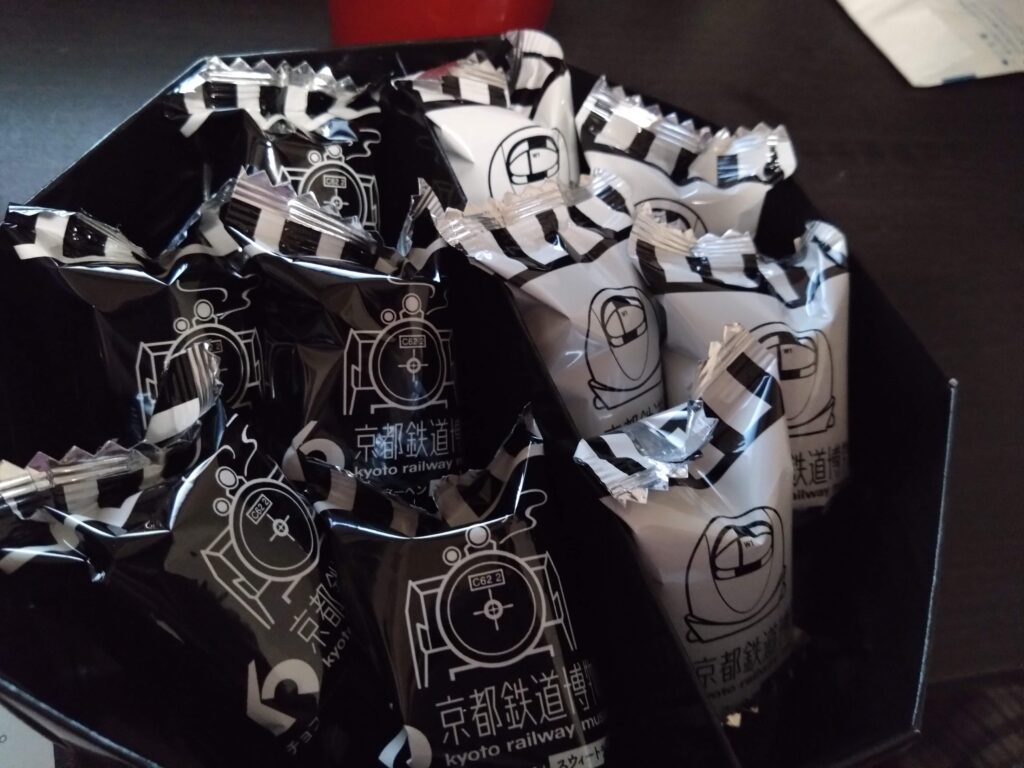
The Souvenir: Chocolate-Coated Baumkuchen
From the museum shop we picked up a chocolate-coated baumkuchen (¥864 including tax).
The packaging carries a railway design and is almost too nice to open. We opened it, and it was very good. The shop is strong on sweets as well as the usual railway merchandise.
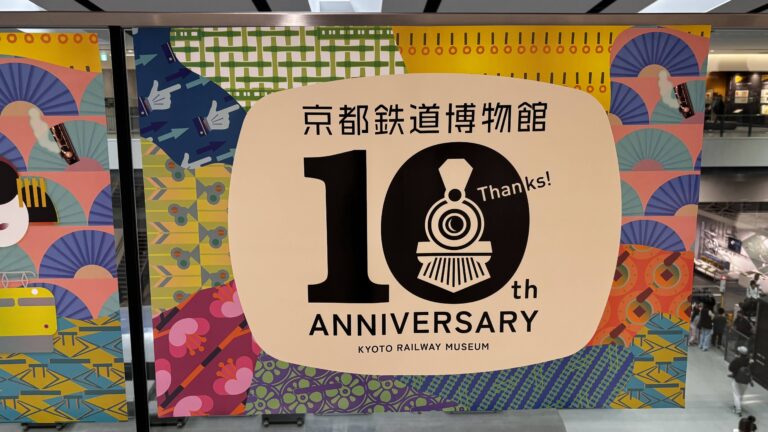
Then in 2026, We Came Back for the 10th Anniversary
The Kyoto Railway Museum opened on 29 April, and reached its tenth anniversary in 2026.
We returned to mark it on 3 May 2026.
The Museum Was Decked Out for the Anniversary
The entrance carried elaborate anniversary decorations, with more scattered throughout the building. At the photo spots the mascots elbowed each other out of the way to pose.
In front of the steam locomotives and Shinkansen it was the same — “Take a photo with me!” “Me too!” The atmosphere of a place marking ten years is infectious.
We Got the 10th Anniversary Commemorative Ticket
The object of the day was the 10th anniversary commemorative ticket. The mascots were airborne when we managed to get hold of one.
Commemorative tickets are issued in limited numbers. If you want to be certain of one, arriving as the museum opens is the safe approach.
And the Thunderbird Home Again
Second visit — the journey (3 May 2026, Sunday) Limited Express Thunderbird No. 26 — Kyoto 16:10 → Shin-Osaka 16:32 (22 minutes) Seats: Car 5, seats 7A and 7B (ordinary car) WESTER Point Ticketless: ¥450 + 200 points per person Purchased 43 minutes before departure
Faced with that blue streamlined nose again, the mascots were every bit as excited as the first time. They sank into their seats and talked through the day all the way home.
When to Go | What Two Visits Taught Us About Crowds
This is the part we could only write by going twice.
First visit
Second visit
Date
1 May 2024 (Wednesday)
3 May 2026 (Sunday)
Timing
A working day between holidays
The middle of Golden Week
Crowds
Genuinely quiet
Busy throughout
Golden Week is Japan’s cluster of public holidays running from late April into early May, and it is one of the busiest travel periods of the year. But it isn’t uniform: a few working days fall in the middle of it, and they behave completely differently.
The museum’s own anniversary falls on 29 April, which pulls extra visitors in during exactly this period. Go on one of the working days in the gap, though, and it was remarkably comfortable.
If your dates are flexible, aim for a weekday in the middle of Golden Week rather than the holidays themselves. If you’re going for an anniversary event, accept the crowds and arrive as the doors open.
Kyoto Railway Museum — Basic Information
Address
Kankiji-cho, Shimogyo-ku, Kyoto
Access
2 min walk from JR Umekoji-Kyotonishi Station / about 20 min from Kyoto Station
Hours
10:00–17:30 (last entry 17:00)
Closed
Wednesdays (the following day if a public holiday), and over New Year
Admission
¥1,500 adults / ¥1,300 university and high school / ¥500 junior high and elementary / ¥200 age 3+
Dates visited
1 May 2024 and 3 May 2026
The museum was open on the Wednesday of our first visit, during the Golden Week period. Check the official site for current opening days before you go.Prices are subject to change.
Summary | Taking the Express on Purpose
Journey
Limited Express Thunderbird (Osaka–Kyoto 27 min / Kyoto–Shin-Osaka 22 min)
Limited express charge
¥450 + 200 points with WESTER Point Ticketless (base fare separate)
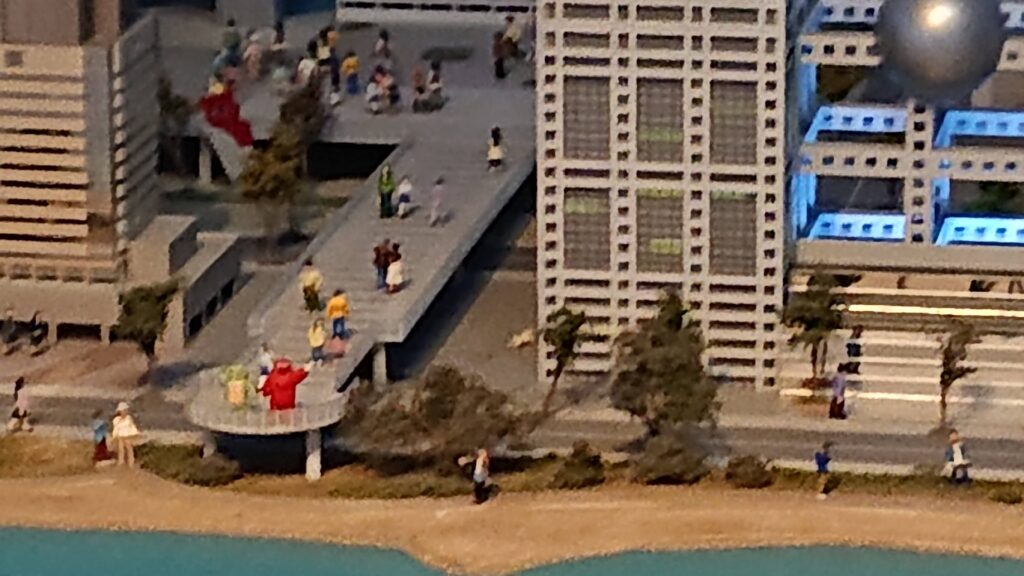
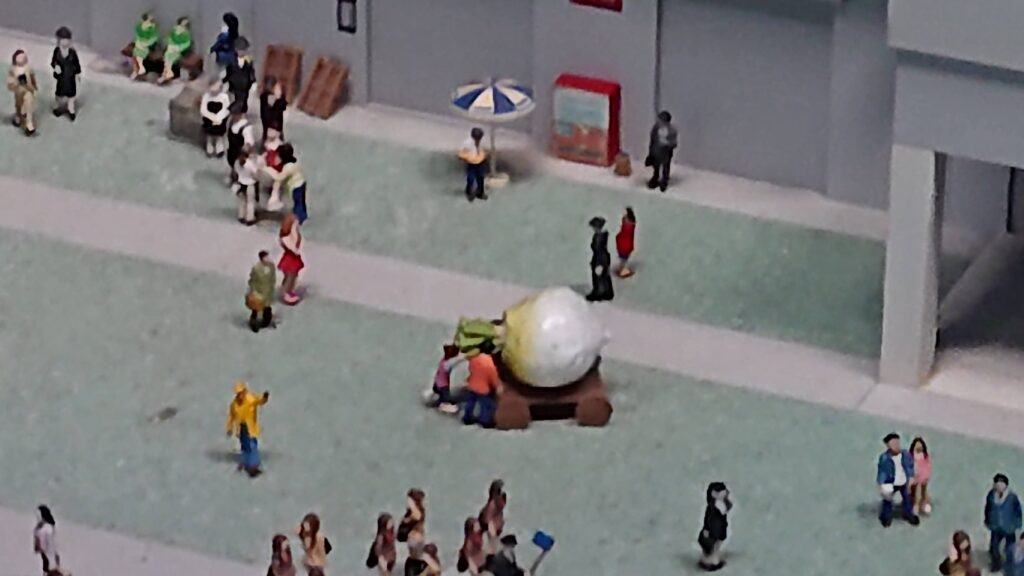
A question to start with: can you tell where this is? Gachapin, Mook and a giant turnip, hidden in the dioramas of the SCMAGLEV and Railway Park in Nagoya.
If You Can Guess This From the Photo, You’re Quite the Expert
A question to start with: can you tell where this is?
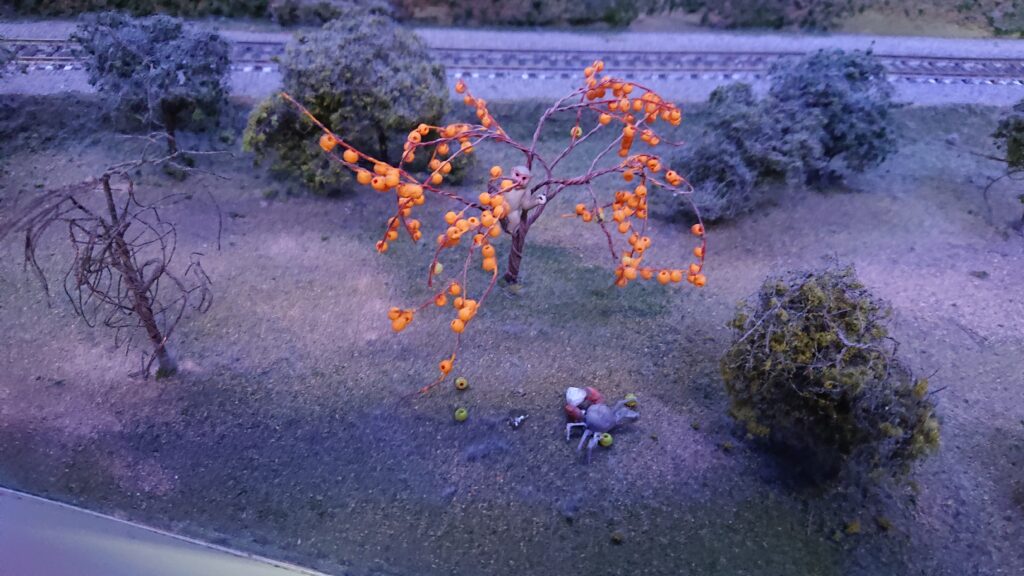
Gachapin and Mook are waving. And then, for some reason, an enormous turnip.
“Wait — a turnip?” We genuinely did a double take.
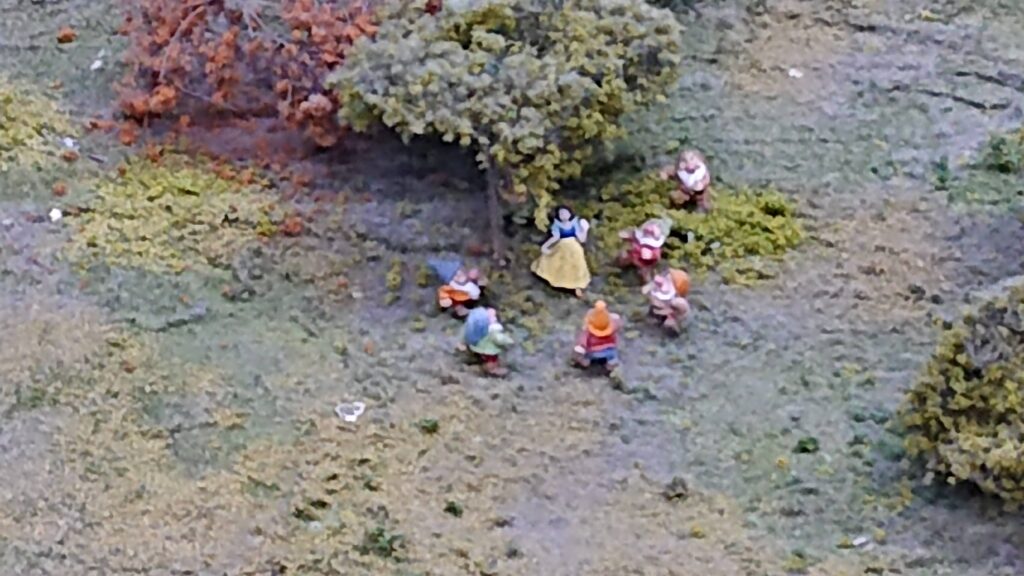
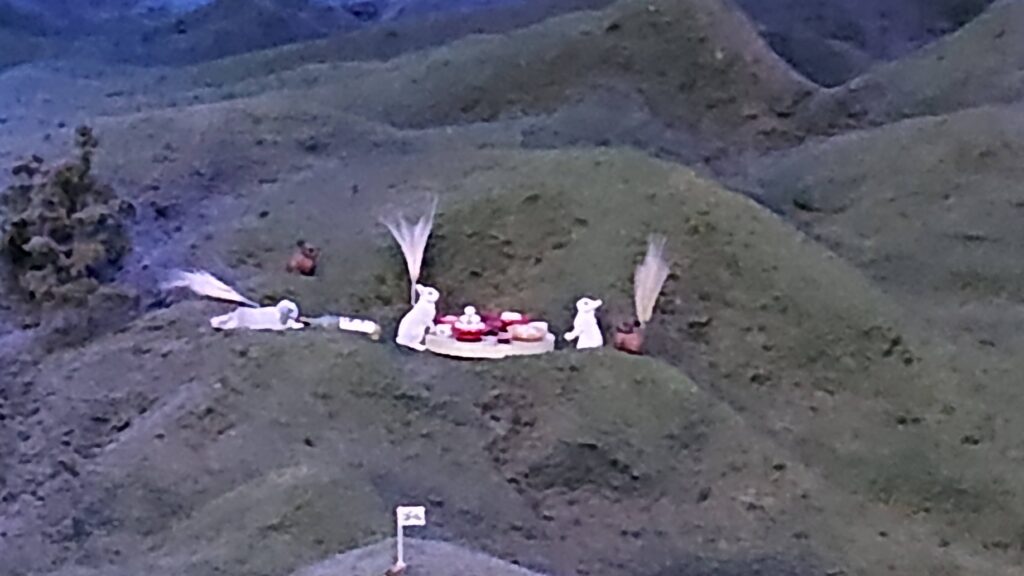
Fairy Tales Hidden All Over the Place
Look closely and there are stories tucked in everywhere.
Snow White
Moon viewing
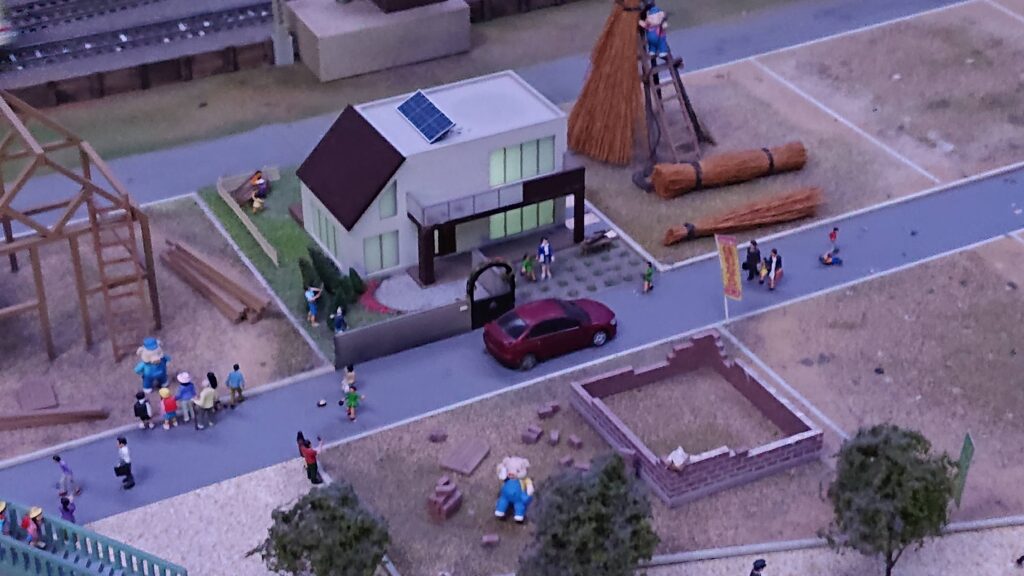
The Three Little Pigs
The Crab and the Monkey
There’s something irresistible about this particular sense of humour.
The Answer Is… the SCMAGLEV and Railway Park
This is the SCMAGLEV and Railway Park in Nagoya. We visited on 7 October 2023.
It’s a museum covering the history and future of the Shinkansen and maglev — but everything in those opening photographs comes from the museum’s diorama. More on that below.
The Maglev in the Flesh — “Why Is Its Face So Long?”
True to the name, the unmissable exhibit is the actual superconducting maglev vehicle.
The mascots’ first reaction on seeing it was this:
“Why is its face so long?”
Fair enough — that distinctive streamlined nose really does make an impression the first time. It’s a futuristic shape, quite different from a Shinkansen, and we stood looking at it for some time.
There’s a section explaining how superconducting maglev works, and the answer to “why is the face so long” is in there too. It leaves you rather keen for the day it actually runs.
A Lineup of Historic Shinkansen
The other major draw is the collection of actual Shinkansen vehicles. The 0 Series, 100 Series and 300 Series all gathered in one hall is quite a sight.
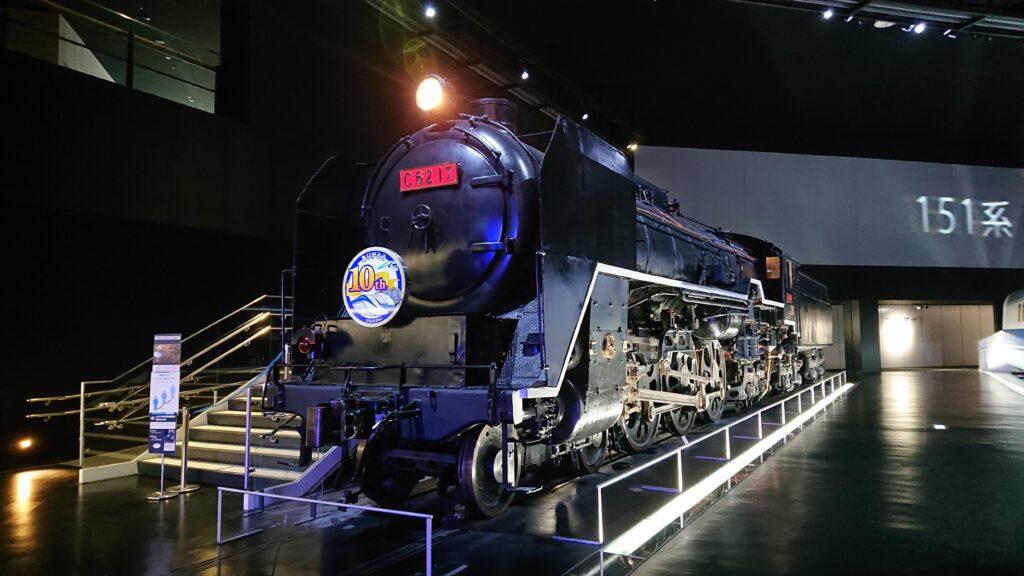
The one with real presence for us was the 151 Series limited express. The polished bodywork carries the engineering of its era rather well.
The Driving Simulators — We Didn’t Get to Try Them
The driving simulators are a popular attraction. To be honest about it: we didn’t get to use them.
Some of the simulators run on a numbered-ticket system, and they’re claimed almost as soon as the museum opens. By the time we thought about it, we were far too late.
If you’re going, check the numbered-ticket situation as soon as you’re through the door. Looking at the exhibits first is exactly what we did wrong. Homework for next time.
We Spent Nearly Two Hours in Front of the Diorama
Those opening photographs — Gachapin and Mook, the giant turnip, Snow White — all come from the museum’s diorama, one of the largest railway dioramas in Japan.
It recreates a day in Japan along the Tokaido Shinkansen: city blocks, farmland, hot spring towns in the mountains, all built in fine detail.
The remarkable part is the lighting, which moves through morning, afternoon and night. What’s more, the diorama compresses a full 24 hours into 20 minutes. Lights come on across the town at nightfall, and the Shinkansen runs with its headlights lit. Those twenty minutes are genuinely beautiful.
How far did it draw us in? We watched the 20-minute cycle two and a half times.
But that isn’t the whole of it. We stayed in front of the diorama during the gaps between cycles as well. All told, we spent close to two hours at this one exhibit.
The reason is that you look at different things during the cycle and between cycles. While the lighting is moving, your eye follows the whole scene changing. When it’s still, you can work through the detail properly. It was during those still periods that we spotted the fairy-tale characters.
Gachapin and Mook, the giant turnip, Snow White. Walk past once and you will not find them.
It’s easy to see why so many visitors say they enjoyed it despite not knowing much about railways. Hunting for Snow White with a child would be good fun.
The Doctor Yellow Exhibit Opened in June 2025
This happened after our visit, but the Doctor Yellow exhibit opened on 14 June 2025.
Doctor Yellow — the yellow inspection train said to bring good luck to anyone who spots it — ended scheduled operation in 2024. Having the actual vehicle on permanent display is reason enough to return.
We didn’t see it on this visit, but we went back in September 2026 and finally did — stepping inside it, and sitting in the driver’s seat of the 300X, which was open for two days only.
SCMAGLEV and Railway Park — Basic Information
Address
3-2-2 Kinjofuto, Minato-ku, Nagoya, Aichi
Access
2 minutes on foot from Kinjofuto Station on the Aonami Line
Opening hours
10:00–17:30 (last entry 17:00, closed Tuesdays)
Admission
¥1,200 adults / ¥500 school age / ¥200 preschool children aged 3 and over(Prices as of September 2026)
Date visited
7 October 2023
Prices and opening hours are subject to change — please check the official site before visiting. (Prices as of September 2026)
Summary | Two Hours Disappear at the Diorama Alone
Highlight
In short
Superconducting maglev
That long nose, in person
Historic Shinkansen
0, 100 and 300 Series lined up
The diorama
24 hours in 20 minutes. We watched two and a half cycles and stayed nearly two hours
Driving simulators
Numbered tickets — claim one as you arrive
Doctor Yellow
On display since 14 June 2025
It’s a place that works for families as much as for railway enthusiasts. Give the diorama more time than you think it needs — we ended up spending close to two hours at that one exhibit.