
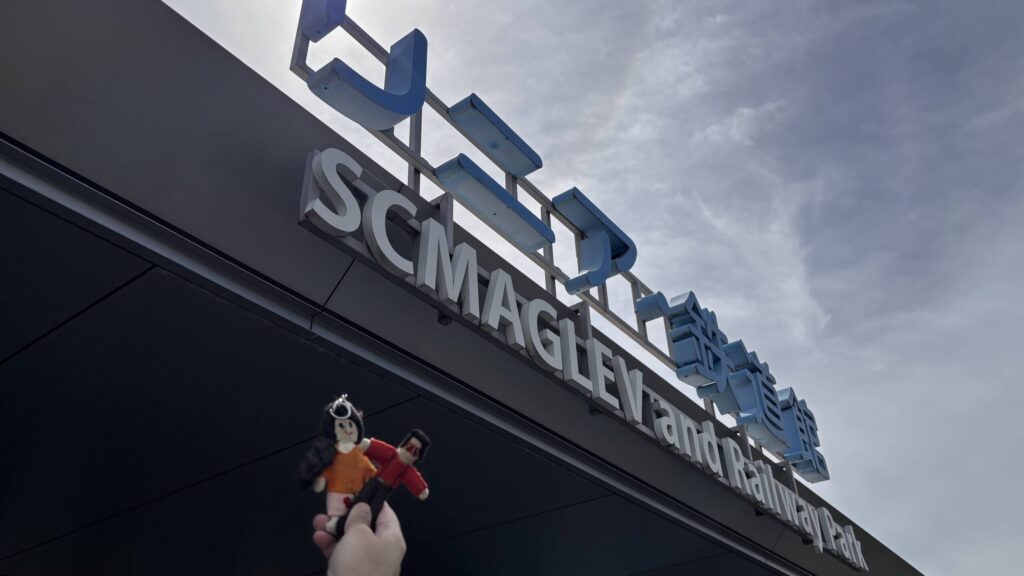
Four hours at the SCMAGLEV and Railway Park: the driver’s seat of the 955 Series 300X, and inside a 923 Series Doctor Yellow. Ninety minutes of it queuing.
Two years on, we went back to the SCMAGLEV and Railway Park. Last time we lost two hours in front of the model railway diorama and left without seeing half the museum. This visit we had two things in mind. One was the Doctor Yellow display, the one we described in our earlier article as “starting soon.” The other was open for these two days only. As it turned out, we ended up inside two different trains that day. Railway vehicles on display are usually something you look at from the outside. Days when you can get in are rare.
Arriving at 11:18, and Straight into the Queue for the 300X
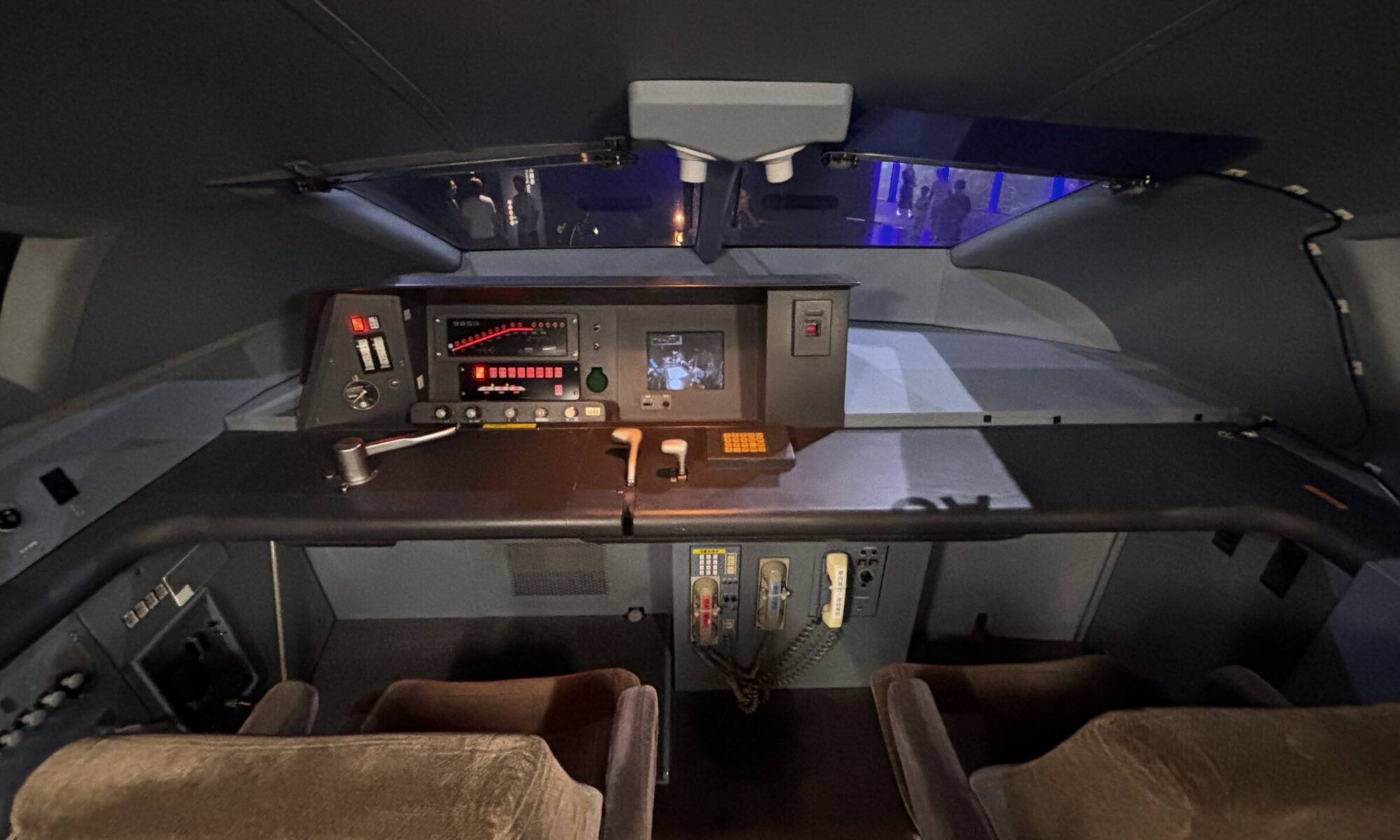
It was a special opening of the interior and driver’s cab of the 955 Series Shinkansen test train, the “300X.” Two days only, 20 and 21 September, with roughly 1,000 people admitted each day on a first-come basis. The notice said you could sit in the driver’s seat.
We hesitated for a moment about joining. In the end we queued for about an hour, and it was the right call.
About the 300X: 443 km/h, set in 1996
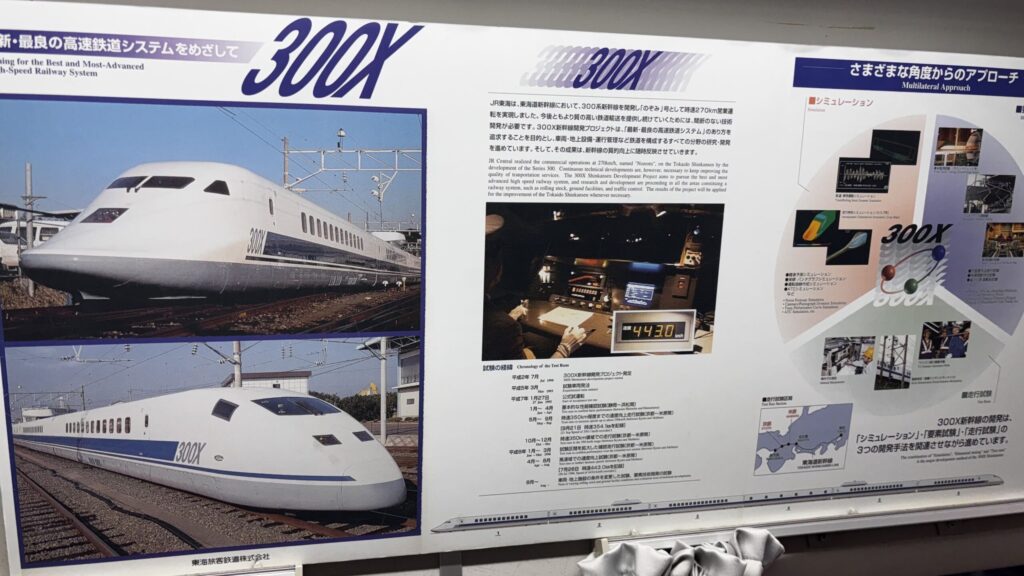
The 300X was a Shinkansen test train developed by JR Central in pursuit of “the best and most advanced high-speed railway system.” Its formal designation is the 955 Series. The project began in July 1990, and on 26 July 1996 the train recorded 443.0 km/h – at the time the fastest speed ever achieved by an electric multiple unit. A photograph of the speedometer from that day is part of the display inside the museum.
Sitting in the Driver’s Seat, Somewhere Nobody Normally Goes
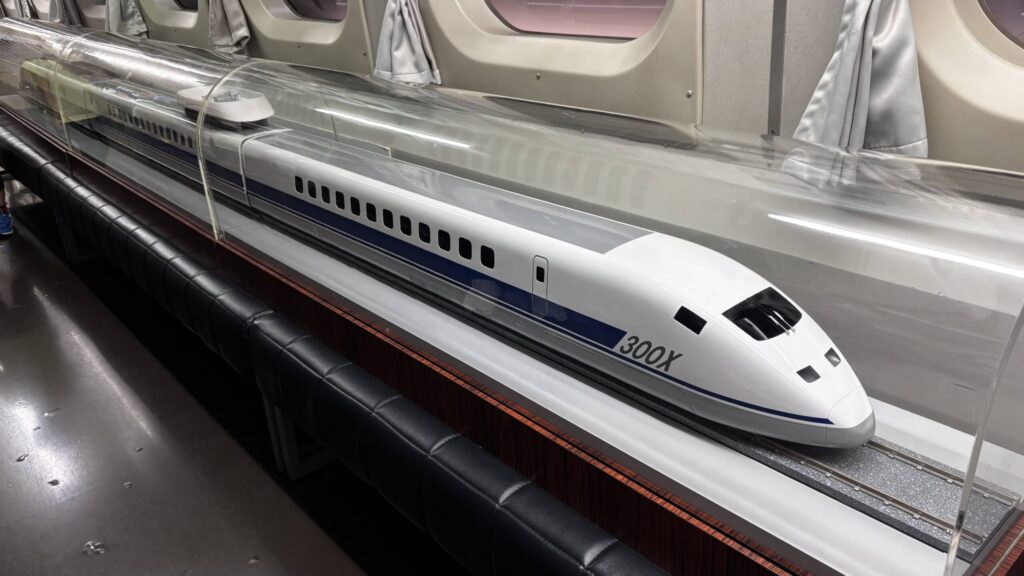
When our turn came, we boarded. Sitting down, we found a model of the 300X in a case right in front of us – looking at the shape of the very vehicle we were sitting in, from inside it.
And then the cab.
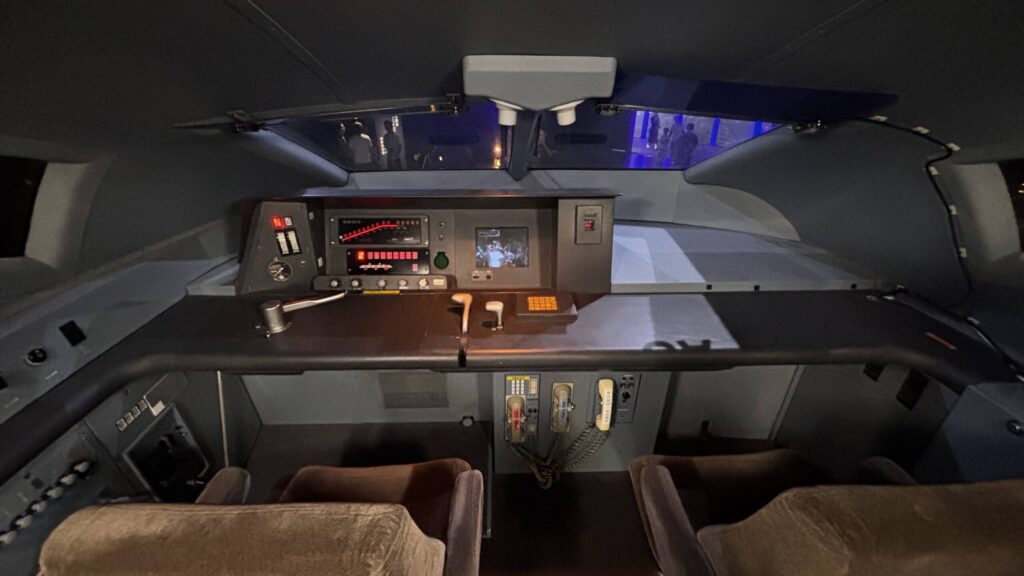
There is an instrument panel, a master controller and a brake handle, and three telephones lined up on the right. Through the windscreen we could see the people still waiting their turn. This is the cab of a test train, so what is laid out in front of the driver is not quite what you would find in a service train. Simply looking at the markings on the speedometer told us what this vehicle had been built to do.
The hour we had spent queuing stopped mattering.
Lunch Meant Another 30 Minutes in Line – Eaten Inside a Display Train
After the 300X came lunch. We bought bento boxes inside the museum.
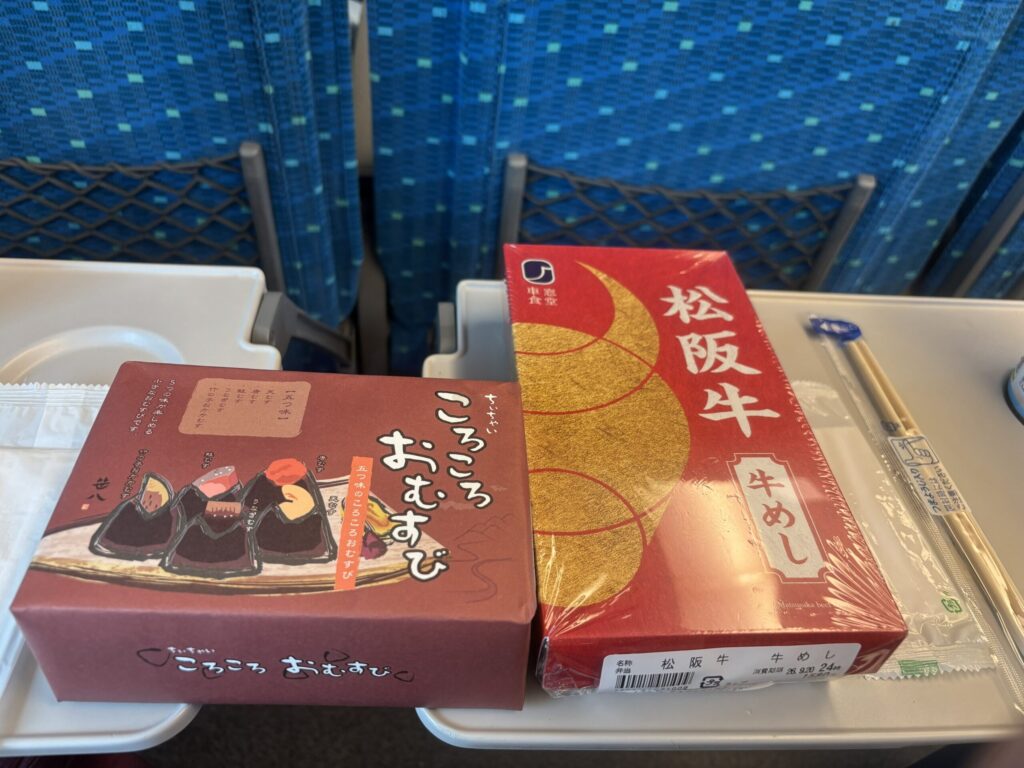
That meant another thirty minutes of queuing. It was a Sunday, so this was hardly a surprise. We chose the Matsusaka Beef Gyumeshi and the Chiichai Korokoro Omusubi, 2,560 yen for the two of us. The latter is a set of small rice balls in five flavours.
The good thing about the SCMAGLEV and Railway Park is that you can eat what you have bought inside the display trains. Sitting in a Shinkansen seat and opening a station bento. The train is not moving, and yet it feels like travelling. Here too, being allowed inside is what makes the place enjoyable.
Inside the Doctor Yellow – Now a 923 Series
Fed and watered, we finally reached the Doctor Yellow.
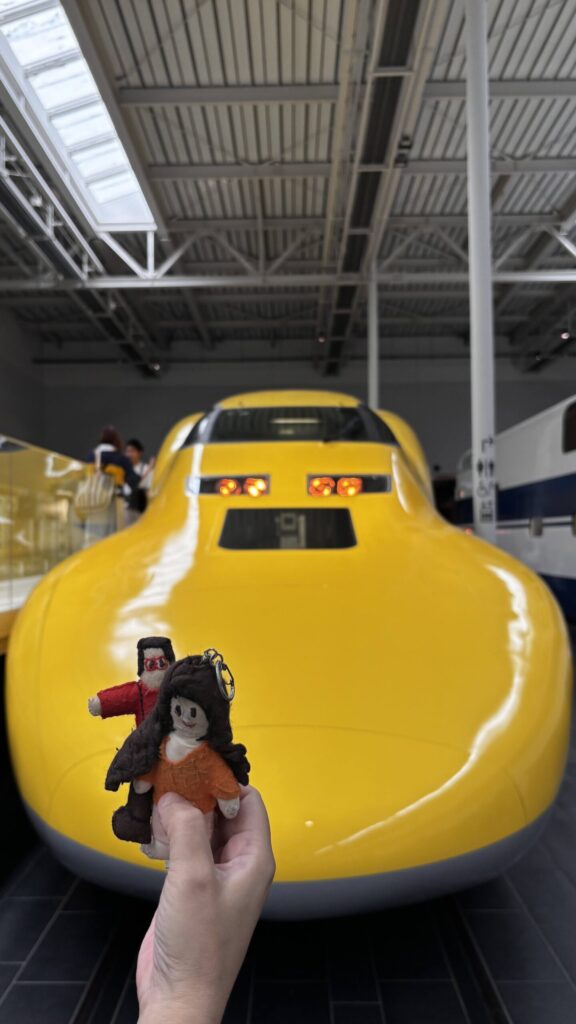
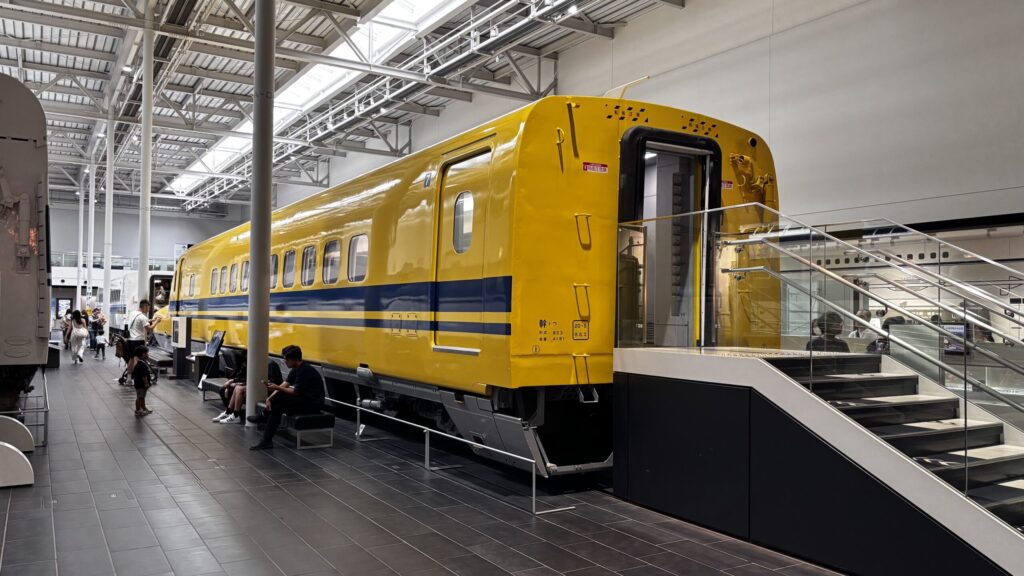
The car on display is number 7 of the 923 Series T4 set, open to the public since 14 June 2025. This time we were able to go inside.
Looking up at the yellow nose, the mascots started making a fuss. The same yellow Shinkansen we saw at Shin-Osaka, they insisted. Strictly speaking it is not the same car – what we photographed that day was car 1, and what stands here is car 7. Even so, the yellow that swept past the platform in a few seconds is now standing still in front of us. That day all we could do was chase it. This time we could look for as long as we liked, and step inside as well.
We Spotted Doctor Yellow at a Live Event! Photographing the Legendary Train Near Shin-Osaka
The One on Display Two Years Ago Was the Older 922 Series
When we came here two years ago, the train in this spot was the previous generation, the 922 Series T3 set. After the 923 Series T4 set finished its working life in January 2025, the 922 was moved out on 7 June that year and the 923 took its place. The 922 that left is now on display at Train Park Hakusan in Ishikawa Prefecture. Come back to the same place after two years and the exhibit itself has been replaced. We had not expected that.
The Diorama at Night, and the Work of Maintenance
The Doctor Yellow is a maintenance vehicle: it inspects the track and the electrical equipment. Perhaps because of its arrival, the museum seemed to us to have more on maintenance than it did before.
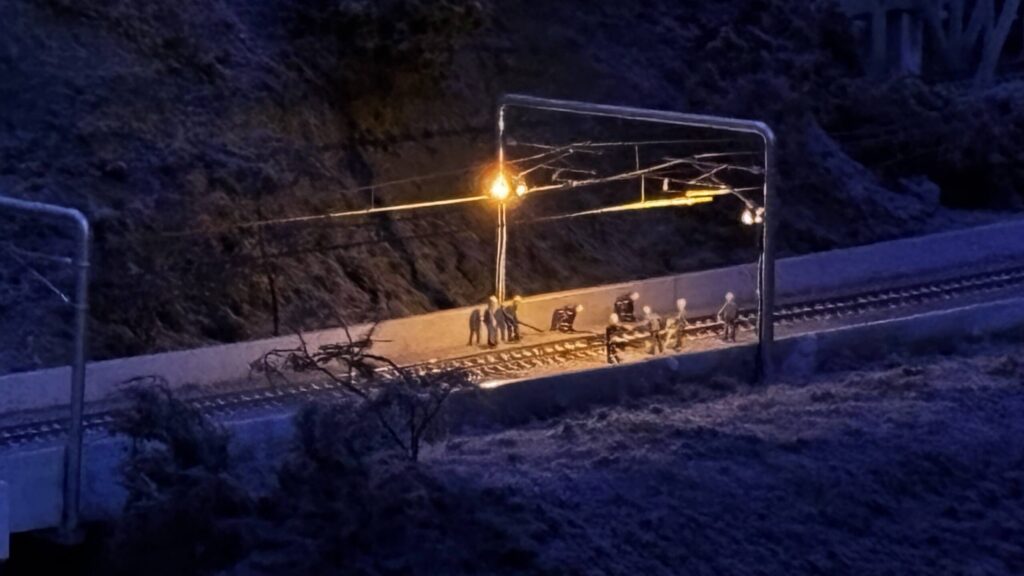
The large diorama moves through the hours, and eventually night falls. Lights come on beside the darkened track, and looking closely we found a line of maintenance workers at work on the rails. It is a quiet scene, quite unlike the bright running sequences of the daytime. Somebody is out repairing the track during the hours when no trains run. We stood watching that for a while, struck that anyone had thought to model it.
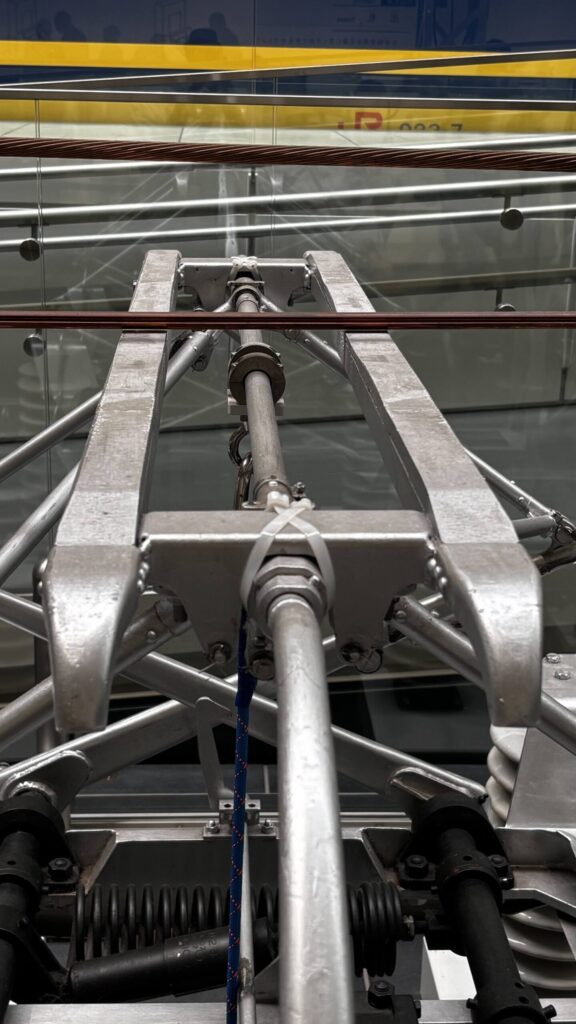
The full-size exhibits were just as good. A pantograph and its contact wire are set close enough to touch. Normally these things are high above you and can only be looked up at; the chance to see one from the side is rare. The whole current is collected through a single point where the contact strip meets the wire. Seen properly, it looks a remarkably slender arrangement.
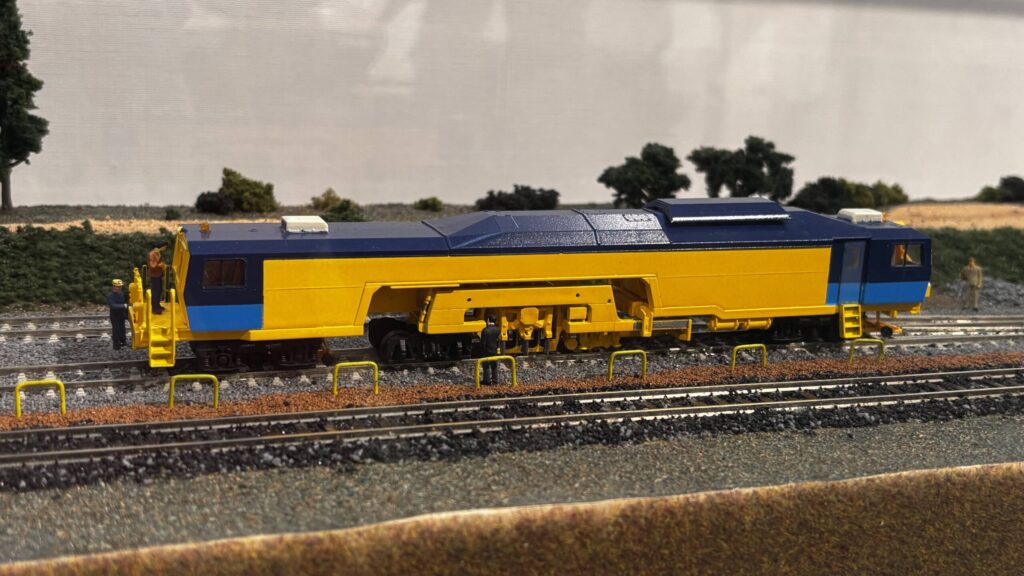
There was a model of a maintenance vehicle on display too – yellow and blue, carrying the machinery used to tamp and align the track. An unglamorous train, but laid out like this it gives you some sense of what goes on behind the scenes to keep a railway running.
What It Cost, and Where the Four Hours Went
Here is what we spent, and how the time broke down.
Admission: 1,200 yen per adult x 2 = 2,400 yen
Bento: Matsusaka Beef Gyumeshi + Chiichai Korokoro Omusubi = 2,560 yen
Total: 4,960 yen
We were there from 11:18 to 15:30 – four hours and twelve minutes.
To be honest about it, an hour and a half of that was spent queuing. An hour for the 300X, thirty minutes for lunch. Out of four hours, that is more than a third.
It still did not feel like a long visit. If anything, we ran short of time for the exhibits. If you expect to queue for something, the safest plan is to be there when the doors open at 10:00. Our 11:18 arrival was, on reflection, a little late.
In Summary: What We Couldn’t Do Last Time, We Did This Time
Our earlier article carried this heading: the driving simulator, which we never got a turn on. The queue never reached us.
Two years later, it was not a simulator we sat in but a real cab. And not just any cab: the one from a test train that recorded 443 km/h.
The display we described back then as “starting soon” is one we have now properly seen. There is something satisfying about a trip taken to close a loop you opened yourself.
Best of all this time was being allowed inside two trains – the cab of the 300X and the interior of the Doctor Yellow. Neither is somewhere you can normally go. We had thought of exhibited vehicles as things to be viewed from outside; from within, what you take away is a different thing entirely. The SCMAGLEV and Railway Park changes between visits. Sometimes the vehicles themselves are swapped out. It is not a place you can tick off after going once.
We Visited the SCMAGLEV and Railway Park! From Gachapin & Mook to a Giant Turnip