A Summer Day Trip to Kyoto: The Mitarashi Festival, Echoes of Gion Matsuri, and Honno-ji Temple

When you think of summer in Kyoto, the Gion Festival is probably the first thing that comes to mind. This time, I hopped on the Keihan Railway’s rapid limited express “Rakuraku” for a day trip covering the Mitarashi Festival at Shimogamo Shrine, the Shijo area where traces of the Gion Festival linger, and Honno-ji Temple — a must-see for history fans. Here’s my full report on the charms of Kyoto that you can only experience in the heat of summer!

Starting the Trip in Comfort on the Keihan Rapid Limited Express “Rakuraku”

Whenever I travel from Osaka to Kyoto, my goto train is the Keihan Railway’s rapid limited express “Rakuraku.” You can board at Yodoyabashi or Kyobashi Station, and with only a few stops along the way, it whisks you to Demachiyanagi Station in no time. True to its name — a play on words meaning “to Kyoto (Raku), with ease (raku)” — the concept itself is charming.

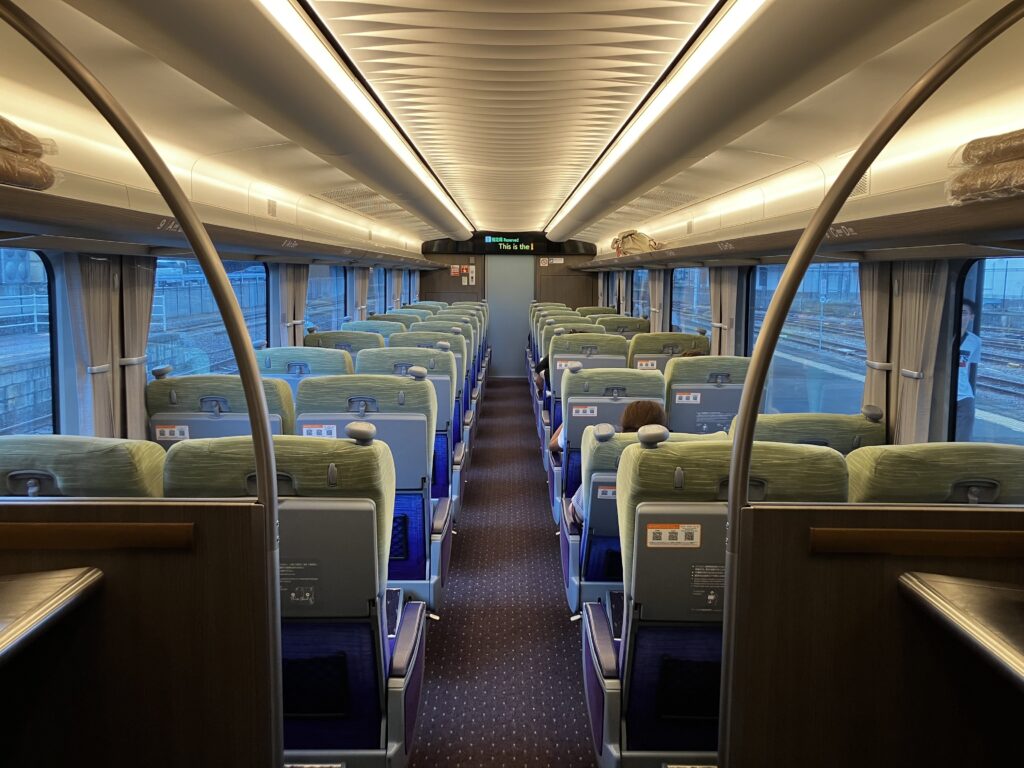
The best thing about the Rakuraku is, without a doubt, its comfort. If you opt for the Premium Car, you can spend the ride in style in a spacious reclining seat. The Uji River and Kyoto’s townscape drift past the window, building anticipation for the day ahead. Departing while the morning is still cool also means you get a full day for sightseeing. This time, I left Yodoyabashi Station around 10 a.m. and arrived at Demachiyanagi Station about 50 minutes later. Note that the Rakuraku mainly runs on weekends and public holidays, so be sure to check the schedule before you go. Advance reservations are required for the Premium Car — book here!
Praying for Good Health at Shimogamo Shrine’s Mitarashi Festival

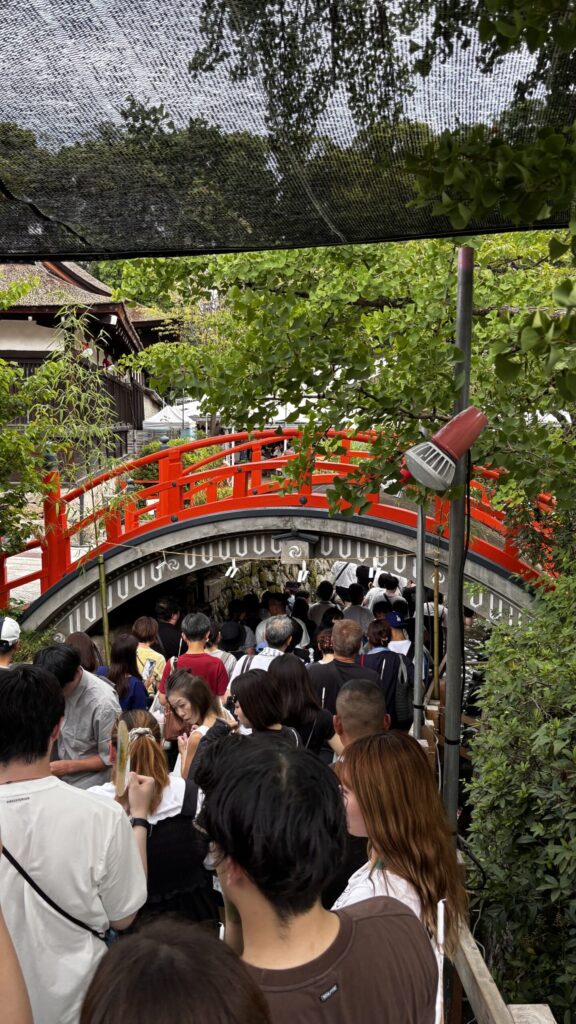
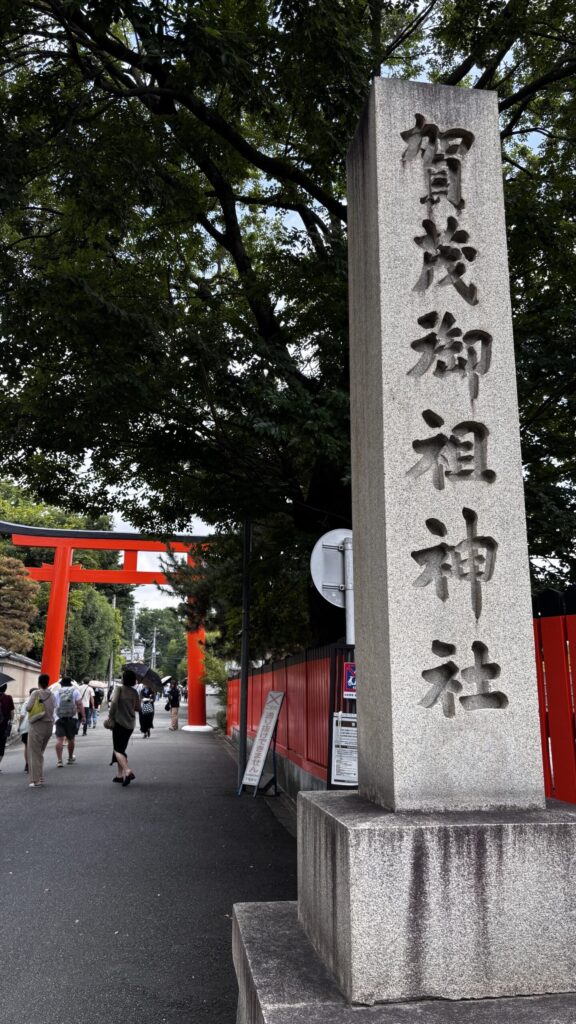
About a 12minute walk from Demachiyanagi Station, I arrived at Shimogamo Shrine, nestled in the greenery of the Tadasu no Mori forest. Officially known as Kamo Mioya Shrine, it is a venerable shrine registered as a UNESCO World Heritage Site. Summer at Shimogamo Shrine is synonymous with the famous Mitarashi Festival, held every year around the “Doyo no Ushi” day of midsummer.

Also known as the “footdipping ritual” (ashitsuke shinji), the Mitarashi Festival is a beloved summer tradition in which visitors wade into the shrine’s Mitarashi Pond to pray for health and protection from illness. Holding a candle in hand, you walk through the chilly spring water. The water is said to stay around 15°C even in summer — cold enough to make you gasp at first! But as I kept walking, it strangely began to feel pleasant, and I felt a refreshing sensation, as if all the impurities were being washed out of my body.

I offered my candle at the small shrine at the far end of the pond and prayed earnestly for good health. After drying your feet, you can also write a wish on an “ashigata kitogi” (foot-shaped prayer plaque) available at the shrine and dedicate it. And here’s a fun fact: this Mitarashi Pond is said to be the birthplace of mitarashi dango, the famous sweet soy-glazed dumplings! After your visit, be sure to try some at a nearby teahouse — the fragrant aroma of freshly grilled dango is irresistible.

A word of advice: weekends during this period get extremely crowded. That said, the Tadasu no Mori forest provides plenty of shade, and the line moves quickly, so this is one ritual I wholeheartedly recommend experiencing.

Strolling Shijo and the Otabisho: Echoes of the Gion Festival

Leaving Shimogamo Shrine behind, I took the Keihan Line from Demachiyanagi to Gion-Shijo Station. In July, Kyoto is all about the Gion Festival. Even if you miss the grand float processions of the Saki Matsuri (early festival) and Ato Matsuri (later festival), the afterglow of the celebration lingers everywhere.

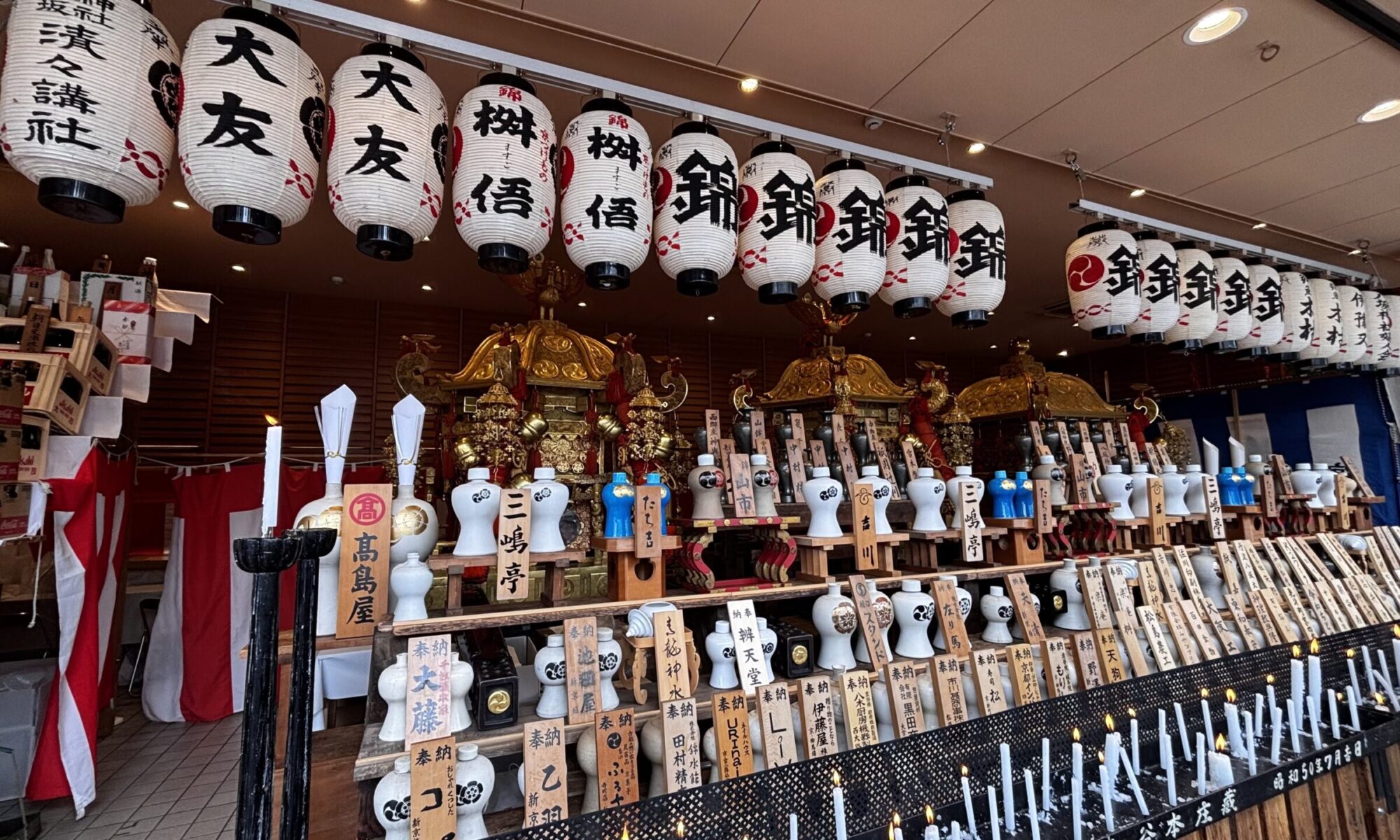
Walking along Shijo Street, I came across the Otabisho — the resting place where the portable shrines (mikoshi) of Yasaka Shrine are enshrined after the Shinkosai procession. Known as the Shijo Otabisho, it stands on Shijo Street just east of Teramachi Street. During the Gion Festival, the mikoshi remain here for seven days, receiving the prayers of the townspeople. Even when the mikoshi are absent, passing by the Otabisho you can sense the living history and tradition of the Gion Festival — I couldn’t help but stop and take it all in.

Step into the side streets off Shijo, and you’ll catch glimpses of how deeply the festival is woven into local life: machiya townhouses that retain the atmosphere of the historic float-building neighborhoods, residents putting away festival lanterns, and more. Visiting slightly off-peak lets you connect with Kyoto’s culture on a deeper level — one of the true joys of travel.
Honno-ji Temple and the Site of the Honno-ji Incident: Visiting a Turning Point in History

A short walk north from Shijo brought me to Honno-ji Temple on Teramachi Street. The temple is famous for the “Honno-ji Incident,” but here’s the thing: the present-day Honno-ji actually stands in a different location from where Oda Nobunaga met his end.

The current temple was relocated to this site in 1591 (Tensho 19) as part of Toyotomi Hideyoshi’s redevelopment of Kyoto. The grounds include a memorial tower for Nobunaga and a treasure museum displaying items connected to him — an absolute delight for fans of Sengoku-era history. After paying my respects at the main hall, I toured the museum and viewed Nobunaga’s personal effects and letters. The history you learned from textbooks confronts you here as vivid reality.

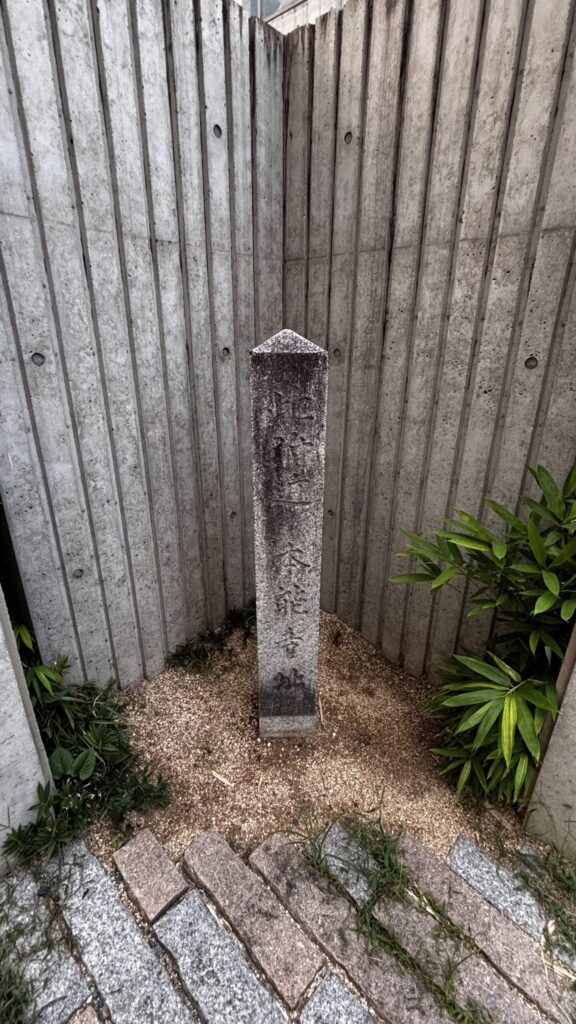
And there’s one more place I urge you to visit: the site of the original Honno-ji. The actual location of the Honno-ji Incident lies about one kilometer west of the current temple, near the intersection of Aburanokoji and Takoyakushi Streets. Today, only a stone marker and an information board remain, surrounded by apartment buildings and shops. Yet standing on that unassuming street corner, you can’t help but be moved by the thought that an event which changed the course of Japanese history happened right here. Visiting both the temple and the original site gave me a much deeper appreciation of the layers of history.

In Closing: Summer in Kyoto Is Best Enjoyed Chasing History and Cool Relief

This trip packed a lot into one day: a comfortable ride on the Keihan Rakuraku, cooling off at Shimogamo Shrine’s Mitarashi Festival while praying for good health, strolling the Shijo area still aglow with the spirit of the Gion Festival, and soaking in history at Honno-ji Temple and the site of the original temple.

Kyoto summers have a reputation for brutal heat, but there are plenty of places to stay cool — the chilly spring water of the Mitarashi Festival, the shade of the Tadasu no Mori forest, and more. And by timing your visit to avoid peak events like the float processions, you can enjoy the festival atmosphere without the crowds. History, nature, and living traditions — that’s summer in Kyoto. Hop on the Rakuraku and discover your own Kyoto journey!

[Farewell, 500 Series Hello Kitty Shinkansen] A Journey Through Western Japan on Character Trains — Including the Anpanman Train to Tokushima!

Spring 2026 — the day has finally come. With the beloved 500 Series Hello Kitty Shinkansen heading into retirement, we set off on one last ride to bid it farewell! We also hopped aboard the Anpanman Train in Shikoku, making this a dream trip packed with character trains from start to finish.


The Pink Dream Train: Hello Kitty Shinkansen

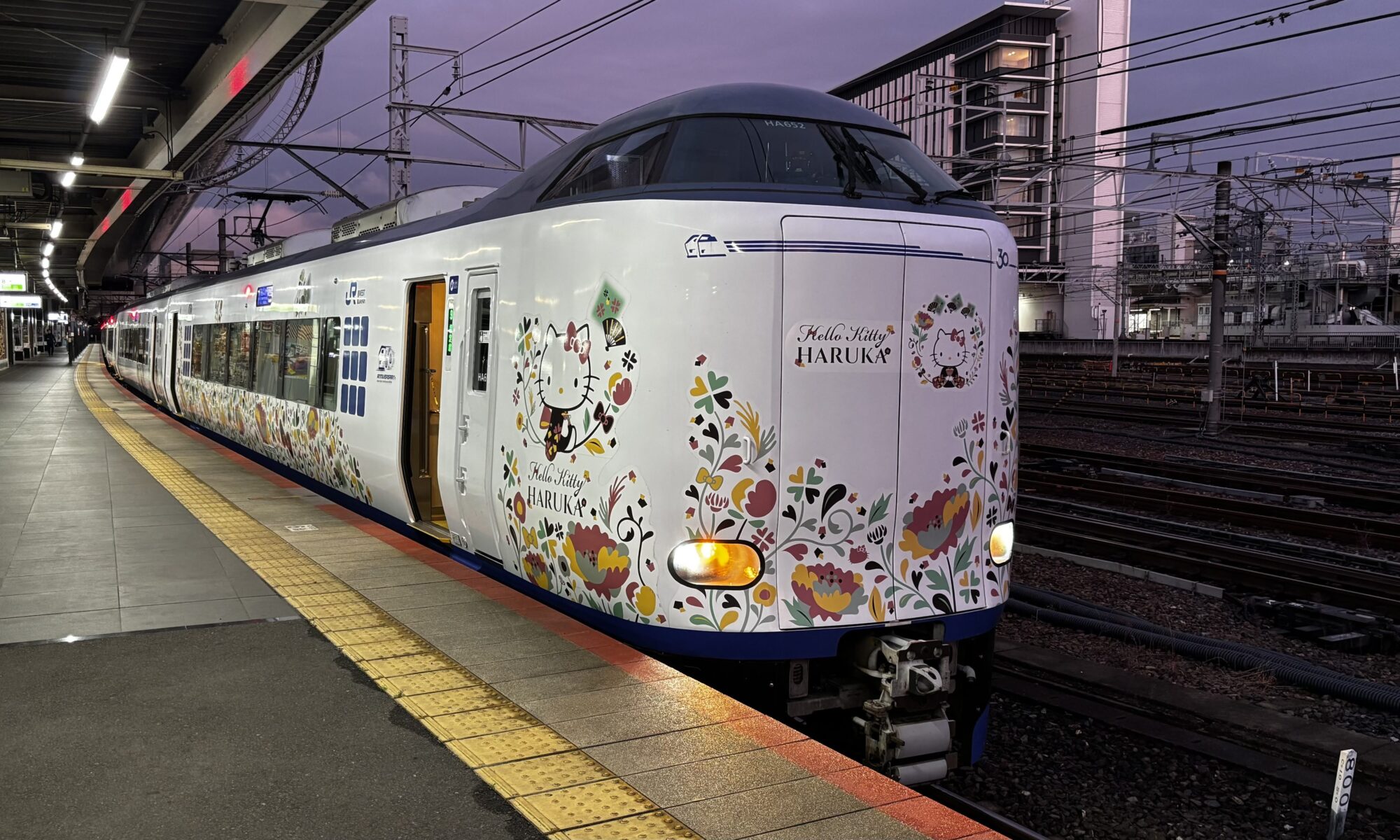
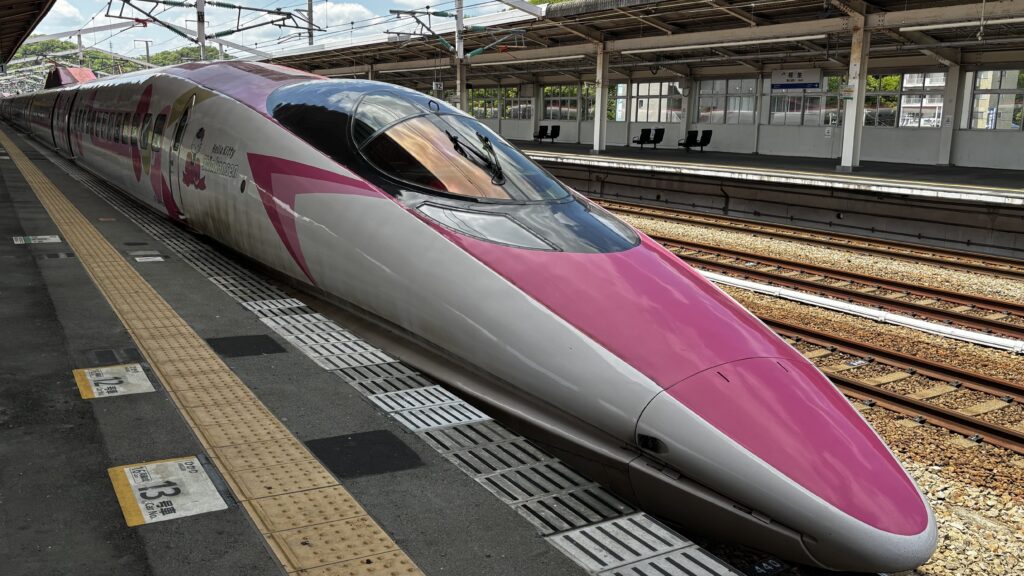
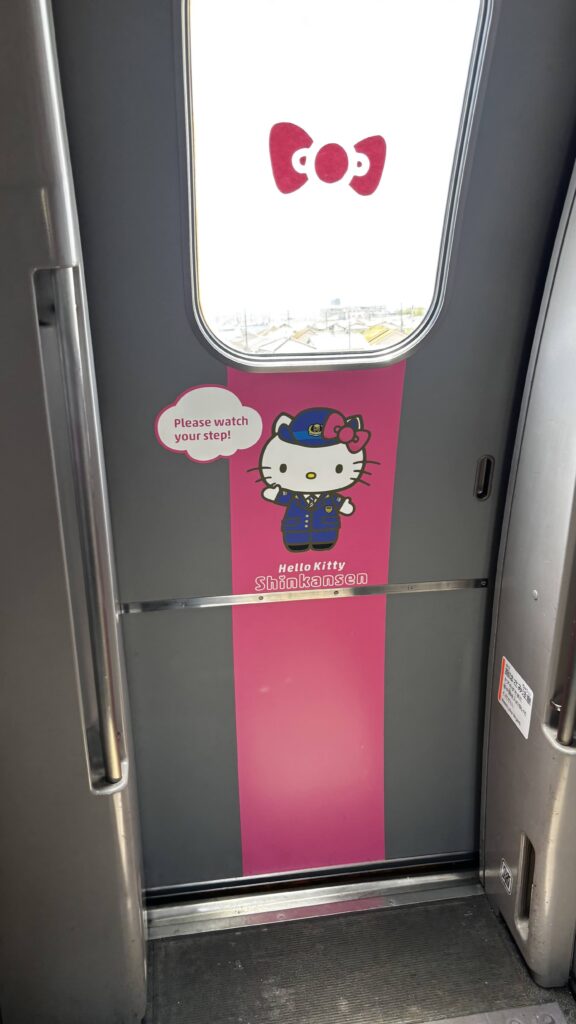
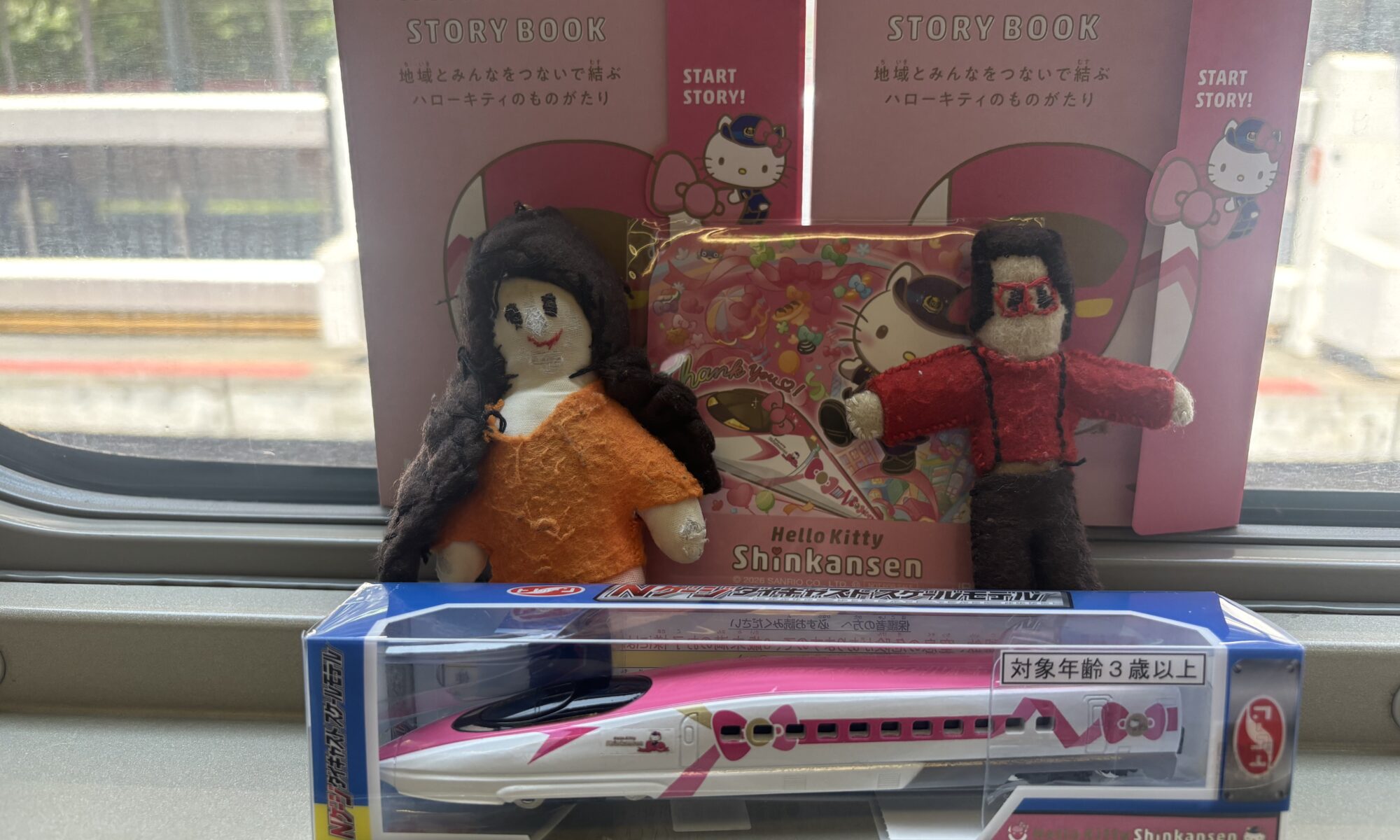
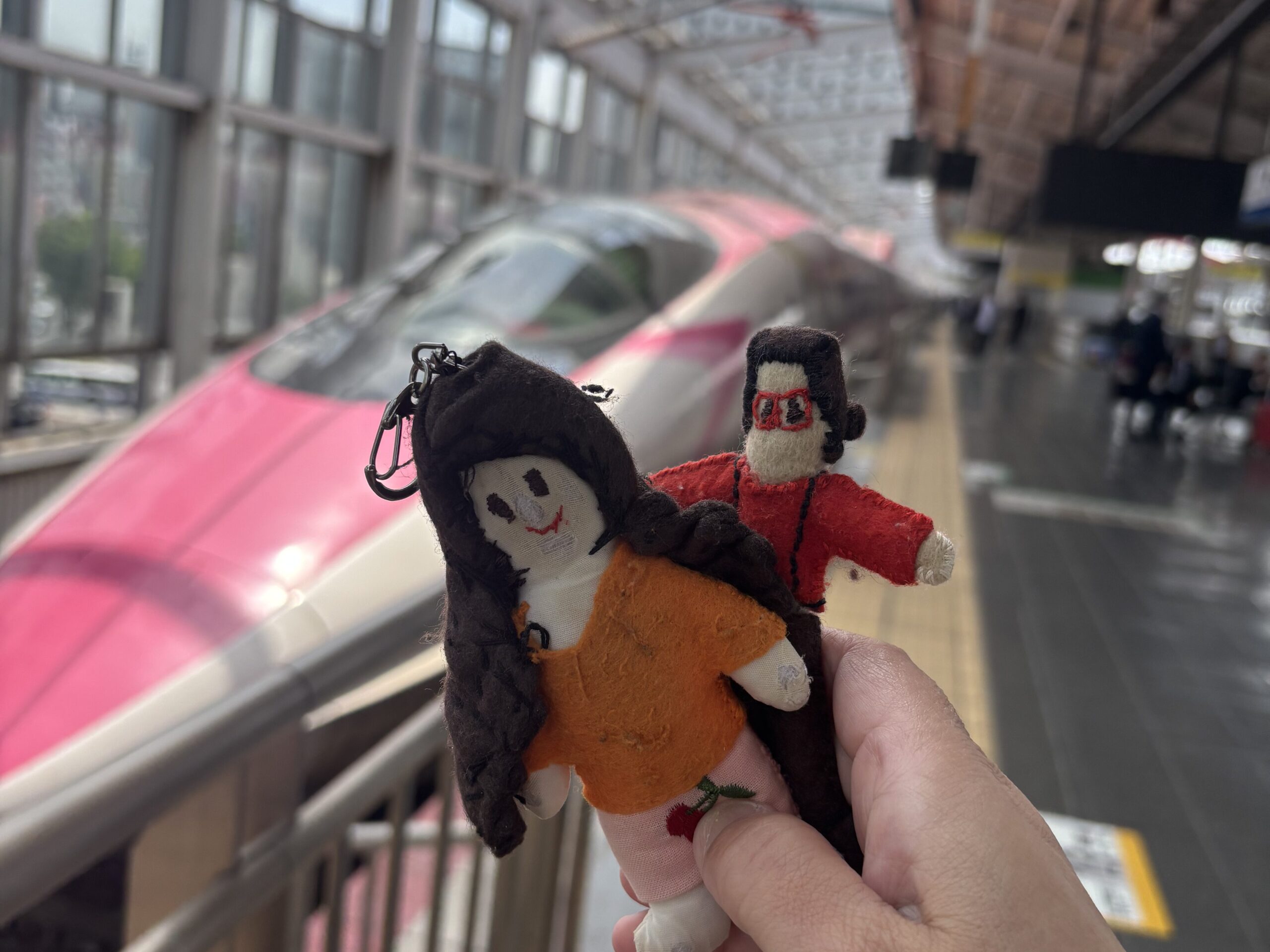
As the vivid pink 500 Series Hello Kitty Shinkansen glided into the platform at Shin-Osaka Station, our mascots let out a collective “Wow, it’s real! So cute!” — and stood completely frozen on the platform for a good while.

Since its debut in 2018, this train has captured the hearts of fans across Japan with its charming appearance. The 500 Series, with its sleek aerodynamic form, was once the fastest Shinkansen on the Nozomi route — a legendary train in its own right. Wrapped in Hello Kitty’s iconic style, it took on an entirely new kind of charm.

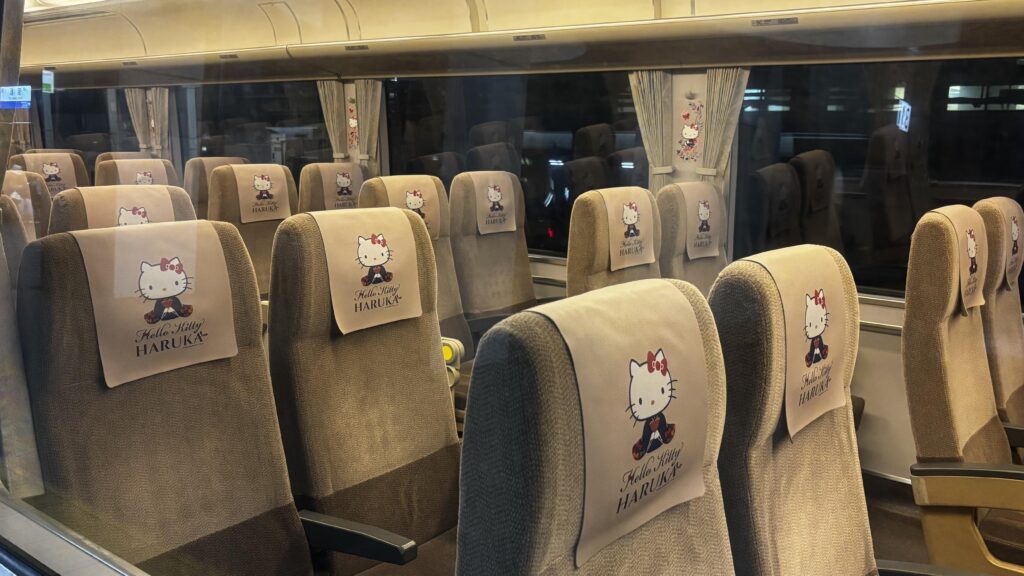
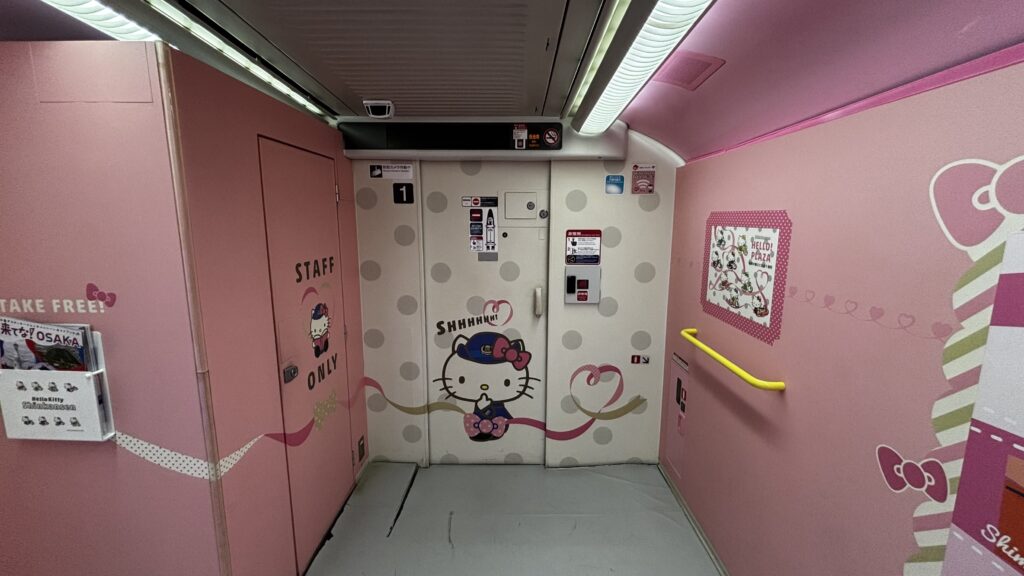
Stepping inside, Car 1 — the “HELLO! PLAZA” — was filled with limited-edition merchandise and photo spots. The corner where you could take commemorative photos with Hello Kitty was especially popular, given that this was one of the final rides. Even the headrest covers featured Hello Kitty designs, showing just how much attention to detail went into every corner of the train. The roughly one hour to Okayama passed like a dream, with our mascots smiling the entire way.

💡 Travel Tip: The HELLO! PLAZA in Car 1 is located in the unreserved seating area, meaning you can visit the shop and photo spots with just a regular ticket. It gets crowded quickly, so head there as soon as you board!


Shikoku’s Beloved Icon: The Anpanman Train to Tokushima

From Okayama, we boarded the Marine Liner rapid service across to Takamatsu — and from there, our Shikoku adventure truly began. We were about to ride the Anpanman Train on the Kotoku Line, a service that launched in October 2025. Operated by JR Shikoku, the Anpanman Train runs on multiple routes centered around Kochi, the hometown of creator Takashi Yanase.

The moment our mascots spotted Anpanman and his friends painted across the entire side of the train, they burst out with “Anpanman! Baikinman is there too!” — pure joy. It’s the kind of sight that brings out the child in anyone. The interior is completely themed around the world of Anpanman, creating a space that puts smiles on the faces of families with children and adults alike. There were also unique characters like “Udon-chan” and “Udon-kun,” a charming nod to the region’s famous Sanuki udon — just one of many delightful surprises waiting inside the train.

💡 Travel Tip: The Anpanman Train operates on specific dates and routes. Be sure to check the official JR Shikoku website for the current schedule before making your plans.


What Makes Character Trains So Special

Both the Hello Kitty Shinkansen and the Anpanman Train are more than just a way to get from A to B — they are destinations in themselves. Character trains give children something to dream about, while offering adults a sense of nostalgia and warmth. Gazing out the window, surrounded by beloved characters, turns an ordinary journey into something truly memorable.

Saying goodbye to the 500 Series Hello Kitty Shinkansen is bittersweet — but the memories from this trip will stay with us forever. If you ever get the chance, hop aboard one of Japan’s many character trains and experience the magic for yourself!


Trip Summary

TrainRouteHighlights
500 Series Hello Kitty ShinkansenShin-Osaka → OkayamaHELLO! PLAZA in Car 1, limited-edition merchandise
Marine LinerOkayama → TakamatsuScenic Seto Inland Sea crossing
Anpanman Train (Kotoku Line)Takamatsu → TokushimaLaunched October 2025, Udon-chan & Udon-kun characters

📝 500 Series Hello Kitty Shinkansen — Basic Information

TrainRouteFeatures
500 Series Hello Kitty ShinkansenShin-Osaka~HakataCar 1 “HELLO! PLAZA,” limited merchandise
Anpanman TrainOkayama~ShikokuYuuyuu Anpanman Car, playroom onboard

📝 500 Series Hello Kitty Shinkansen — Key Facts

・Route: Shin-Osaka to Hakata
・Travel time: Approx. 2.5 hours (compared to Nozomi)
・Operation period: 2018 – May 17, 2026 (service ended)
・Features: Car 1 “HELLO! PLAZA” with Kitty-themed interior
・Reservations: JR tickets, e5489, or Midori-no-madoguchi

💡 For Those Considering a Ride
The 500 Series Hello Kitty Shinkansen concluded its service on May 17, 2026. For information on successor character trains, please visit the JR West official website.

A Chance Encounter with the E8 “Kabuki Color” at Utsunomiya Station — But We Couldn’t Ride It

A rare business trip to Utsunomiya, and an unexpected encounter on the way home. Along with a good deal of regret.

Heading Home After Work

When we book the Shinkansen home from a business trip, we almost always choose whatever leaves soonest after the work finishes. Meetings can overrun, or wrap up early, so the priority is simply “the first train we can catch.”

This trip was no different. We gave no thought at all to which train it would be.

Our usual line is the Tokaido Shinkansen; we rarely have reason to use the Tohoku Shinkansen. It had been a long time since we’d even been to Utsunomiya.

A Streak of Crimson on the Platform

Glancing idly at a phone on the platform, we had the sense that the light coming into the station had turned red, and looked up.

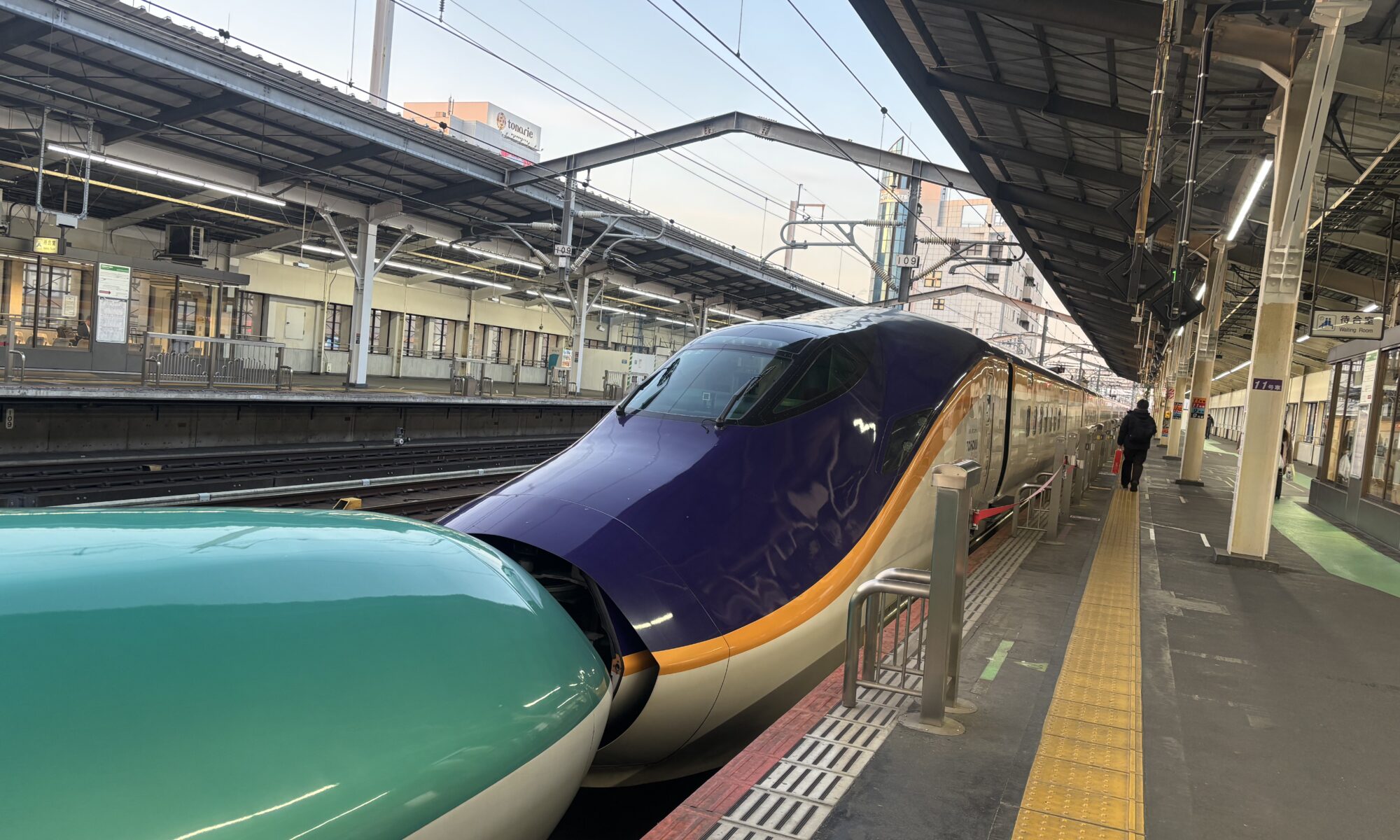
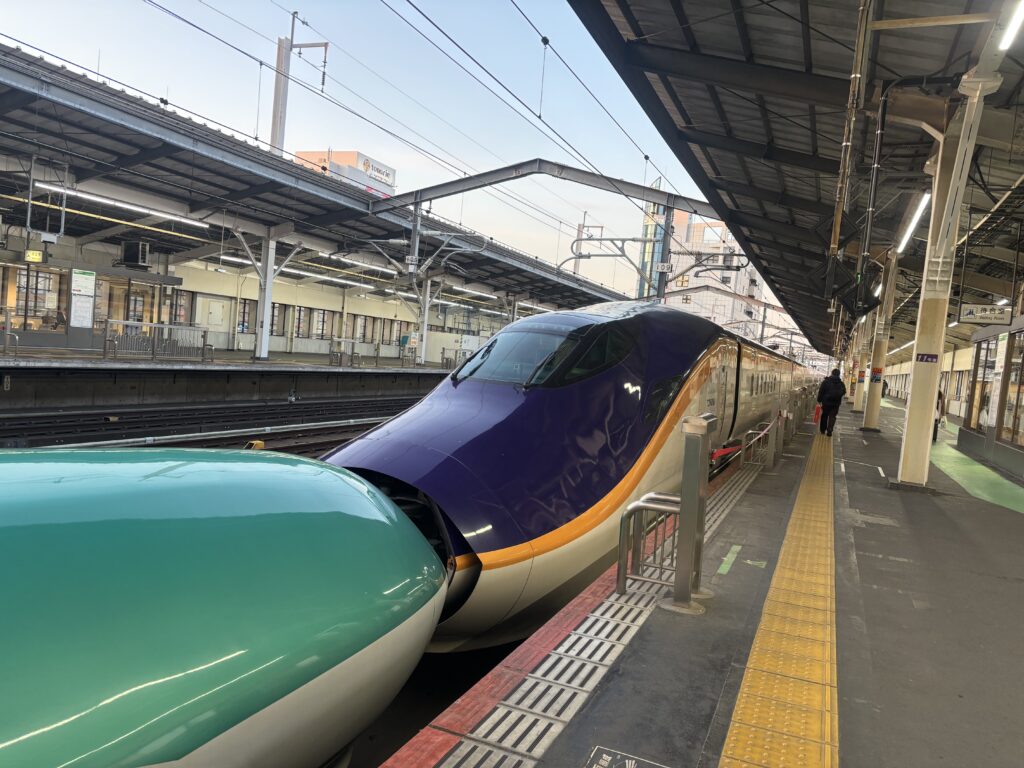
Sliding quietly in was an E8 Series Shinkansen “Tsubasa” in vivid crimson — the livery known as “Kabuki Color.” It has the presence of something that has stepped straight off a traditional theatre stage.

The sharp nose of the lead car against that glossy crimson is a genuinely striking combination. Other passengers on the platform were reaching for their cameras too. We shot away, thoroughly taken with it.

We were determined to film it while it was moving, and remember concentrating hard on doing exactly that.

The E8 Series entered service in 2024 on the Yamagata Shinkansen. Its deep crimson is drawn from the safflower, the official flower of Yamagata Prefecture. Between Tokyo and Fukushima it runs coupled to a Tohoku Shinkansen “Yamabiko,” separating at Fukushima to continue toward Yamagata. Utsunomiya lies within the coupled section.

And Our Train Was the Next One

Here is the part that still stings.

The Kabuki Color arrived as the service immediately before the one we had booked.

That crimson ran past us. We got the shots we wanted. What we didn’t get was a ride. Had we booked one train earlier, we would have been on it.

Watching it pull away from the platform, the regret set in slowly.

We Should Have Researched a Line We Never Use

Thinking about it calmly, the cause is obvious.

We had forgotten the E8 “Kabuki Color” existed at all.

Because we so rarely take the Tohoku Shinkansen, we had never looked into what runs on it. We booked purely on “the first train after work finishes,” and the question of rolling stock never entered our heads.

Which is faintly absurd. On the Tokaido Shinkansen we’re particular enough to specify seat E in order to see Mount Fuji. On a line we know, we care about the seat number. On a line we don’t, we checked nothing whatsoever.

If you’re planning to take the Tohoku or Yamagata Shinkansen When you book, take a moment to check which type of train operates that particular service. JR East’s site and the Ekinet booking service both show the rolling stock for individual trains. Shifting your booking by one service can change what you get to ride. The less familiar the line, the more this small step is worth.

Looking It Up Afterwards: You Can Still Board a Full Train

Smarting from the whole thing, we went and read up on the Tsubasa when we got home. Which is how we learned something we hadn’t known.

The Tsubasa is entirely reserved-seating, year round. There are no unreserved cars. However, when the reserved seats sell out, a “standing limited express ticket” (立席特急券 / tachiseki tokkyūken) is released.

  • It costs ¥330–¥930 less than an ordinary reserved seat
  • You are, in principle, expected to stand — the ticket itself states that it does not entitle you to a seat
  • In practice, if a seat happens to be free, sitting in it is not a problem

The catch is how you buy it. These tickets are not sold through Ekinet. You have to buy one at a reserved-seat ticket machine in a station, on the day of travel or the day before. If you’re searching online from overseas you simply won’t find it, so plan on doing this at a station.

Standing all the way home after a day’s work isn’t much of a plan. But knowing there’s an option other than giving up when everything is sold out felt like something worth having. For a leisure trip, we’d take it.

Please note: this is information we looked up after the fact rather than something we’ve used ourselves. Check JR East’s official guidance for the current terms.

For everyday travel, “whatever gets me home fastest” is a perfectly reasonable rule. But on a line you’ll only ride once in a long while, it’s worth spending a few minutes before you book — a lesson this trip delivered rather firmly.

In Summary: We Saw It, and We Missed It

Those few minutes on the platform at Utsunomiya were genuinely memorable. Precisely because we weren’t expecting it, the shock of that crimson appearing in front of us landed hard.

Honestly, though, the frustration of not riding it has stayed with us more strongly.

Next time we head north, we’ll check the timetable and the rolling stock before booking. Booking the Tsubasa on purpose — that’s the homework now.

The trip home from a business trip pulls you toward “whichever train leaves first.” There’s nothing wrong with that. But apply it on a line you’ll rarely see again and this is the sort of thing you’re left with. Next time, we’ll be a little greedier.


How particular the same writer gets on a line they do know well is covered here.

→ Riding the Tokaido Shinkansen N700S for Work | How to See Mount Fuji from Your Seat

Typhoon Travel Turned Luxury Adventure! Gran Class, Green Car & an Unexpected Meitetsu Bonus

15 August 2024. We were supposed to be in Tokyo that day.

This is what happened the day after an emergency meeting in Kanazawa, where we decided to run west rather than into a typhoon making landfall in Kanto.

→ Day one: From Nagoya to Kanazawa on the Shirasagi and Tsurugi

If We Have to Change Plans — Let’s Go All Out

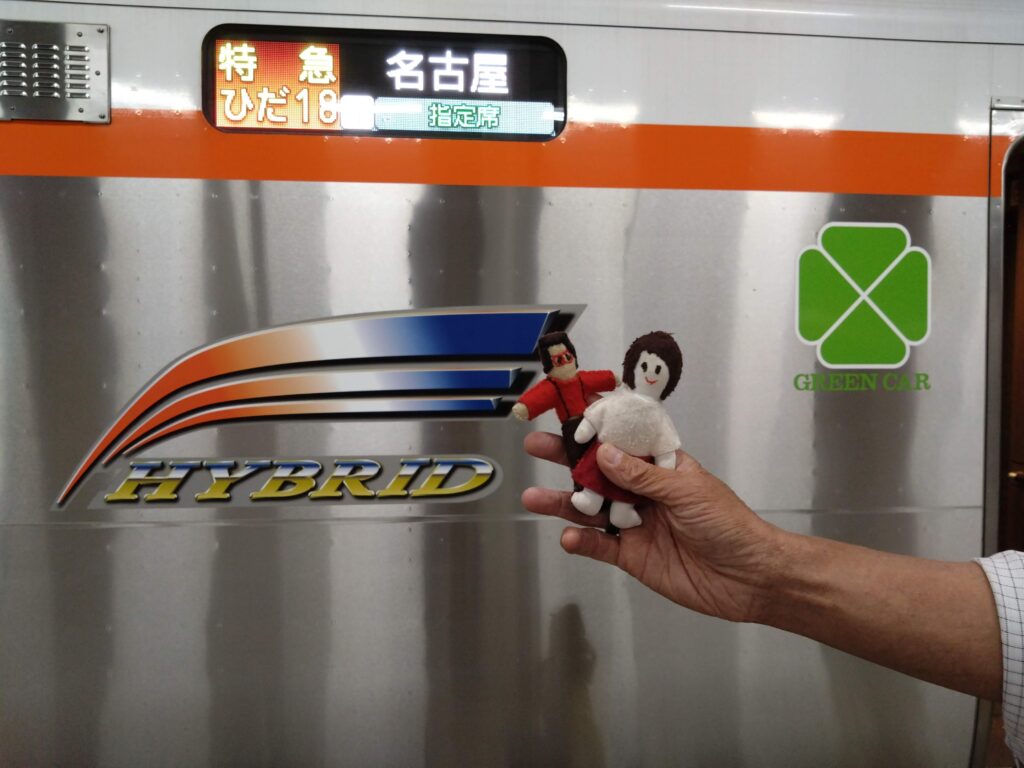
Forced into rearranging everything, we held an emergency meeting, mascots included.

“If we’re changing the plan anyway, let’s make it a luxurious one.”

From that moment the mood of the trip lifted considerably. Typhoons aren’t all bad, we thought.

Our First Gran Class — for 22 Minutes, With No Food or Drink Service

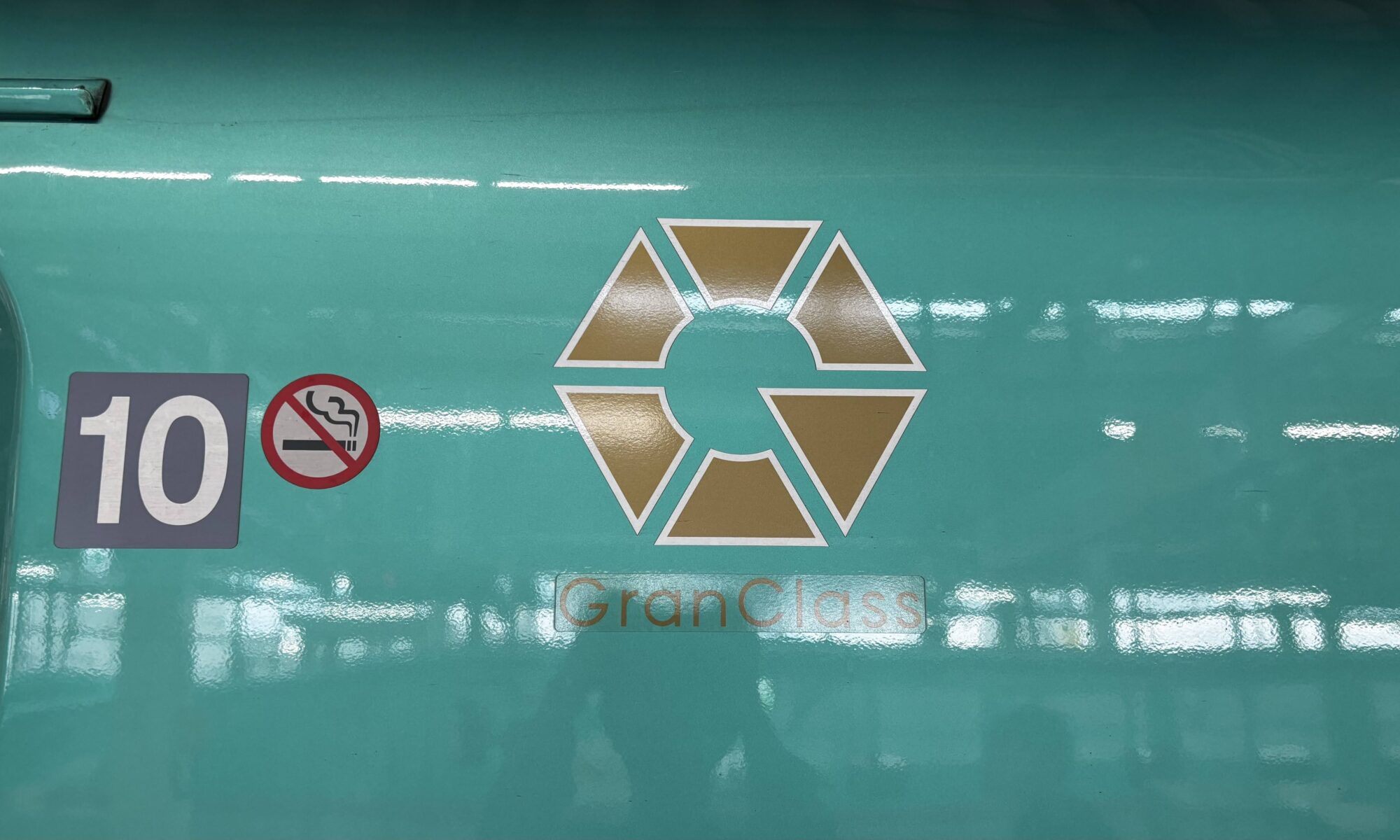
Conclusion number one of the emergency meeting was to book Gran Class, the class above Green Car and the highest on the Shinkansen.

We booked it with some enthusiasm. The reality was rather different from what we’d pictured.

On the rails Hokuriku Shinkansen Hakutaka No. 560 — Kanazawa 10:58 → Toyama 11:20 (22 minutes) Seats: Car 12, seats 5B and 5C Gran Class (no food or drink service) As of August 2024

First, it lasted 22 minutes. We settled in, tested the seat, took a few photographs — and were in Toyama.

And as the booking screen had stated, this service’s Gran Class was the “no food or drink” configuration. No attendant on board, and no drinks or sweets of any kind. Gran Class as a seat, and nothing else.

The seat itself really was in another league. The leather powered recliner goes back a long way, the spacing is generous, and the car was remarkably quiet. There were only a handful of other passengers.

But the parts you usually read about — the attendant service, the drinks, the dessert — we experienced none of them on this occasion.

Worth knowing before you book Gran Class Gran Class comes in two configurations: with food and drink service, and seat-only (no food or drink). Which one you get depends on the individual train. The Hakutaka No. 560 we rode was seat-only. The booking screen shows which configuration applies, so if you’re expecting the full service, check that line carefully. The same name can mean two quite different things.

We were, frankly, a little deflated. That said, this particular disappointment gets properly resolved a year later — see the end of this article.

Second Decision: Green Car on the Limited Express Hida

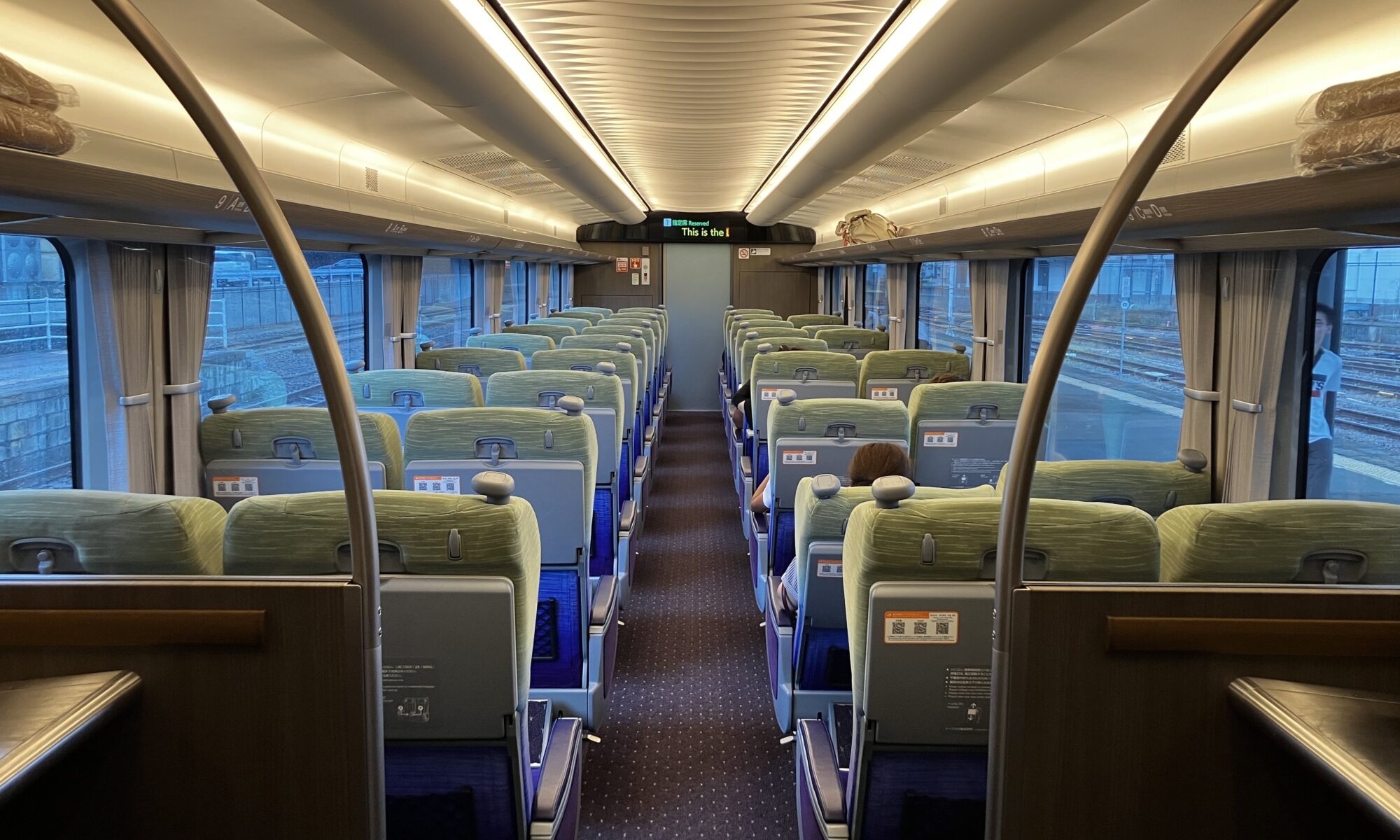
Conclusion number two was to book the Green Car on the Limited Express Hida, running from Toyama through Takayama toward Nagoya. Here too the carriage was nearly empty and we had space to spread out.

Watching the summer landscape of Gifu slide past the window, the anxiety about the typhoon seemed to drift away.

The Limited Express Hida is operated by JR Central between Nagoya and Hida-Takayama / Toyama.

An Unexpected Stop at Gifu — the Typhoon Catches Up

Then, as we approached Gifu Station, the Hida came to a stop. Services had been suspended because of the typhoon.

Halted with Nagoya almost in sight, we had no choice but to change at Gifu onto the Meitetsu line and continue to Nagoya from there.

An unplanned Meitetsu ride — a bonus stage, of sorts.

Meitetsu (Nagoya Railroad) is a private railway serving Aichi and Gifu. Meitetsu Gifu to Meitetsu Nagoya takes about 30 minutes by limited express. Worth knowing as an alternative when JR services stop.

A Wonderful Surprise — the Green Car Fare Was Refunded

“We got to enjoy the Green Car as far as Gifu, so fair enough,” we thought — and then the Green Car charge was refunded to us, because we hadn’t reached Nagoya.

What we’d planned as an indulgence turned into a bargain. The typhoon’s disruption ended up as a pleasant surprise.

What to Remember When Travelling by Train During a Typhoon

Refund rules If a limited express or Shinkansen service is suspended, or you don’t reach your destination, the limited express and Green Car charges are refunded. Don’t panic — ask at a station counter. In our case we didn’t apply for anything; the refund simply came through afterwards.

Use substitute transport When services are suspended, you can often transfer to another operator’s line. Our switch to Meitetsu is one example. On sections where a private railway runs parallel to JR, knowing your options means you can keep moving.

And sometimes, the answer is to travel away from it The decision we made in Kanazawa the night before — to abandon Tokyo — was ultimately what saved the trip. Rather than heading toward the storm, rearranging your plans to move away from it is the more reliable approach.

Summary | Turning Travel Chaos into Something Memorable

JourneyDetails
Hakutaka No. 560, Gran ClassKanazawa 10:58 → Toyama 11:20 (22 min, no food or drink service)
Limited Express Hida, Green CarToyama / Takayama → suspended at Gifu
MeitetsuGifu → Nagoya (the unexpected bonus)

And the Green Car charge came back to us.

A typhoon’s disruption turned into a summer trip we won’t forget. Plans changing is part of travel.


What happened afterwards

The Gran Class experience that ended here after 22 minutes with no service was repeated properly in the summer of 2025 — Morioka to Tokyo, two hours and fifteen minutes, with the full service this time.

A hot towel to start, sparkling wine, Aomori apple and nuts, a pound cake. Everything we missed on this occasion was there. Homework handed in, a year late.

→ Tohoku Summer Trip 2025 ③ | Riding Gran Class Home from Morioka

Tohoku Summer Trip 2025 ② | Akita Shinkansen Komachi & Kakunodate — Staying at Hotel B4T Kakunodate, Steps from the Station

Captivated by the Rice Fields the Komachi Runs Through

What unfolds outside the window of the Akita Shinkansen Komachi is rice paddy, as far as you can see. Akita is the home of Akita Komachi, one of Japan’s best-known rice brands — and true to the name, the sight of the Komachi streaking through those golden ears of rice lifts the mood of the whole trip.

The Akita Shinkansen is unusual even among Shinkansen lines, because part of its route runs on conventional railway tracks. You get Shinkansen speed and small-town railway atmosphere in the same journey, and the result is a flavor you won’t find on an ordinary Shinkansen. If you’re a railway fan, this is a line to ride at least once.

Komachi Trivia The Komachi connects Tokyo and Akita. As far as Morioka it runs coupled to the Hayabusa; at Morioka the two are uncoupled and the Komachi carries on alone to Akita. To make that through service possible, the conventional-line section between Morioka and Akita was regauged from 1,067 mm to the 1,435 mm standard gauge the Shinkansen uses. The trains, in turn, are built with narrower bodies so they fit the tighter clearances of those older lines. This arrangement is known as a “mini-Shinkansen,” and it’s a genuinely interesting piece of engineering.


Getting to Kakunodate

Kakunodate is reachable directly from Tokyo on the Akita Shinkansen Komachi.

FromJourney timeTrain
Tokyo Stationapprox. 2 hr 50 minAkita Shinkansen Komachi
Morioka Stationapprox. 1 hrAkita Shinkansen Komachi
Akita Stationapprox. 45 minAkita Shinkansen Komachi

Kakunodate is a small station, but it’s the gateway to a town known for its samurai residences and its cherry blossoms. The main sights are all within walking distance of the station.

Our Base in Kakunodate: Hotel B4T Kakunodate, Right by the Station

For this trip we stayed at Hotel B4T Kakunodate, just a short walk from Kakunodate Station.

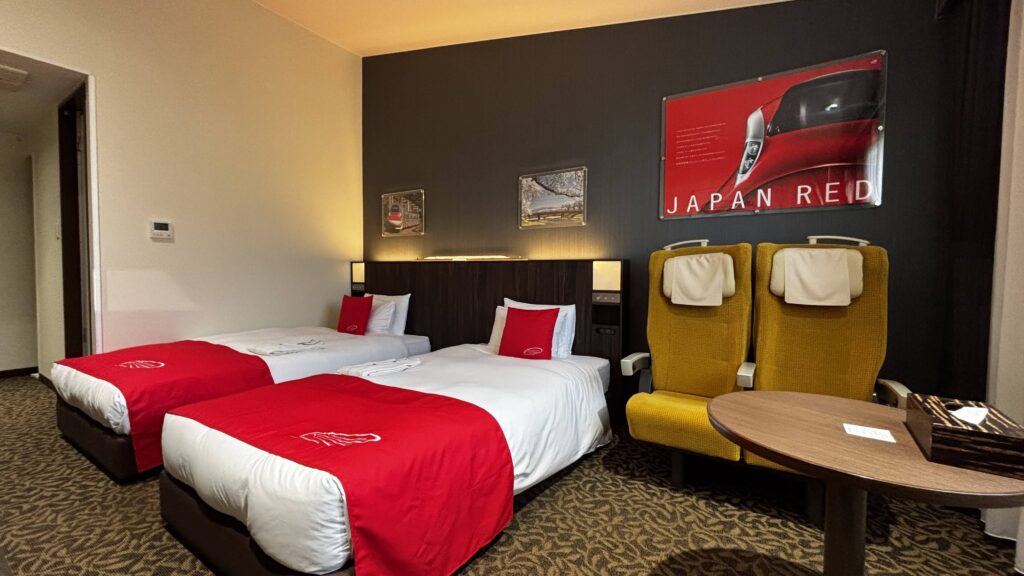
This is not an ordinary hotel. For a railway fan, it has something hard to resist: guest rooms themed around the Komachi.

A note on the name: this property was rebranded in February 2026, from Hotel Folkloro Kakunodate to Hotel B4T Kakunodate. If you know it by the old name, it’s the same hotel.

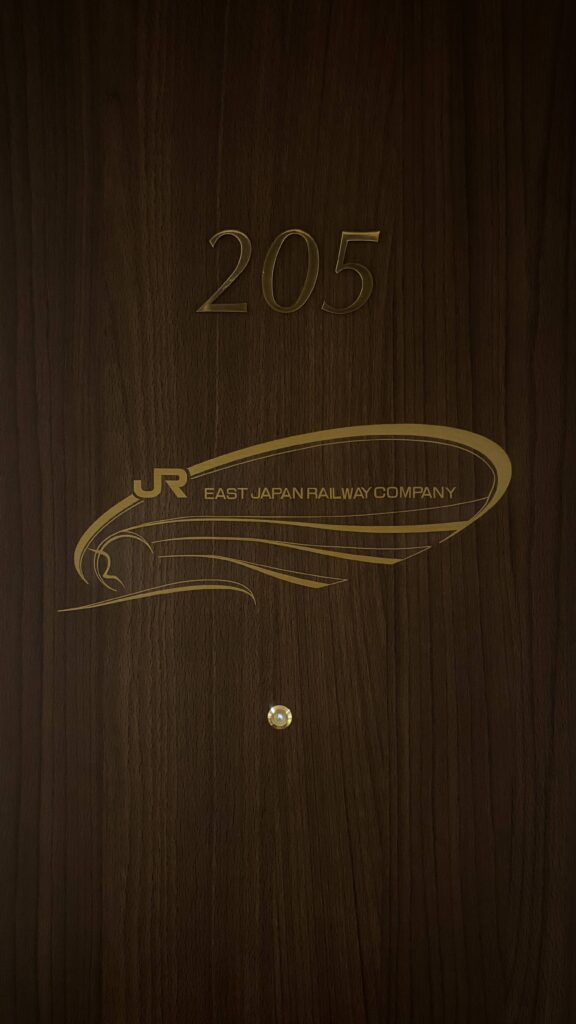
The Door of the Komachi Room

The door to the room carries the Komachi’s emblem, and simply walking down the corridor is enough to lift your spirits. It’s not something you see at a typical hotel, and we ended up taking far too many photos of a door.

From the moment you check in, you feel like you’re on a railway journey. That attention to small details is what makes this hotel a pleasure.

The Room Key Is Yours to Take Home

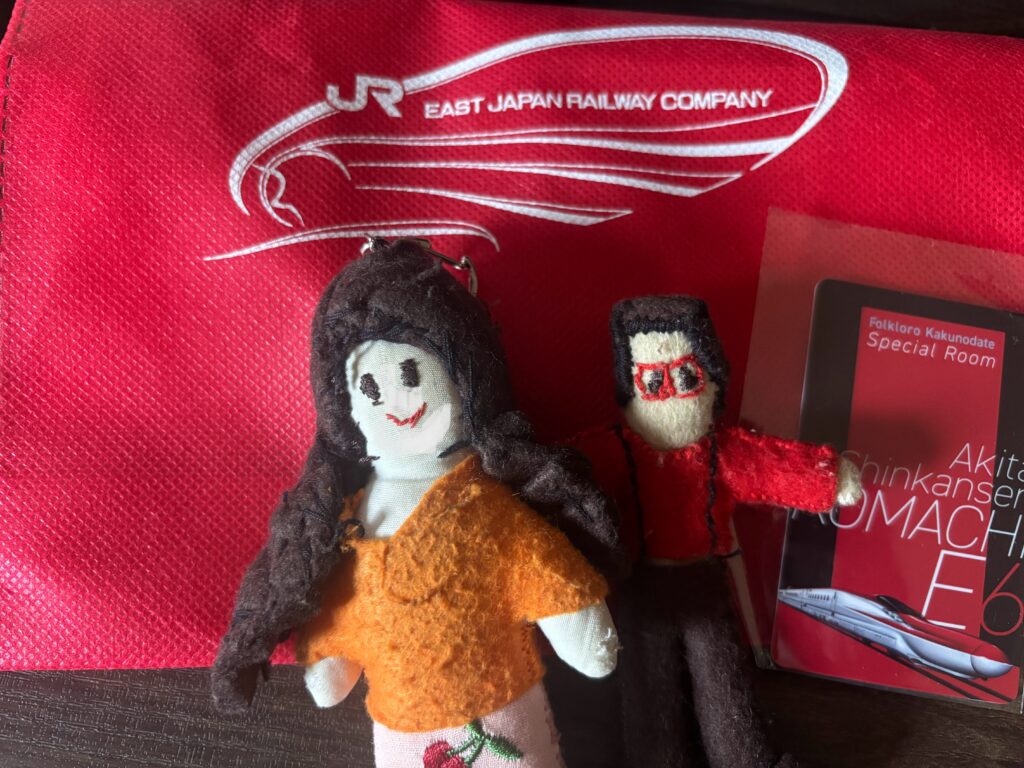
Better still, you’re officially allowed to keep the room key. Line the key up with the amenities, take a photo, and you have a souvenir of the trip in physical form.

Small touches like this do a lot for how satisfying a stay feels. It’s the kind of keepsake an ordinary hotel simply can’t offer.


A Front-Row Seat: Watching the Komachi from Your Room

What moved us most, though, was the view from the room. Kakunodate Station spreads out beyond the window, and you can lie on the bed and watch the Komachi standing at the platform — a front-row seat built for railway fans.

Every time a train pulled in, we found ourselves drawn to the window. As for exactly what you’ll see, that’s worth discovering for yourself — it’s one of the pleasures reserved for guests.


There’s Plenty to See in Kakunodate

Staying at Hotel B4T Kakunodate also puts you within easy reach of the town’s sights.

Bukeyashiki-dori (the samurai residence street) A street lined with samurai houses dating back to the Edo period, designated by the national government as an Important Preservation District for Groups of Traditional Buildings. The contrast between the black wooden fences and the weeping cherry trees is especially striking.

One of Japan’s finest cherry blossom destinations Kakunodate is known as the “Little Kyoto of Michinoku,” and it’s a celebrated spot for blossoms. In late April, roughly 400 weeping cherry trees and 160 Somei-Yoshino cherry trees come into bloom. Visitors arrive from across the country during peak season, so booking accommodation well in advance is essential.

Autumn is beautiful too Come October, the trees along the samurai district turn red and gold, and the town takes on a quieter seasonal charm. It’s far less crowded than cherry blossom season, which makes autumn a good choice if you’d rather take your time.

Who This Hotel Suits

  • Anyone fond of the Akita Shinkansen Komachi
  • Travelers who want to see Kakunodate’s samurai district and cherry blossoms
  • Anyone curious about staying somewhere with a railway theme
  • Travelers looking for a trip with a bit of occasion to it
  • Couples planning an anniversary trip

Kakunodate is at its busiest during cherry blossom season (late April) and the autumn colors (October), and rooms become hard to find. We’d recommend booking early.

A Model Course for Akita

WhenWhat to do
Day 1, morningTokyo Station to Kakunodate on the Komachi (approx. 2 hr 50 min)
Day 1, afternoonWalk the samurai residence street
Day 1, eveningCheck in at Hotel B4T Kakunodate and enjoy the Komachi view
Day 2, morningA morning stroll through Kakunodate; cherry blossoms or autumn colors
Day 2, afternoonOnward to Morioka or Akita on the Komachi

Summary | The Komachi and Kakunodate — A Pilgrimage for Railway Fans

AccessA short walk from Kakunodate Station
HighlightsKomachi-themed rooms; the room key as a souvenir
The viewThe Komachi standing at Kakunodate Station
Best seasonsCherry blossoms (late April) and autumn colors (October)
Best suited toRailway fans; anyone using Kakunodate as a base for Akita

It really was a lovely place to stay. Do consider building it into a trip on the Akita Shinkansen Komachi.

We Spotted Doctor Yellow at a Live Event! Photographing the Legend Near Shin-Osaka & What’s Coming to the Linear Railway Museum

We Actually Got to See Doctor Yellow at a Special Event!

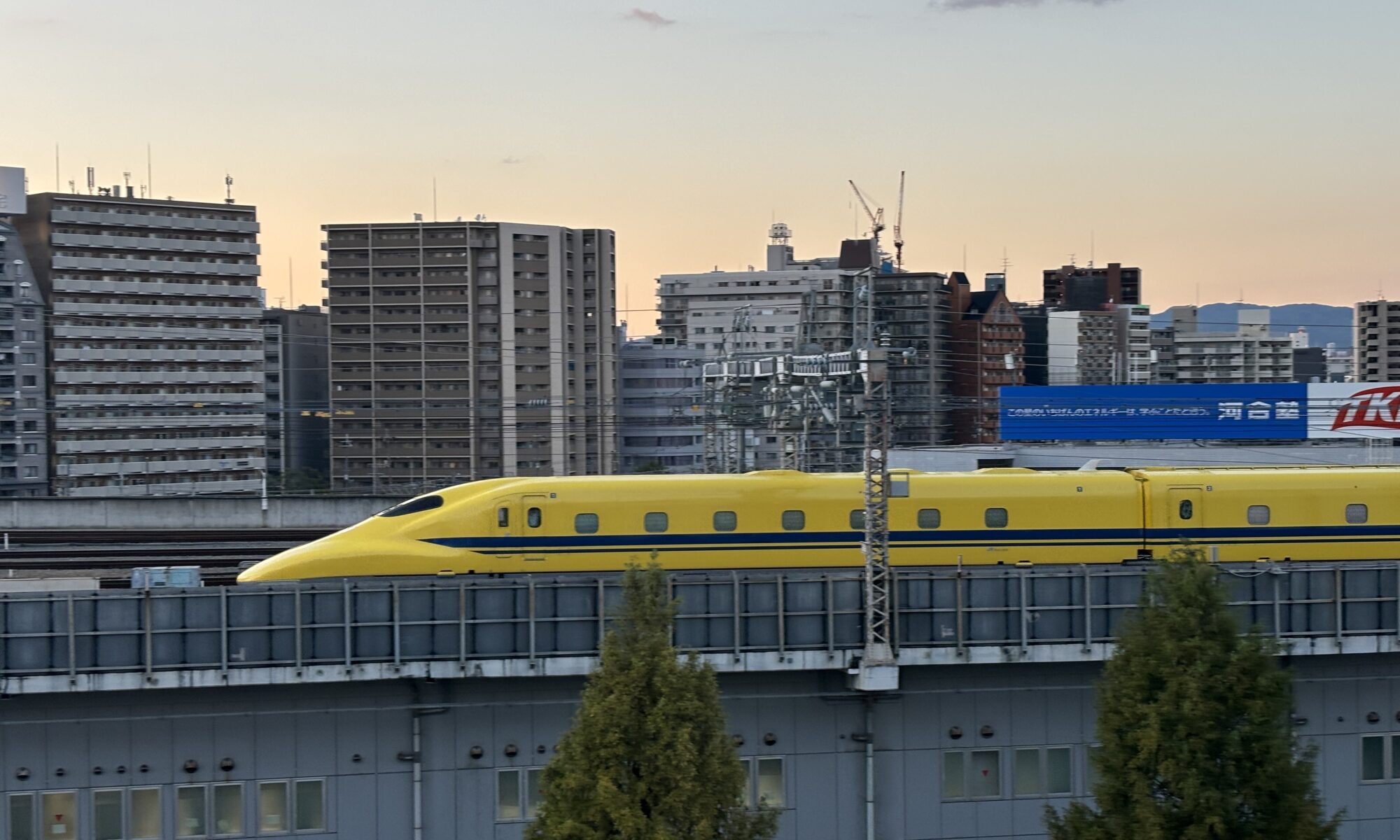
This time, a Doctor Yellow boarding event was held, and we managed to photograph the legendary train from a parking lot right near Shin-Osaka Station!

The moment that yellow body flashed past in front of us — the excitement was indescribable, no matter how many times you see it.

The “Lucky Yellow Shinkansen” — Doctor Yellow. There’s a saying that if you happen to spot it, good luck will come your way. We were thinking about that very legend when suddenly, right before our eyes, that unmistakable yellow body appeared. The Mascots fell completely silent for a moment, utterly spellbound. We nearly forgot to press the shutter — that’s how overwhelming its presence was. Unlike any ordinary Shinkansen, it carries a special aura all its own. “Just seeing this today made the whole trip worthwhile” — that’s the only thought running through our heads.

Doctor Yellow is a special inspection vehicle used to check the tracks and electrical systems of the Shinkansen network. It ended its regular service in 2024, but it has long been beloved by railway fans as a legendary train — said to bring happiness to anyone lucky enough to spot it.


Photography Spot: The Parking Lot Near Shin-Osaka Station

Our shooting location this time was a parking lot right near Shin-Osaka Station.

During special events, unexpected spots like this can suddenly become prime photography opportunities. Doctor Yellow operation information is frequently shared on social media and in railway fan communities, so keeping a close eye on those is highly recommended.


Breaking News: Doctor Yellow Is Coming to the Linear Railway Museum!

And now for some big news!

It has been officially announced that Doctor Yellow will be put on permanent display at the Linear Railway Museum in Nagoya, Aichi Prefecture. Now that its regular service has ended, this will be a precious opportunity to see the real thing up close and take your time admiring it.

The Linear Railway Museum is a railway museum operated by JR Central. It houses real vehicles including the superconducting maglev and generations of Shinkansen trains — and with Doctor Yellow joining the lineup, it’s set to become an even more unmissable destination.


Who Should Visit the Linear Railway Museum?

  • Anyone who wants to see Doctor Yellow in person
  • Families who want to enjoy railways together with their children
  • Anyone interested in the history of the Shinkansen and maglev
  • Anyone looking to combine a visit with sightseeing in Nagoya

Once the Doctor Yellow display opens, crowds are expected. Early planning for your Nagoya trip is strongly recommended!


Main Highlights at the Linear Railway Museum

Beyond the Doctor Yellow display, the Linear Railway Museum is packed with things to see.

Superconducting Maglev MLX01
A real superconducting maglev vehicle — one of the fastest ever built — is on display. It’s a rare chance to get up close to the future of transportation.

Generations of Shinkansen, All in One Place
Historic Shinkansen models including the Series 0, Series 100, and Series 300 are all gathered under one roof, letting you trace the entire evolution of Japan’s bullet trains in a single visit. Railway fans and children alike will be absolutely thrilled.

Simulator Experiences
Shinkansen and conventional railway driving simulators are among the most popular attractions. You can experience what it’s like to sit in a real driver’s cab — a highlight for visitors of all ages. Note that some simulators require a numbered ticket, so it’s best to secure yours right when the museum opens.


Things to Know Before You Visit

The Linear Railway Museum is about a 2-minute walk from Kinjo-futo Station on the Aonami Line — very easy to reach. From Nagoya Station, it’s approximately 25 minutes by Aonami Line.

Opening hours are 10:00–17:30 (last entry at 17:00), and the museum is closed on Tuesdays. Once the Doctor Yellow display opens, visitor numbers are expected to rise significantly — visiting on a weekday or arriving right at opening time is the best way to beat the crowds. The museum is also conveniently located for a day trip combined with Nagoya’s famous local cuisine.


Doctor Yellow Merchandise — Worth Checking Out Too

Even after the end of regular service, demand for Doctor Yellow merchandise remains high. If you’d like to keep a piece of the legend at home, check out the commemorative goods available now.


Summary: Doctor Yellow Lives On — at the Linear Railway Museum!

ItemDetails
Photography locationParking lot near Shin-Osaka Station
Future display locationLinear Railway Museum (Nagoya, Aichi)
Access to museum2-min walk from Kinjo-futo Station (Aonami Line)
TipVisit early after the display opens to beat the crowds

Regular service may be over, but the day when you can see Doctor Yellow’s iconic form up close at the Linear Railway Museum is drawing near. Start planning your Nagoya trip now!

Riding the Tokaido Shinkansen N700S for Work | How to See Mount Fuji from Your Seat

March–April: Peak Season for Shinkansen Business Travel

Because of the work we do, March and April bring a lot of business trips, and with them a lot of rides on the Tokaido Shinkansen N700S. We’re partial to Car 7, which tends to fill up with business travelers — but at this time of year the Shinkansen holds a quiet pleasure that only a railway fan would notice.

Want to See Mount Fuji? Go for Seat “E”!

If you want to see Mount Fuji from the Tokaido Shinkansen, your seat is everything.

Ordinary cars are split into a three-seat row (A, B, C) and a two-seat row (D, E), and that lettering doesn’t change whether you’re heading for Tokyo or for Shin-Osaka. The mountain side is always E; the sea side is always A.

Heading west (Tokyo → Shin-Osaka), Seat E is on your right. Heading east (Shin-Osaka → Tokyo), it’s on your left. But either way, Mount Fuji appears on the E side. Rather than trying to remember left or right, just remember “Seat E” — it’s the reliable rule.

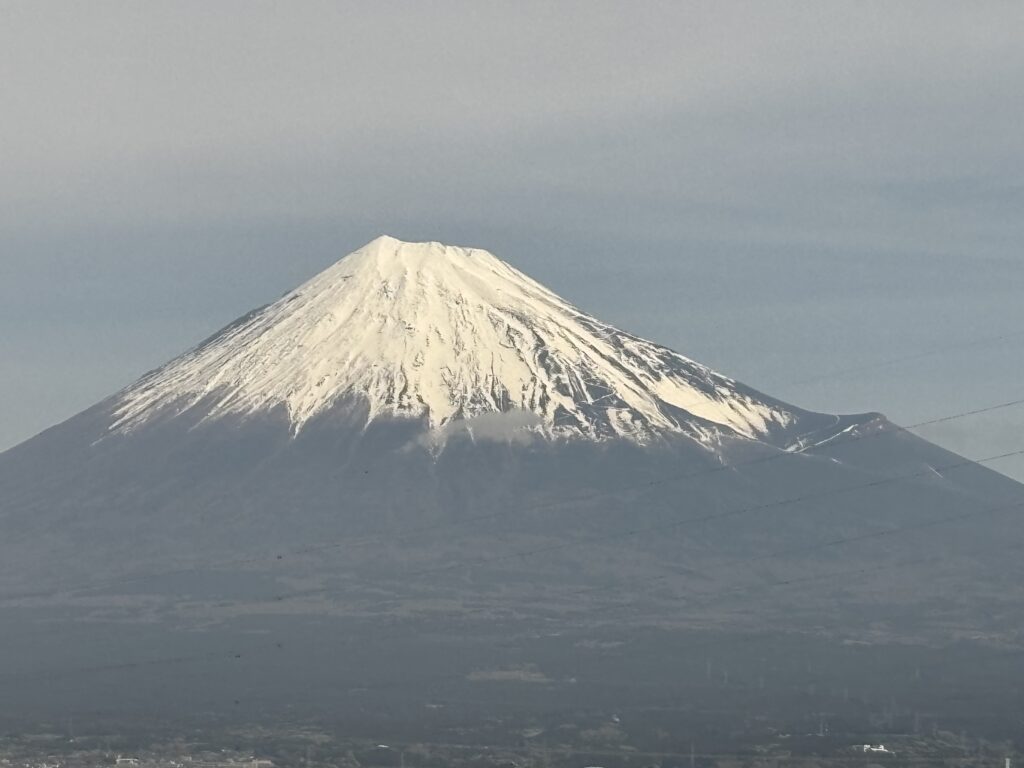
The best stretch for Mount Fuji is between Shin-Fuji and Shizuoka stations. The mountain shows most clearly in winter and early spring, when the air is at its clearest. Clouds tend to gather in the afternoon, so aim for a morning departure.

On a Morning Train to Tokyo, Seat E Decides Whether You See Anything at Al

There’s one more thing worth knowing if you’re taking a morning train up to Tokyo.

Morning eastbound trains run straight into the rising sun, and the light comes in hard on the A–C side. It’s bright enough that those curtains generally stay shut for the entire run. Even on a beautifully clear day, passengers on the sea side can’t see out at all.

Seat E faces north, so the glare never reaches it and you can leave your curtain open the whole way. On a morning run to Tokyo, whether or not you’re in Seat E more or less decides whether you get a view.

A Special Announcement Interrupted Our Work!

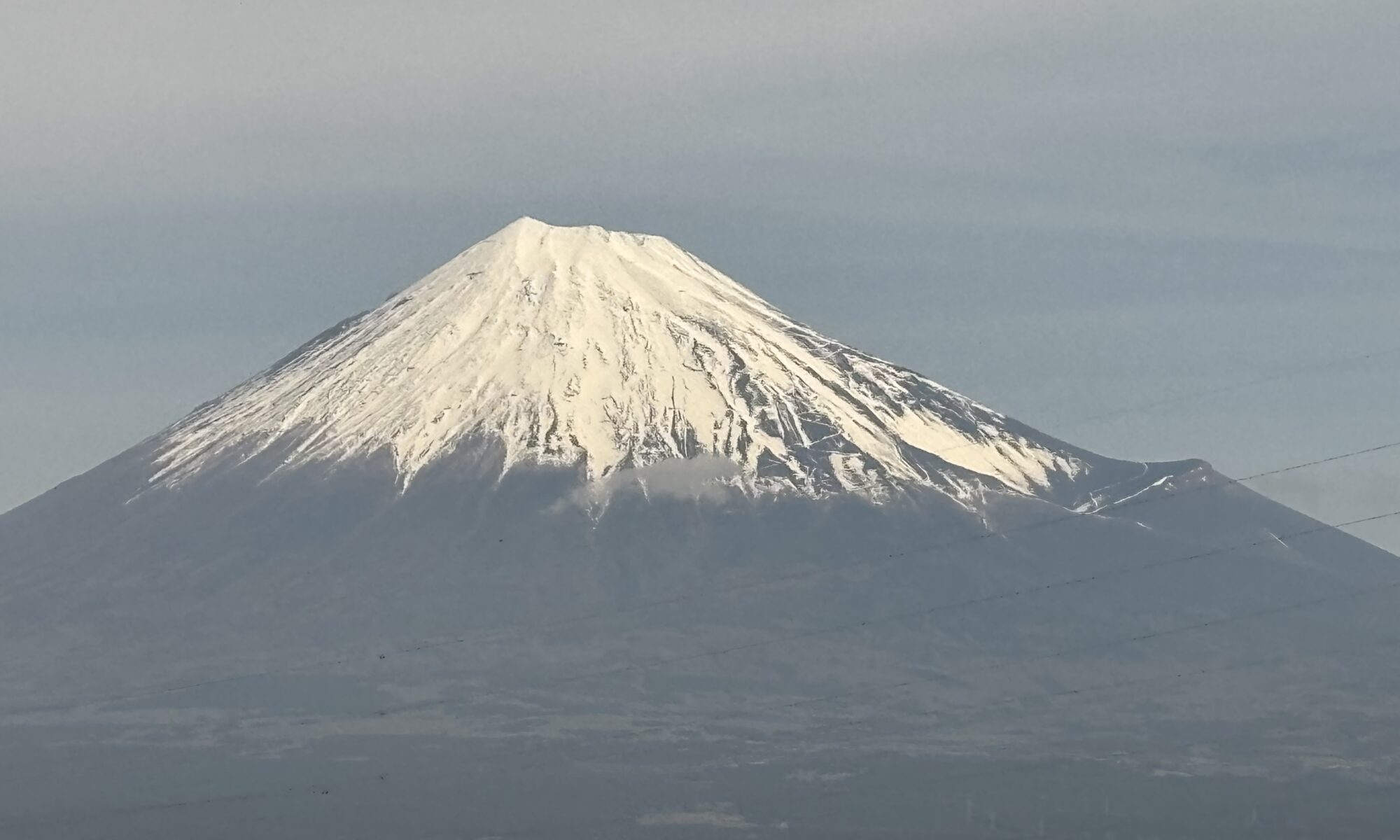
On this particular trip we were heads-down working when an announcement came over the speakers: “Mount Fuji is visible on the left-hand side of the train.”

We scrambled for the camera and got the shot. Worth putting the work down for. This announcement is only made when conditions are right, so if you hear it, point your camera and don’t hesitate.

Sitting in Seat E, we finally came face to face with Mount Fuji. The mascots pressed themselves against the window to look, and after a while one of them announced: “That mountain is wearing a hat!” They had mistaken the snow on the summit for headwear. It’s exactly the sort of thing you’d say if you weren’t used to seeing snow — and honestly, once it’s been pointed out, a snow-capped Fuji does rather look like it’s wearing a hat. Seeing the mountain through that kind of fresh perspective made it something special all over again.

Why Car 7 Is Perfect for Business Travelers

Car 7 draws a lot of business travelers, which makes for a calm atmosphere, and it’s well set up for working: power outlets throughout and a reasonably generous tray table. Book Seat E and you get Mount Fuji into the bargain — two birds with one stone.

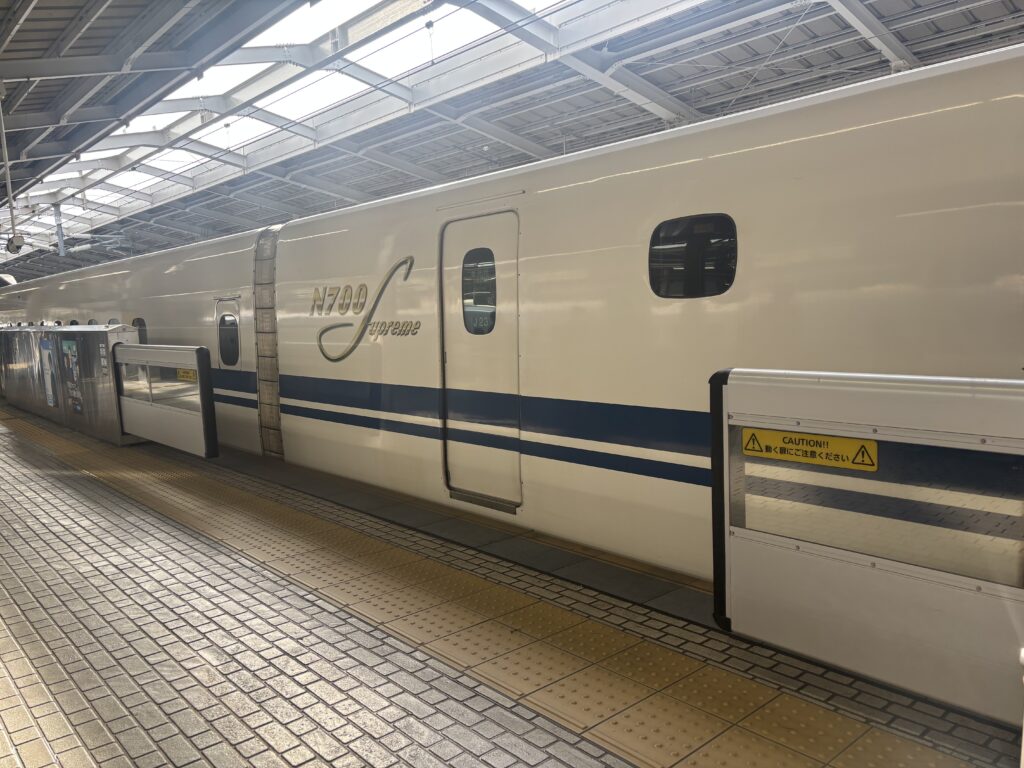
The N700S entered service in 2020 as the newest generation on the Tokaido Shinkansen. Every seat has a power outlet, Wi-Fi is standard, and the ride quality is a clear step up, which makes long trips considerably easier.

Quick Guide: Spotting Mount Fuji from the Shinkansen

PointDetails
Seat to bookSeat E (on your right heading west, on your left heading east — the Fuji side either way)
Best stretchBetween Shin-Fuji and Shizuoka stations
Best seasonWinter through early spring, when the air is clearest
Best time of dayMorning — clouds build in the afternoon
Morning eastbound noteCurtains on the A–C side are usually closed against the sun
Car to chooseCar 7 — quiet, business-oriented

Booking Seat E with Smart EX

We book our Tokaido Shinkansen travel through the Smart EX app. Registration is free, and you can pick Seat E straight from your phone. Changes are accepted up to six minutes before departure, which has saved us more than once when a business trip shifted. Link it to Mobile Suica and you can walk straight through the gates.

If Mount Fuji is the goal, secure Seat E by the day before to be safe.

It’s Not Only Mount Fuji on the E Side

.Mount Fuji isn’t the only reason to want Seat E. Lake Hamana and Mount Ibuki are both on the E side as well.

Lake Hamana (Shizuoka Prefecture) Visible as the train crosses the bridge. It isn’t really something you can sit and wait for — you glance out the window and it has already gone past.

Mount Ibuki (Shiga / Gifu Prefectures) Visible near Sekigahara, and, as it turns out, also on the E side. We’re a little embarrassed to admit we’ve never consciously looked for it. Next business trip, we intend to.

Take a look out of the window on your next trip. It makes the time pass rather more richly.

N700S Basic Information

ItemDetails
Entered service2020
LinesTokaido and Sanyo Shinkansen
Top speed285 km/h (Tokaido) / 300 km/h (Sanyo)
What the “S” stands forSupreme
FeaturesPower outlets at every seat, high-performance braking, improved ride quality

Summary | Don’t Forget to Enjoy the Journey, Even on a Business Trip

Even when you’re working, simply booking Seat E means Mount Fuji might be waiting for you as a reward. Something to keep in mind next time you reserve a seat, for business or for pleasure.

Tohoku Summer Trip 2025 ③ | Riding Gran Class Home from Morioka — Two Hours and Fifteen Minutes of Luxury

What this article covers

  • What Gran Class actually costs (our real fare, Morioka to Tokyo)
  • What you’re given, and what’s done for you, across a 2 hr 15 min ride
  • What you can and can’t fit into an 89-minute connection at Morioka
  • A useful thing to pick up while changing trains at Tokyo Station

Kakunodate to Morioka: 51 Minutes on the Komachi

The final leg of the trip began at Kakunodate, boarding the Komachi for Morioka. Watching the Tohoku summer landscape slide past the window, our thoughts were already on Morioka’s jajamen noodles.

Our journey Komachi No. 20, Kakunodate 12:57 → Morioka 13:48 (51 min) Seats: Car 12, seats 2A and 2B (reserved) ¥6,060 for two adults = ¥3,030 per person (fare included, as of August 2025)

Kakunodate is a beautifully preserved castle town, often called “the Little Kyoto of Michinoku.” From the Komachi’s windows the view is green hills and rice fields — the sort of scenery that makes you forget the city for a while.

An 89-Minute Connection at Morioka — and No Jajamen

13:48  Arrive Morioka (Komachi No. 20)15:17  Depart Morioka (Hayabusa No. 26)

Eighty-nine minutes between trains. That looks generous on paper. In practice it was an awkward length.

Morioka is famous for jajamen, thick wheat noodles served with a rich miso-based sauce. Pushed along by the mascots, we made straight for a well-known shop — and found a very long queue. An hour and a half isn’t enough to queue, eat, and get back to the platform with any margin.

If jajamen is the goal, allow yourself more than two hours in Morioka.

Next Door to the Queue: Tsukemen Kazu

Still, boarding a Shinkansen having eaten nothing seemed a waste. What caught our eye was Tsukemen Kazu, sitting immediately next door to the shop everyone was queueing for.

The menu board outside carried several award badges, which was encouraging.

Tsukemen Kazu — menu (August 2025)

  • Plain tsukemen (regular, 200 g): ¥1,100
  • Tsukemen (regular): ¥1,250
  • Special tsukemen (regular): ¥1,500 — the most popular choice Small, medium and large portions are available at similar prices.

Tsukemen is a style where the noodles and the broth arrive separately, and you dip the noodles as you eat. It turned out to be exactly the right decision. There was an excellent restaurant with no wait, directly beside the one with the queue. When your connection time is tight, it pays to look one door further along.

As for the jajamen itself — we bought a take-home set at the station, which lets you recreate the trip at your own kitchen table.

Riding Gran Class on the Hayabusa No. 26

And now the main event: Gran Class, the highest class of seating on the Shinkansen. The previous year we’d ridden Gran Class for the first time, on the Hakutaka No. 560 — but only for the 22 minutes from Kanazawa to Toyama, and on a service configured as seat-only, with no food or drink. We learned what the seat was like and nothing else. This time it was two hours and fifteen minutes, with the full service.

→ Typhoon Travel Turned Luxury Adventure! Gran Class, Green Car & an Unexpected Meitetsu Bonus

Our journey Hayabusa No. 26, Morioka 15:17 → Tokyo 17:32 (2 hr 15 min) Seats: Car 10, seats 5B and 5C (Gran Class) ¥54,160 for two adults = ¥27,080 per person (fare included, as of August 2025)

For comparison, the ordinary reserved seat from Kakunodate to Morioka earlier the same day cost ¥3,030. What follows is what the difference buys you.

The Seat

The powered recliner goes back close to flat, and the spacing between seats is generous — the effect is much like a first-class airline cabin. There’s plenty of storage around the seat, so you can spread out and organise your luggage without difficulty.

Ten Minutes After Departure, It Begins

Service started roughly ten minutes after we pulled out, with a hot towel. The attendant then brought the menu round for us to choose a drink from.

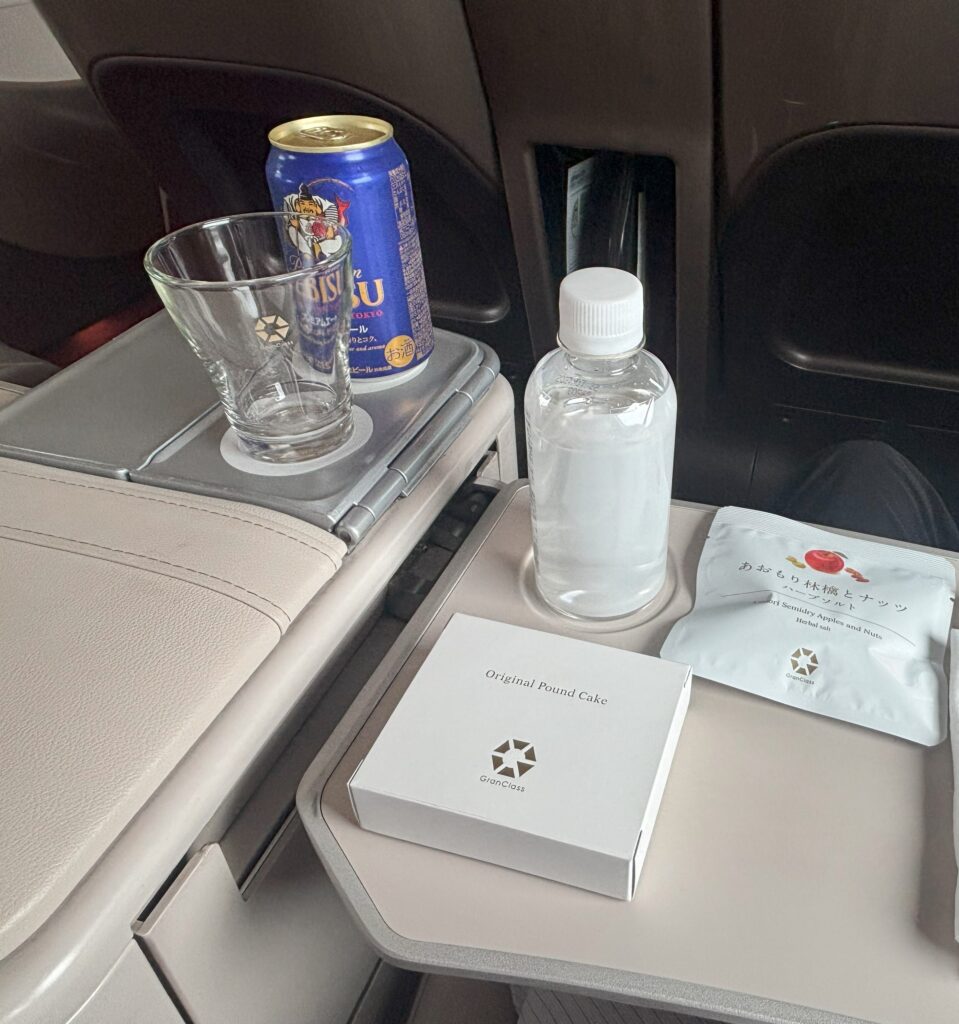
We chose sparkling wine and a Yebisu beer — one each. Being able to order different things is part of the pleasure.

The glassware carries the Gran Class emblem. A small thing, but details like that are what the price is made of.

What Came With the Drinks

Alongside the drinks came Aomori apple and nuts. The pairing worked far better than we expected — the sharpness of the apple and the salt of the nuts carry both the sparkling wine and the beer along nicely.

Inside the small white box was a pound cake. We couldn’t manage it on board, and were able to take it home with us.

An Honest Regret: We Should Have Arrived Hungry

A confession. We had just eaten a full bowl of tsukemen in Morioka.

Because it was a mid-afternoon departure, we’d assumed the service would amount to a light snack. In fact there was considerably more than that. We rather wish we’d turned up hungry.

So, advice for anyone about to do this: keep the meal before your Gran Class ride light. What’s waiting on board is more substantial than you’d guess.

A 30-Minute Delay at Tokyo — and Toyoken’s Black Curry Bread

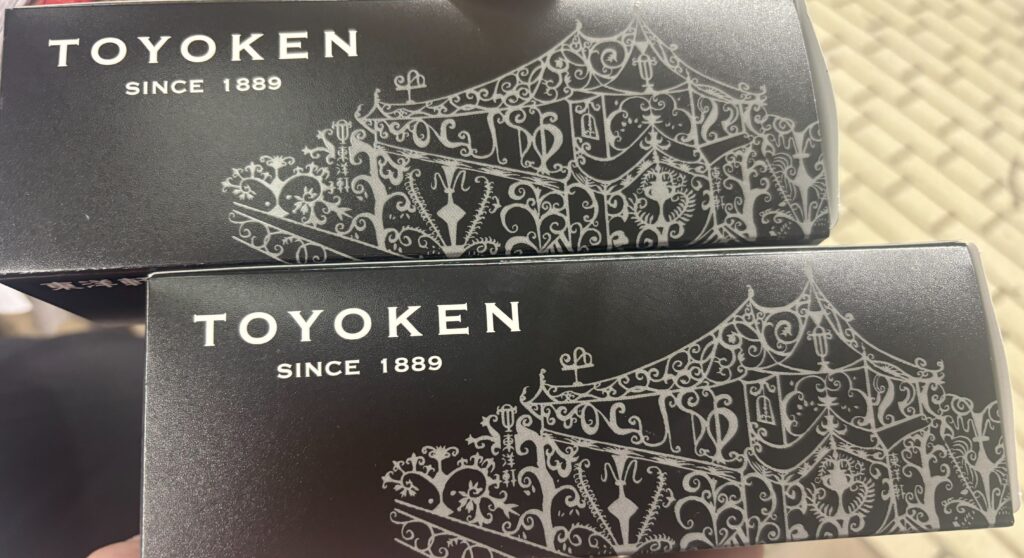
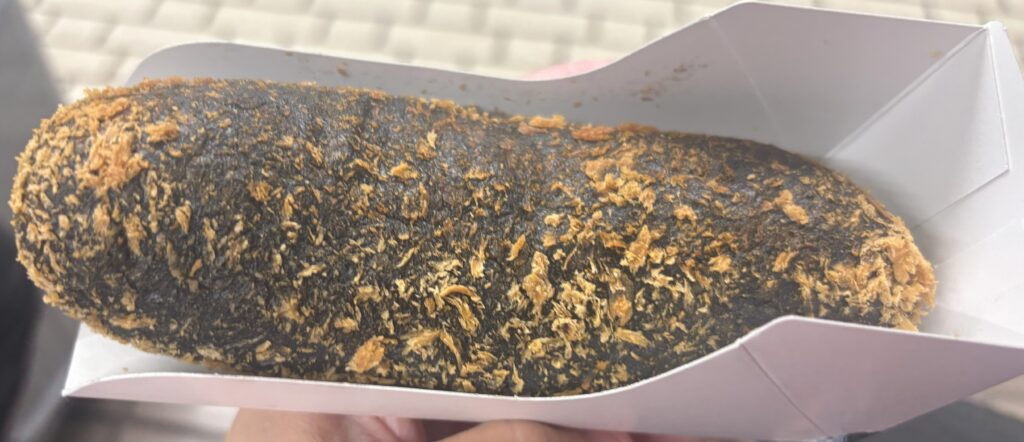
Heavy rain caused a delay of over thirty minutes. As it turned out, this worked in our favour: it gave us time to hunt down Toyoken’s Black Curry Bread, something of a Tokyo Station speciality.

Crisp bread around a spiced black curry filling — an excellent travelling companion for the Tokaido Shinkansen leg.

Toyoken Black Curry Bread is sold at GRANSTA inside Tokyo Station. It does sell out, so it’s best attempted when you have time in hand.

Finishing on the Tokaido Shinkansen N700S

Once aboard the Tokaido Shinkansen, the mascots were asleep almost immediately — the satisfaction of the trip written across their faces. The drinks on the previous leg may have helped.

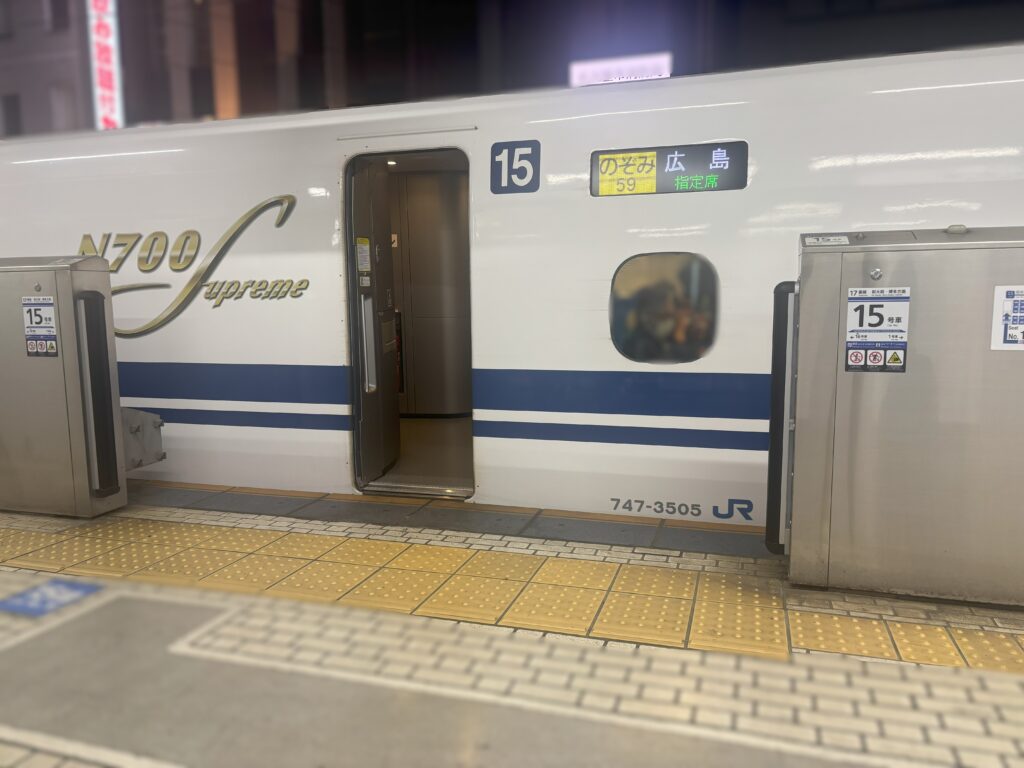
The final train, incidentally, was a JR West N700S set. Ending the journey on the newest generation of Shinkansen was a small bonus for the railway fans among us.

Summary | What ¥27,080 Buys

SectionTrain / classTimesPer person (fare included)
Kakunodate → MoriokaKomachi No. 20, reserved12:57 → 13:48 (51 min)¥3,030
Morioka → TokyoHayabusa No. 26, Gran Class15:17 → 17:32 (2 hr 15 min)¥27,080

What Gran Class included

  • A hot towel about ten minutes after departure, followed by the drinks menu
  • Drinks — sparkling wine and Yebisu beer, chosen individually
  • Glassware carrying the Gran Class emblem
  • Aomori apple and nuts
  • A pound cake, which you may take away with you
  • A powered seat reclining close to flat

Gran Class has a reputation for being an indulgence too far. But on a journey of two hours or more you receive the service in full, and on the way home at the end of a trip, when you’re genuinely tired, we thought it earned its price.


Parts ① and ② of this trip are covered in separate articles.

→ Tohoku Summer Trip 2025 ① | We Just Made the Sendai Tanabata Festival → Tohoku Summer Trip 2025 ② | Akita Shinkansen Komachi & Kakunodate