
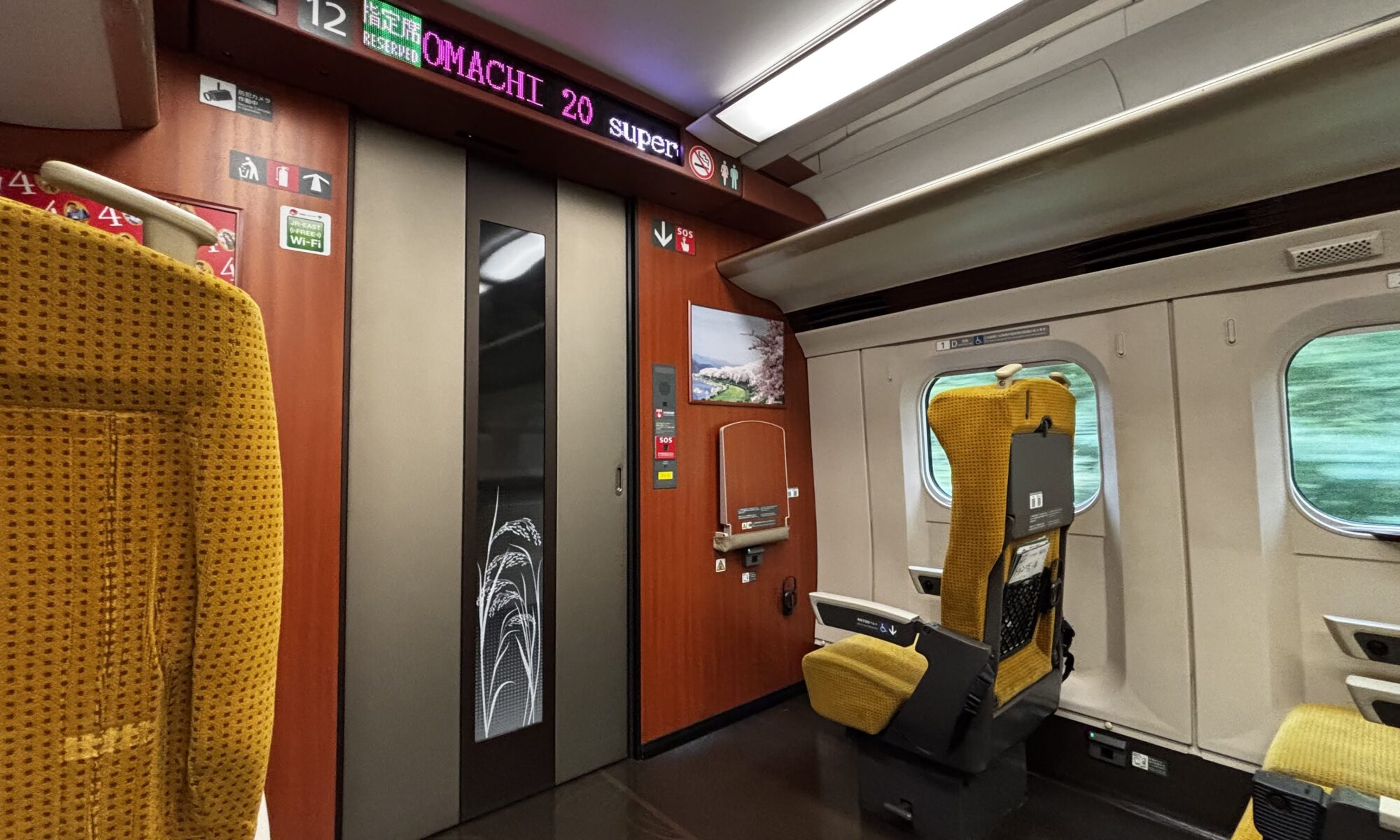
Captivated by the Rice Fields the Komachi Runs Through
What unfolds outside the window of the Akita Shinkansen Komachi is rice paddy, as far as you can see. Akita is the home of Akita Komachi, one of Japan’s best-known rice brands — and true to the name, the sight of the Komachi streaking through those golden ears of rice lifts the mood of the whole trip.
The Akita Shinkansen is unusual even among Shinkansen lines, because part of its route runs on conventional railway tracks. You get Shinkansen speed and small-town railway atmosphere in the same journey, and the result is a flavor you won’t find on an ordinary Shinkansen. If you’re a railway fan, this is a line to ride at least once.
Komachi Trivia The Komachi connects Tokyo and Akita. As far as Morioka it runs coupled to the Hayabusa; at Morioka the two are uncoupled and the Komachi carries on alone to Akita. To make that through service possible, the conventional-line section between Morioka and Akita was regauged from 1,067 mm to the 1,435 mm standard gauge the Shinkansen uses. The trains, in turn, are built with narrower bodies so they fit the tighter clearances of those older lines. This arrangement is known as a “mini-Shinkansen,” and it’s a genuinely interesting piece of engineering.
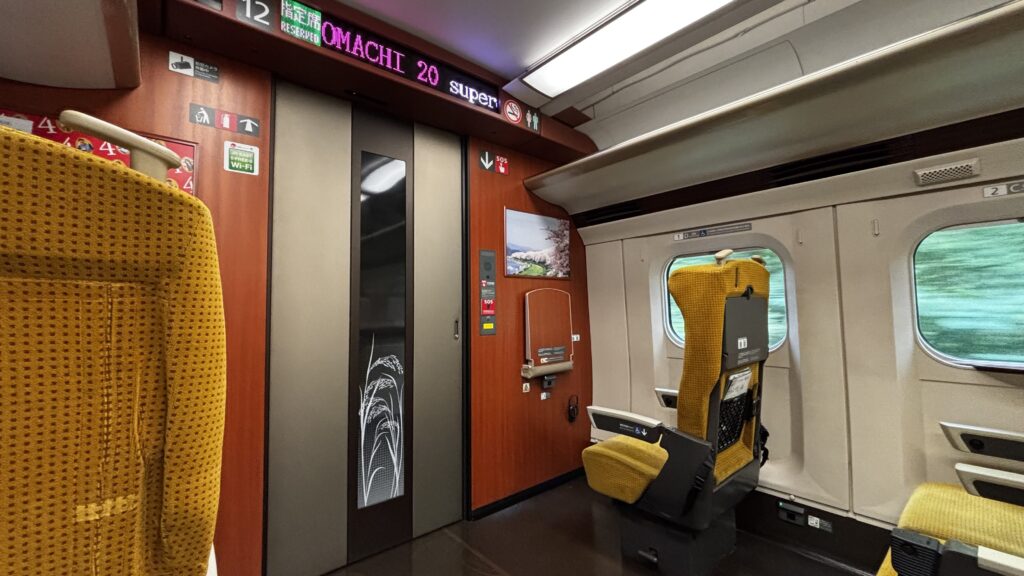
Getting to Kakunodate
Kakunodate is reachable directly from Tokyo on the Akita Shinkansen Komachi.
| From | Journey time | Train |
|---|---|---|
| Tokyo Station | approx. 2 hr 50 min | Akita Shinkansen Komachi |
| Morioka Station | approx. 1 hr | Akita Shinkansen Komachi |
| Akita Station | approx. 45 min | Akita Shinkansen Komachi |
Kakunodate is a small station, but it’s the gateway to a town known for its samurai residences and its cherry blossoms. The main sights are all within walking distance of the station.
Our Base in Kakunodate: Hotel B4T Kakunodate, Right by the Station
For this trip we stayed at Hotel B4T Kakunodate, just a short walk from Kakunodate Station.
This is not an ordinary hotel. For a railway fan, it has something hard to resist: guest rooms themed around the Komachi.
A note on the name: this property was rebranded in February 2026, from Hotel Folkloro Kakunodate to Hotel B4T Kakunodate. If you know it by the old name, it’s the same hotel.
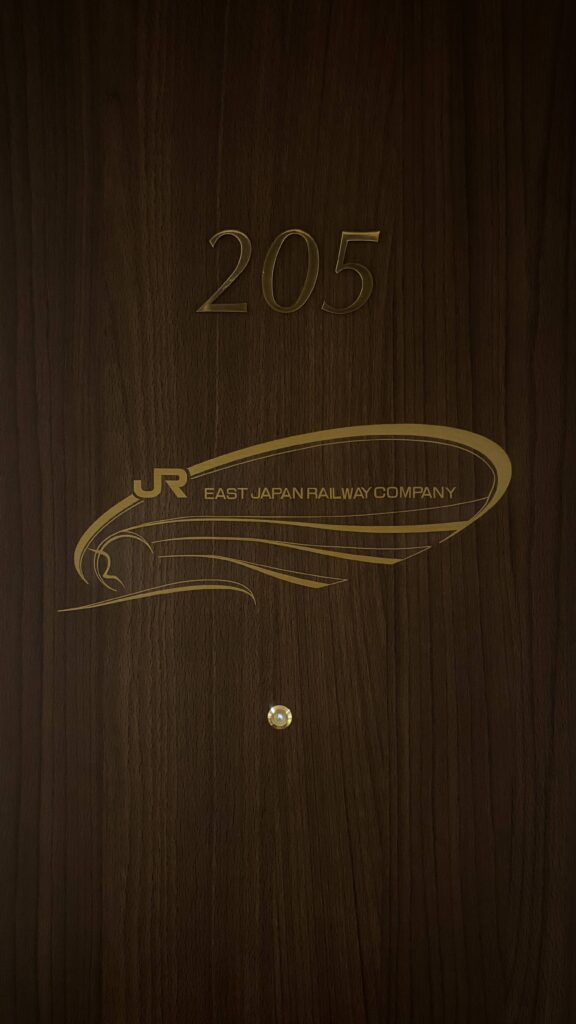
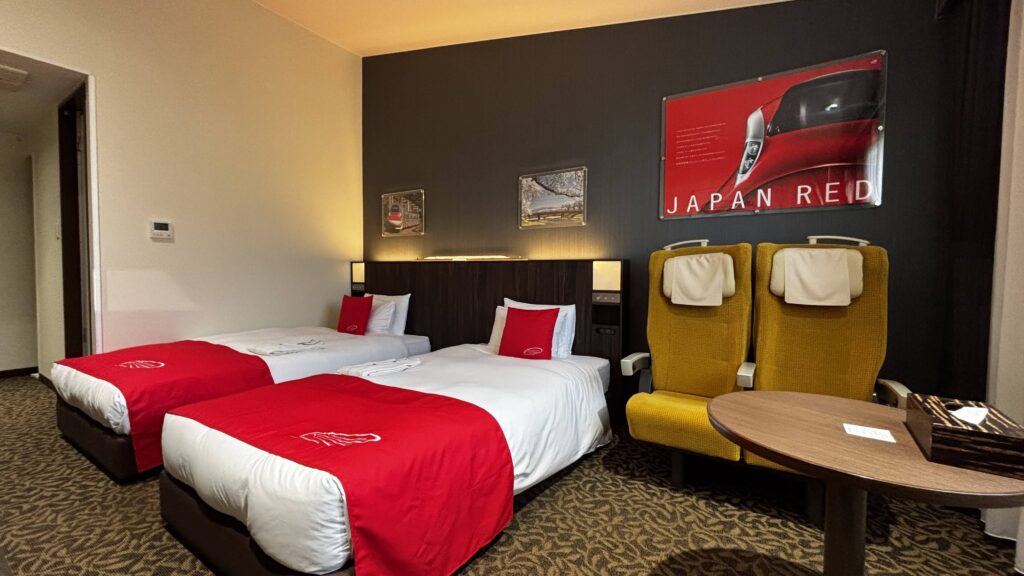
The Door of the Komachi Room
The door to the room carries the Komachi’s emblem, and simply walking down the corridor is enough to lift your spirits. It’s not something you see at a typical hotel, and we ended up taking far too many photos of a door.
From the moment you check in, you feel like you’re on a railway journey. That attention to small details is what makes this hotel a pleasure.
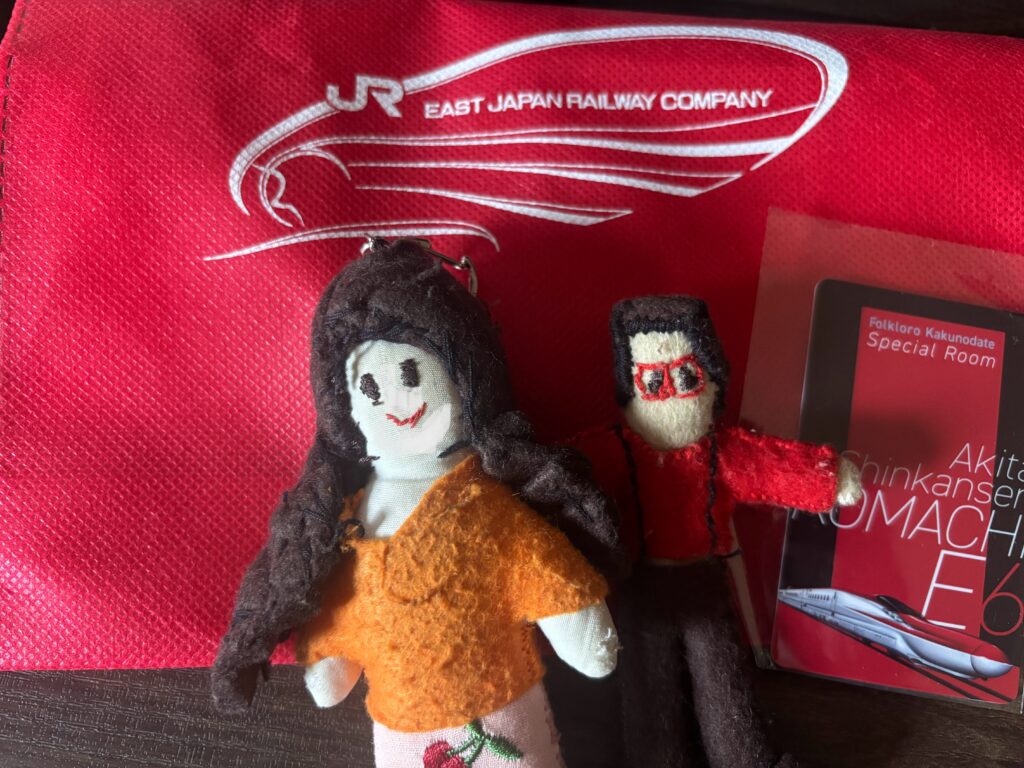
The Room Key Is Yours to Take Home
Better still, you’re officially allowed to keep the room key. Line the key up with the amenities, take a photo, and you have a souvenir of the trip in physical form.
Small touches like this do a lot for how satisfying a stay feels. It’s the kind of keepsake an ordinary hotel simply can’t offer.
A Front-Row Seat: Watching the Komachi from Your Room
What moved us most, though, was the view from the room. Kakunodate Station spreads out beyond the window, and you can lie on the bed and watch the Komachi standing at the platform — a front-row seat built for railway fans.
Every time a train pulled in, we found ourselves drawn to the window. As for exactly what you’ll see, that’s worth discovering for yourself — it’s one of the pleasures reserved for guests.
There’s Plenty to See in Kakunodate
Staying at Hotel B4T Kakunodate also puts you within easy reach of the town’s sights.
Bukeyashiki-dori (the samurai residence street) A street lined with samurai houses dating back to the Edo period, designated by the national government as an Important Preservation District for Groups of Traditional Buildings. The contrast between the black wooden fences and the weeping cherry trees is especially striking.
One of Japan’s finest cherry blossom destinations Kakunodate is known as the “Little Kyoto of Michinoku,” and it’s a celebrated spot for blossoms. In late April, roughly 400 weeping cherry trees and 160 Somei-Yoshino cherry trees come into bloom. Visitors arrive from across the country during peak season, so booking accommodation well in advance is essential.
Autumn is beautiful too Come October, the trees along the samurai district turn red and gold, and the town takes on a quieter seasonal charm. It’s far less crowded than cherry blossom season, which makes autumn a good choice if you’d rather take your time.
Who This Hotel Suits
- Anyone fond of the Akita Shinkansen Komachi
- Travelers who want to see Kakunodate’s samurai district and cherry blossoms
- Anyone curious about staying somewhere with a railway theme
- Travelers looking for a trip with a bit of occasion to it
- Couples planning an anniversary trip
Kakunodate is at its busiest during cherry blossom season (late April) and the autumn colors (October), and rooms become hard to find. We’d recommend booking early.
A Model Course for Akita
| When | What to do |
|---|---|
| Day 1, morning | Tokyo Station to Kakunodate on the Komachi (approx. 2 hr 50 min) |
| Day 1, afternoon | Walk the samurai residence street |
| Day 1, evening | Check in at Hotel B4T Kakunodate and enjoy the Komachi view |
| Day 2, morning | A morning stroll through Kakunodate; cherry blossoms or autumn colors |
| Day 2, afternoon | Onward to Morioka or Akita on the Komachi |
Summary | The Komachi and Kakunodate — A Pilgrimage for Railway Fans
| Access | A short walk from Kakunodate Station |
| Highlights | Komachi-themed rooms; the room key as a souvenir |
| The view | The Komachi standing at Kakunodate Station |
| Best seasons | Cherry blossoms (late April) and autumn colors (October) |
| Best suited to | Railway fans; anyone using Kakunodate as a base for Akita |
It really was a lovely place to stay. Do consider building it into a trip on the Akita Shinkansen Komachi.
This was the middle day of a three-day trip. Sendai, the day before, and Morioka, the day after, are written up separately.