
An hour at Shin-Osaka before your next train? Here is what someone who lives nearby actually does with it: when to buy 551 Horai’s pork buns without queueing, which shops the current renovation has closed, and what is worth skipping.
What this article covers:
・Whether you actually need to spend that hour waiting at all
・When you can buy 551 Horai’s pork buns without queueing
・Which shops the current renovation has closed, and which remain (as of August 2026)
・What locals actually buy as souvenirs, and what I hesitate to recommend
Do You Really Have to Wait That Hour?
Let me start with something unhelpful: if you are changing between Shinkansen trains, you often do not need to wait an hour at all.
With a non-reserved seat you simply board the next train that comes. A reserved seat can usually be changed. A great deal of the time, an hour that has “opened up” can be closed again at the ticket counter. If you are travelling on a rail pass, ask at the ticket office before you resign yourself to waiting.
Still, real one-hour gaps do happen. You may be connecting to a local line where the next train is a while away. You may be waiting for someone, as I once did here for an hour when a friend came to visit. Or you may have a reserved seat that you have good reason not to give up.
This article is for people who genuinely have that hour. I live near Shin-Osaka and use this station regularly, so what follows is simply what I do.
Shin-Osaka Is Under Renovation Right Now
One thing to know before you plan anything: the shopping area on the local line side of the station is being renovated, and a number of shops are currently gone. This is the situation as of August 2026, and no completion date has been announced.
Many guides online still list shops that no longer exist. As you will see below, some of the places I used to rely on have disappeared too.
551 Horai Pork Buns: When You Can Actually Buy Them
Butaman, steamed pork buns, from 551 Horai are the classic Osaka souvenir. Whether you queue or not comes down entirely to timing.
I buy them about once a month, and this is my experience. On weekdays after 7:30pm the line gets dramatically shorter, and that is the window to aim for. At weekends the queue is intimidating, and if you only have an hour I would give up on it rather than gamble.
Here is something that surprises a lot of people: you can buy a single bun. Most visitors assume they only come in boxes and rule them out entirely, but the shop will happily sell you just one. Grabbing one for yourself between trains is a perfectly normal thing to do.
If you buy the chilled type rather than the hot one, it travels fine on the Shinkansen.
Takomasa’s Akashiyaki (2nd Floor)
I like this place and eat here now and then. Akashiyaki is a softer, egg-rich relative of takoyaki: octopus dumplings that you dip into dashi broth rather than coat in sauce.
I will be honest, though. It gets busier than you would expect.
Some guides say fifteen minutes is enough. Depending on the queue, that is optimistic. If you have one hour and try to fit in both a meal and souvenir shopping, you will end up rushing one of them.
If you are going to eat, give up on the shopping. That is the realistic trade-off.
Souvenirs: Honestly, This Is the One
Takopatie (2nd floor, 3rd floor, and convenience stores)
Takopatie is regularly voted the most popular souvenir at Shin-Osaka. There is a saying in Japan that famous local specialities are never actually good. This one is the exception. It is genuinely delicious.
There are three reasons I keep buying it. It is light, so it does not weigh down your bag even if you buy it at the very end of a trip. The twelve-piece box is the right size and the right count for handing out. And you can buy it almost anywhere in the station: the souvenir shops on the second and third floors, and even the convenience stores.
That last point is what matters when you only have an hour. You do not have to queue at a speciality counter, because you can pick it up at a convenience store.
Tenten’s Bite-Sized Gyoza: Not for Everyone, Honestly
This one gets recommended constantly, but I do not push it.
I have bought it as a gift. The problem is that it is difficult to cook. The dumplings are small and thin, so if you get the heat wrong they do not turn out well. As a present for someone who enjoys cooking, it is a fine choice. As a souvenir that anyone will be pleased with, I think the bar is a little high.
Kiyasu Sohonpo’s Mitarashi Dango: No More Fresh Off the Grill
I used to come here often, because you could buy the dango grilled to order in the local line shopping area. Skewers with a fragrant char, handed over the same day, made an excellent gift.
The renovation has taken that shop away. You can still buy the dango at the souvenir section near the Shinkansen gates, but buying them fresh off the grill is not something you can do at the moment.
Rikuro’s: It Has Moved
Rikuro’s is known for its freshly baked cheesecake. Its shop in Ekimarche, on the local line side, is also gone during the renovation.
There are still counters on the third floor by the Shinkansen gates and in the third-floor souvenir shop, so if you are waiting for a Shinkansen you can pick one up on your way through.
The Steam Locomotive Driving Wheels on the 1st Floor
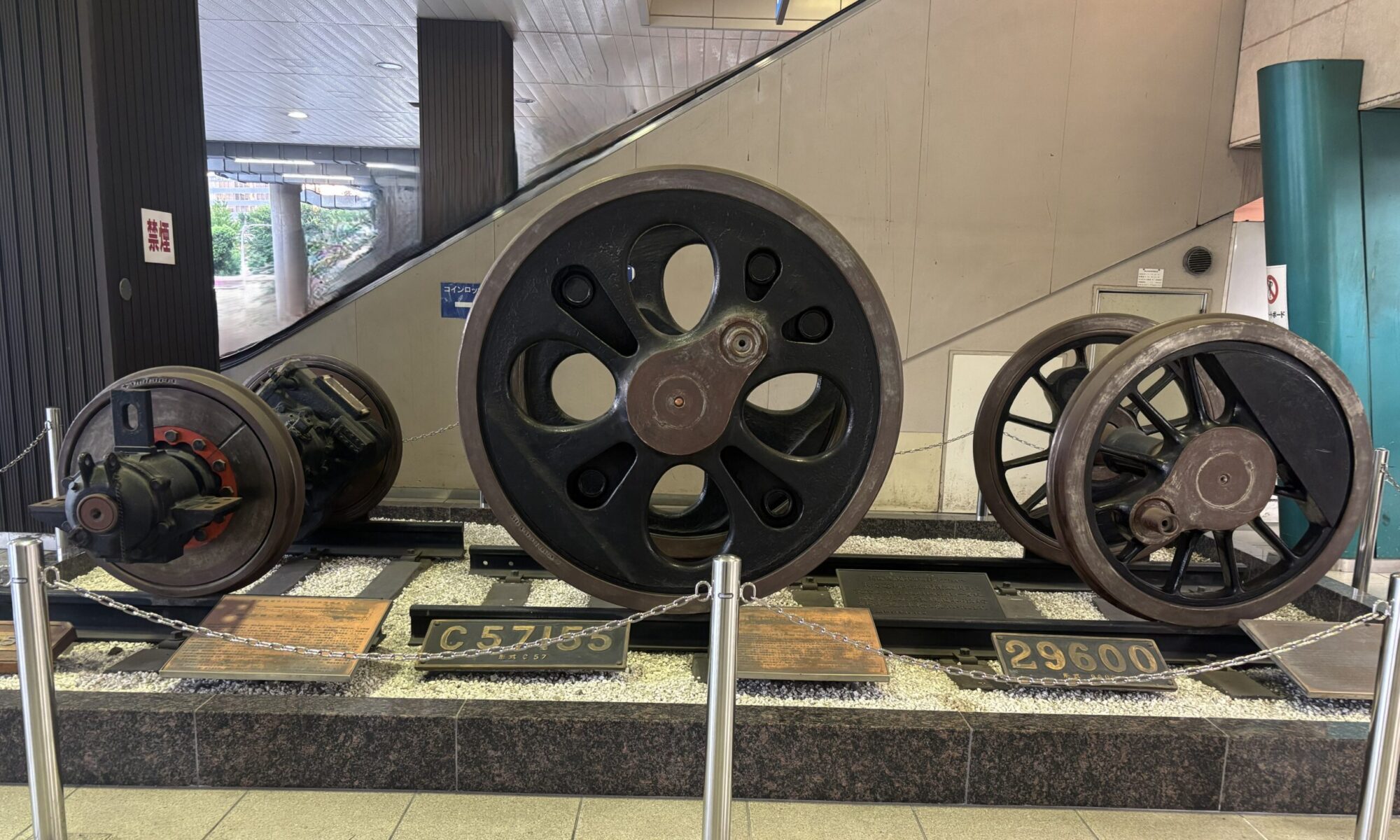
If you like trains, go down to the first floor when you get the chance. Three wheelsets are displayed beside the escalator.
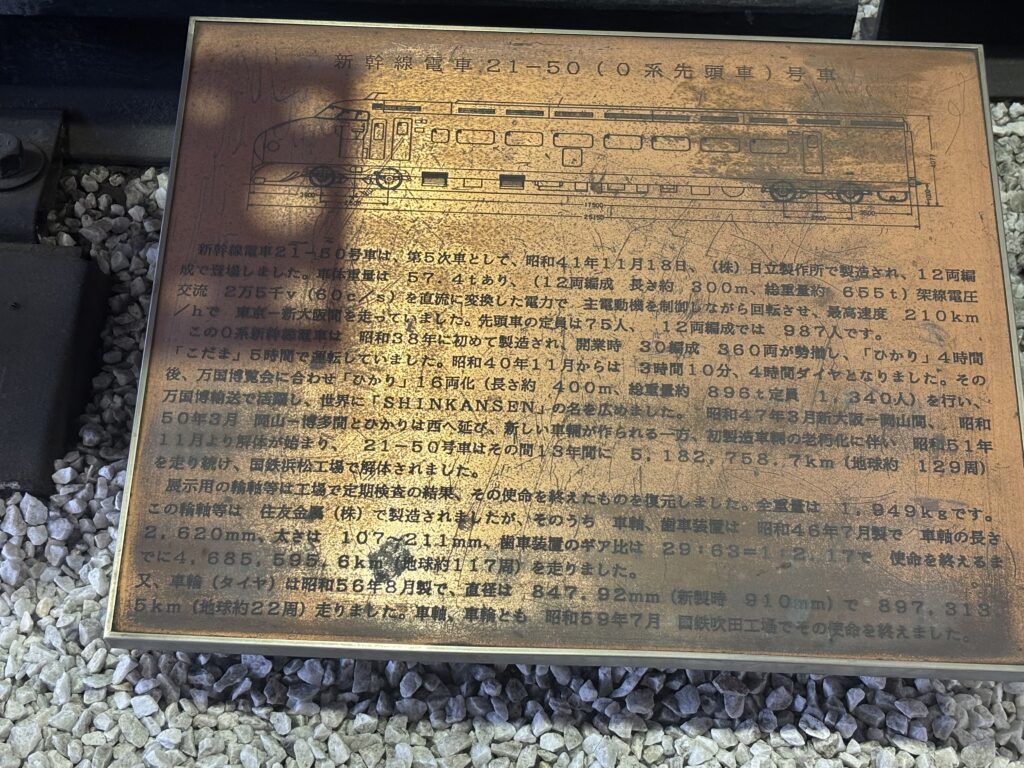
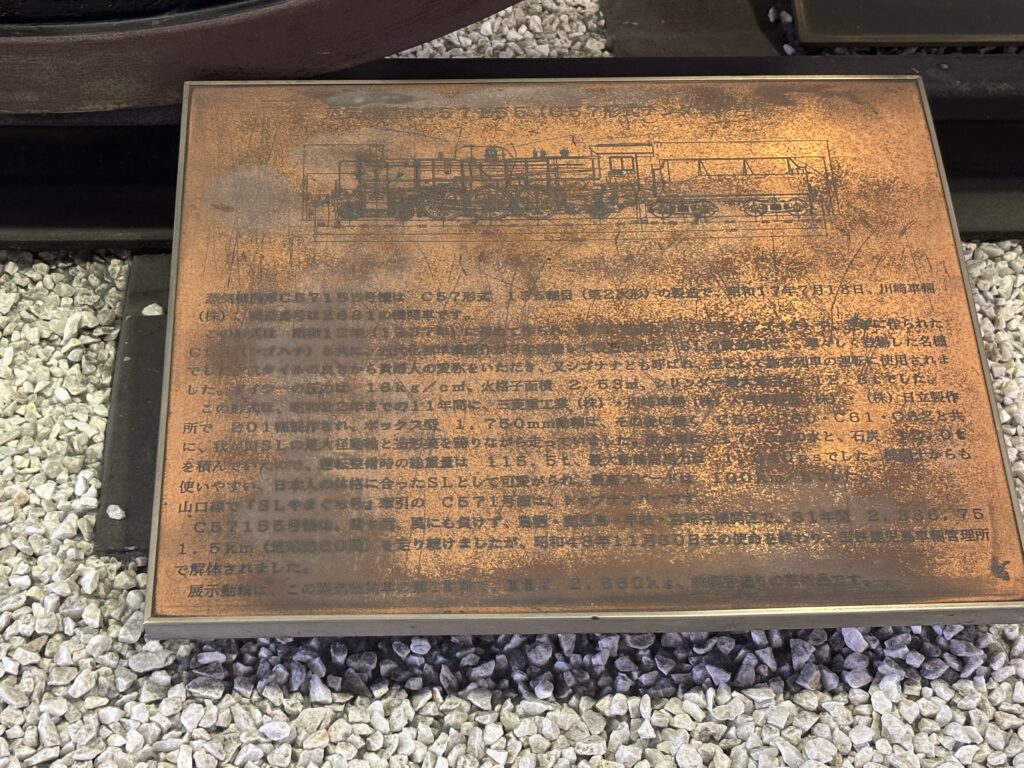
From left to right: a wheelset from car 21-50 of a 0 Series Shinkansen, a driving wheel from the C57 155 locomotive, and a driving wheel from the 29600. Each has its own brass plate, and the plates are worth stopping to read.
The 0 Series plate records that this wheelset covered 5,182,758.7 km over thirteen years, roughly 129 times around the Earth. The wheel began life 910 mm in diameter and had worn down to 847.92 mm by the time it was retired.
C57 155 was built by Kawasaki Sharyo in 1942 and ran for thirty-one years. What is on display is its second driving wheel, 1,750 mm across and weighing 2,880 kg.
I stop and look every time I have a reason to be on the first floor. It is inside the station, so a few minutes is all you need.
Nakajima Soja Shrine: Five Minutes on Foot
If you have a little room in your schedule, Nakajima Soja is about a five-minute walk from the station.
It is a shrine with more than 1,300 years of history and almost no tourists. Locals simply call it the Nakajima shrine. I go there myself at New Year.
Allow fifteen minutes for the walk there and back plus the visit itself. If you only have an hour, you will have to cut something else to make room.
The Roof Garden at Arde Shin-Osaka
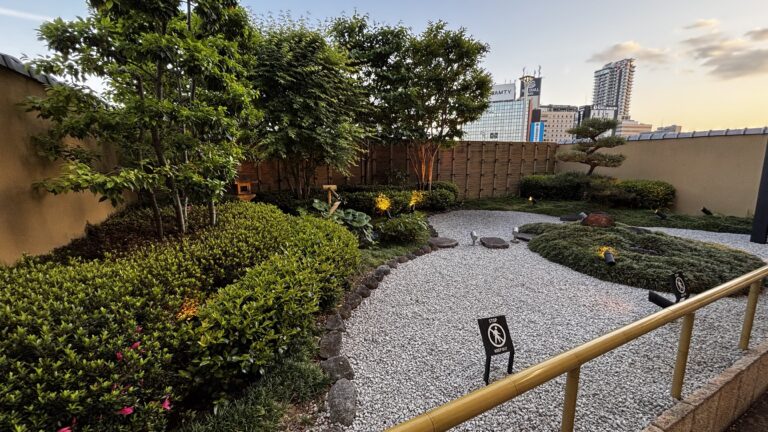
Arde Shin-Osaka, the shopping complex connected to the station, has a roof garden.
The appeal is the surprise of it: a garden, at Shin-Osaka. There are benches, so it works perfectly well as a place to sit down for a while.
One honest warning. You cannot see the Shinkansen from here. It is sometimes described as a hidden train-watching spot. It is not one. Come for the novelty of finding greenery at the station, not for the trains.
In Summary: With One Hour, Don’t Try to Do Everything
What you want to do | Realistic time | Notes
| What you want to do | Realistic time | Notes |
| Akashiyaki at Takomasa | Depends on the queue | Do this and skip everything else |
| 551 Horai pork buns | Minutes on a weekday evening, long queue at weekends | You can buy a single bun |
| Takopatie | Minutes, convenience stores included | If in doubt, this one |
| Steam locomotive wheels (1F) | A few minutes | Inside the station |
| Nakajima Soja Shrine | 15 minutes there and back | Outside the station |
| Arde roof garden | 10 minutes | No Shinkansen view |
You cannot fit all of it into an hour. Choosing between a meal and shopping is the realistic approach.
And to repeat the point I opened with: if you are travelling by Shinkansen, changing your train time is also an option.
If you have half a day rather than an hour, Umeda is only a few minutes away by train.