
Gion Festival Has More to Offer Than the Main Boulevard!
Gion Festival is one of Kyoto’s most iconic summer traditions. This time, instead of sticking to the main street, we discovered a whole new way to enjoy the festival — wandering through Kyoto’s narrow back alleys to find the floats and mountain floats tucked away in quieter corners of the city.
Arare Tenjin-yama: A Place That Brought Back Student Memories
Our first stop was Arare Tenjin-yama.
This float is famous for its protective power against fire, and it also happened to be a place I visited during my student days. Revisiting it brought a wave of nostalgia — and yet, looking at it with fresh eyes, I noticed new details I’d never seen before. It reminded me just how deep the history of Gion Festival really runs.
About Arare Tenjinyama: One of the iconic floats of Gion Matsuri, this float is said to have protected the city from a devastating fire in 1582 (the 10th year of the Tensho era). Its chimaki (sacred rice dumplings) are popular as fire-prevention charms and sell out quickly each year.
A New Way to Enjoy Gion Festival — Why the Back Alleys Are Worth Exploring
Here’s what makes wandering the side streets such a special experience:
- Fewer crowds than the main boulevard — you can take your time and look properly
- A warmer, more intimate atmosphere with locals nearby
- Each float and mountain float has its own unique history and story to discover
- The contrast between the traditional Kyoto townhouses and the floats makes for stunning photos
The back alleys of Gion Festival are a hidden gem — and one we’d highly recommend adding to your itinerary.
Kikusui-hoko: Another Highlight Along the Way
Next, we stopped by Kikusui-hoko. Unlike the famous floats lining the main street, the floats and mountain floats tucked into the side streets have a quietly different atmosphere.
Walking these narrow lanes, you can feel the living culture of the festival — lovingly preserved and carried forward by the local community, generation after generation.
Kikusui-hoko is one of the floats in the Gion Festival’s Sakimatsuri (front festival). It takes its name from the Noh play “Kiku Jido” and is said to grant the blessing of longevity. Original Kikusui-hoko tea and sweets are also sold on the float itself.
Things to Know Before Visiting Gion Festival
Gion Festival runs throughout the entire month of July, from the 1st to the 31st. The highlight events are the Sakimatsuri yamahoko procession on July 17th and the Atomatsuri procession on July 24th — but the Yoiyama evenings (the nights before the processions) are also incredibly lively, with food stalls and float displays filling the streets.
Tips for your visit:
- Wearing a yukata (summer kimono) adds to the atmosphere and is highly recommended
- If you want to avoid the biggest crowds, weekday mornings are your best bet
- Some floats offer paid boarding experiences — well worth trying if you get the chance
- Chimaki (protective rice dumpling charms) sold at each float make wonderful souvenirs
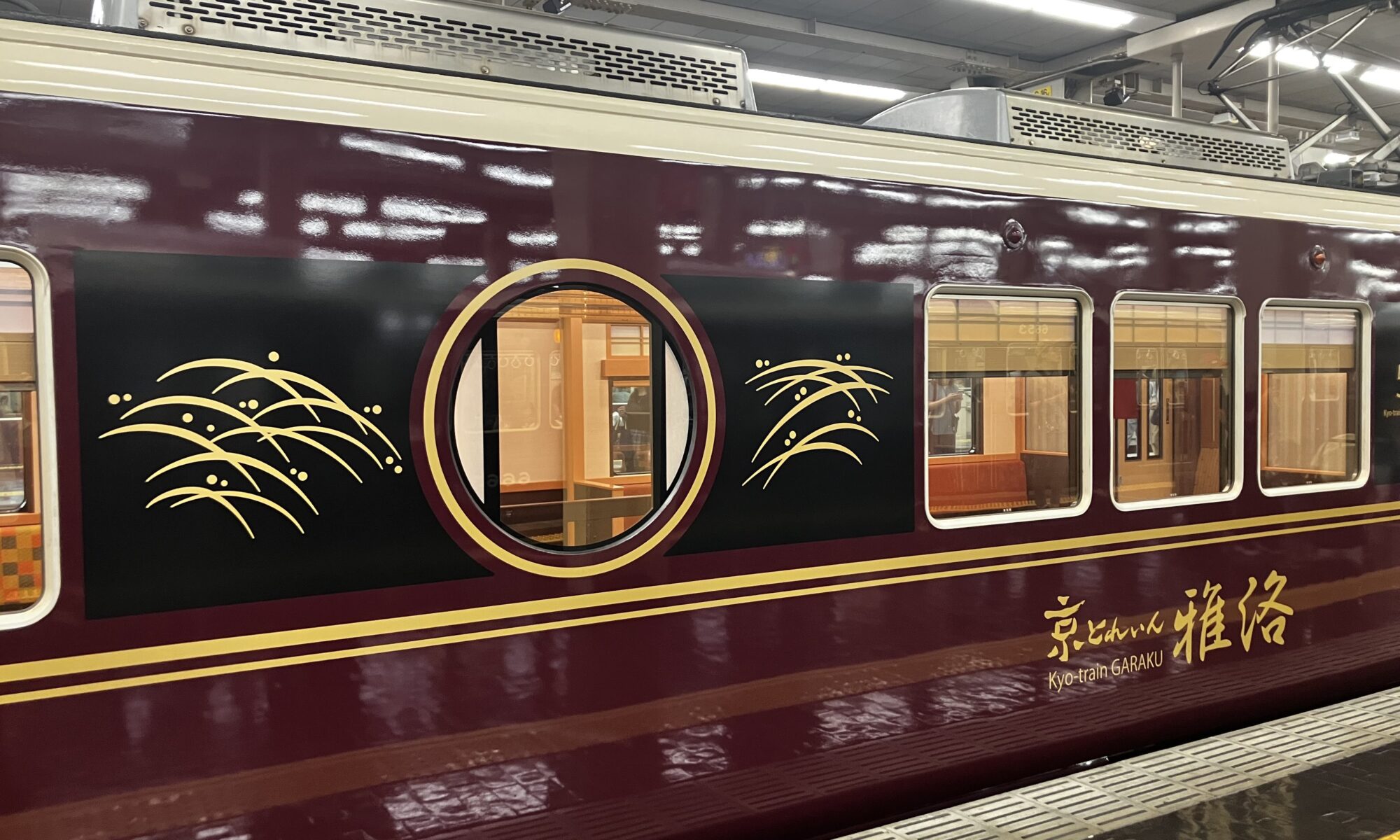
On the Way Home — A Chance Encounter with the Kyototrain Garaku!
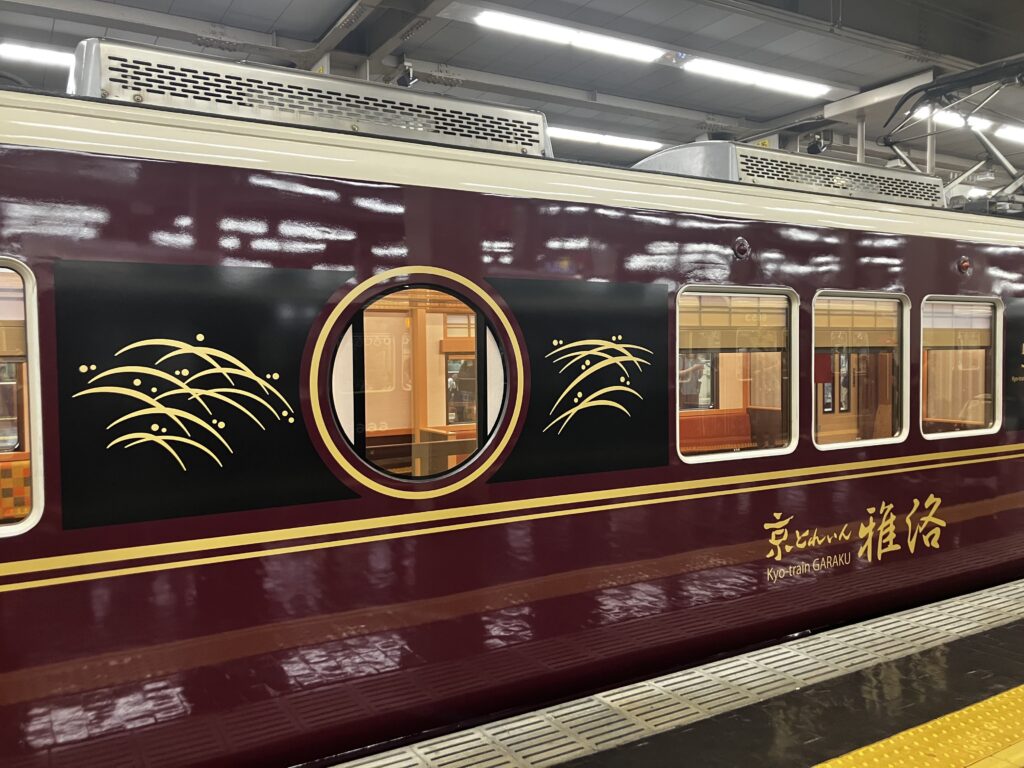
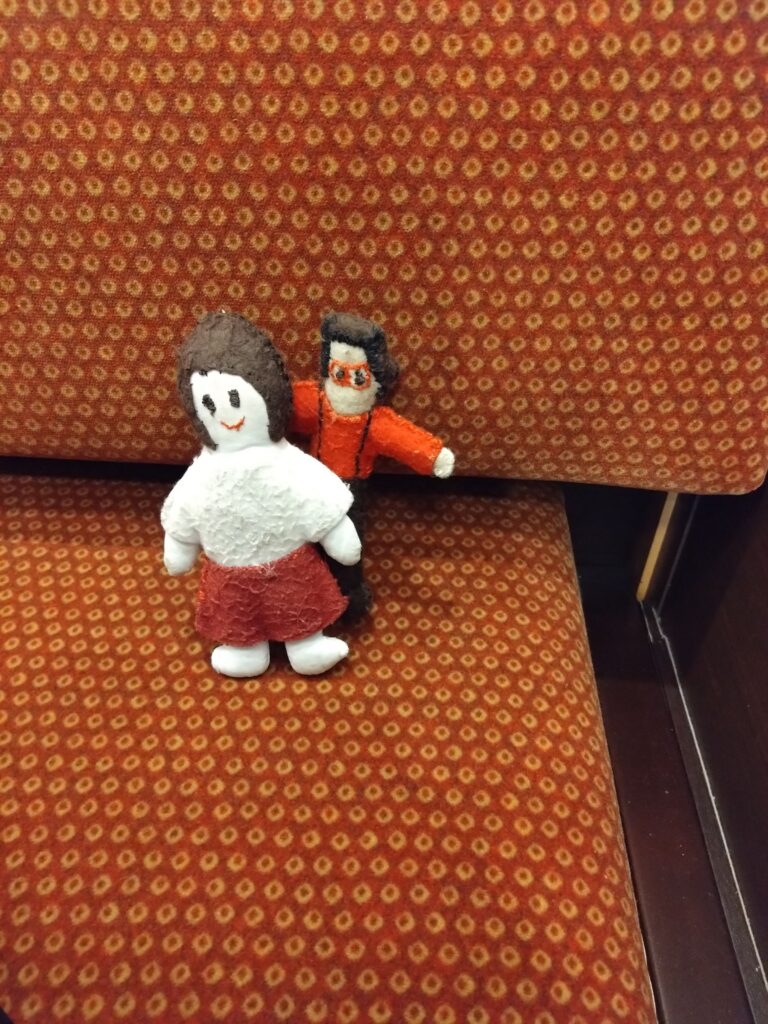
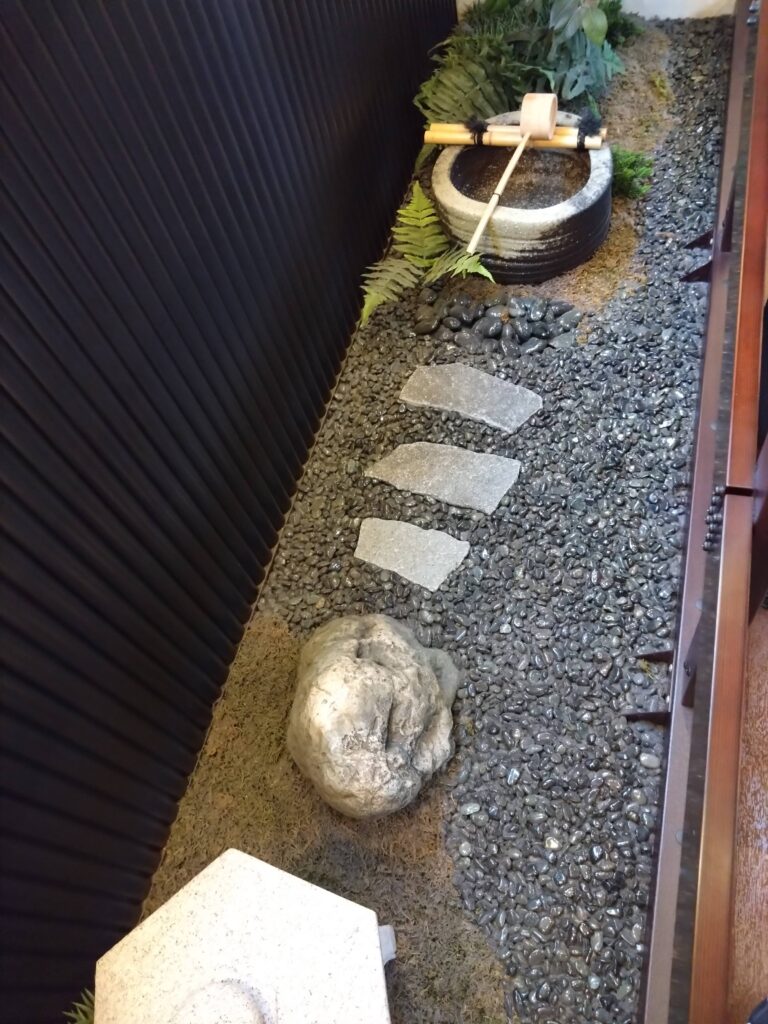
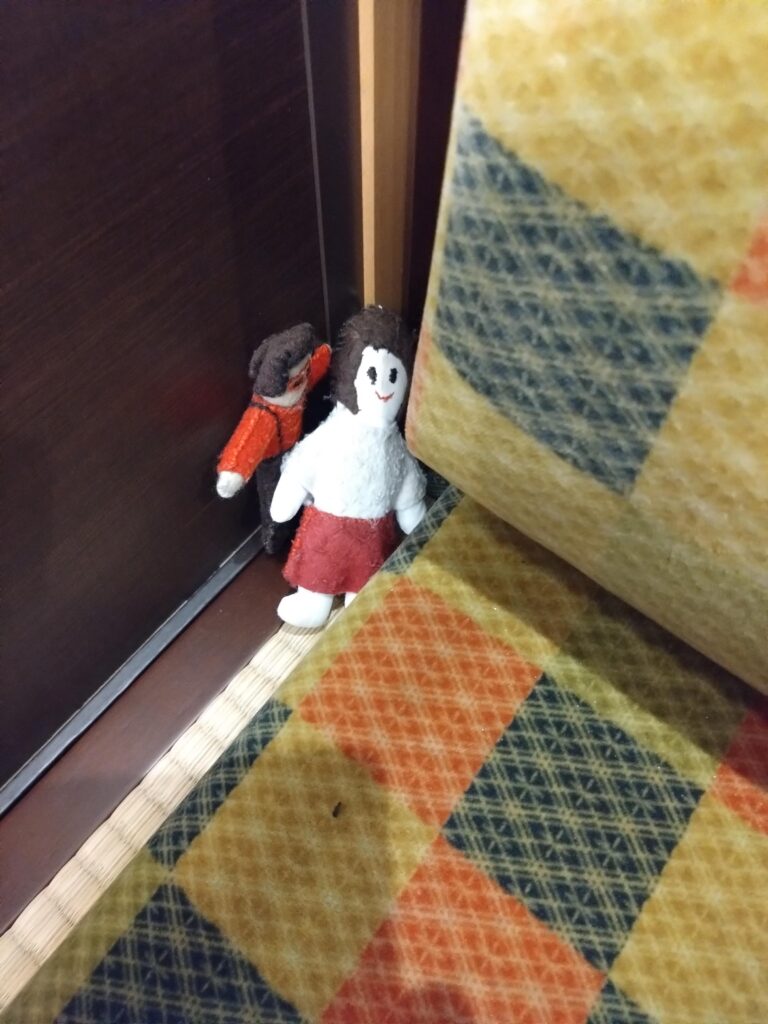
After finishing our stroll, we were heading home when we stumbled upon the Kyototrain Garaku — and somehow managed to get on board!
This was a train I’d always wanted to ride. The beautiful Japanese-inspired interior design, evoking the changing seasons throughout the carriages, was everything I’d hoped for. Even the Mascots were unusually quiet, clearly soaking in the atmosphere (laughs).
Each carriage features a different interpretation of traditional Japanese aesthetics — from a karesansui dry garden space to wooden bench seating reminiscent of a traditional engawa veranda. The BGM playing softly through the carriages was equally Japanese in feel, making the whole journey feel like an extension of Kyoto itself.
Stumbling onto the Kyototrain at exactly the right moment felt like the perfect reward to round off the day. With the lingering warmth of Gion Festival still in our hearts, we made our way gently back to Osaka. Next time, I’d love to plan the trip around the train schedule so we can enjoy the full experience from start to finish.
The Kyototrain is a sightseeing train operated by Hankyu Railway. Themed around traditional Japanese aesthetics, each carriage features a different seasonal landscape. It runs mainly on weekends and public holidays between Osaka-Umeda and Kyoto-Kawaramachi. Check the schedule in advance before your visit.
If you’d like to watch Hankyu trains at leisure, Aman Ruins Park in Takatsuki is a good spot
Recommended Itinerary: Gion Festival + Kyototrain
| Time | Activity |
|---|---|
| Morning | Arrive in Kyoto, begin back-alley festival stroll |
| Late morning | Visit Arare Tenjin-yama, Kikusui-hoko and more |
| Midday | Lunch at a Kyoto restaurant |
| Afternoon | Continue exploring the side-street floats |
| Evening | Board the Kyototrain from Hankyu and head back to Osaka |
Summary: Gion Festival Back Alleys + Kyototrain — The Perfect Kyoto Summer Combination
| Highlight | What Made It Special |
|---|---|
| Arare Tenjin-yama | Fire-protection charm, nostalgic memories from student days |
| Kikusui-hoko | Longevity blessing, quiet side-street atmosphere |
| Kyoto back alleys | A hidden, unhurried way to experience Gion Festival |
| Kyototrain | Japanese-inspired interior, soaking in the Kyoto afterglow |
Gion Festival takes place every July. The Yoiyama evenings and yamahoko processions are especially crowded, so book your accommodation well in advance!
There was one more Kyoto festival that summer: the Mitarashi Festival at Shimogamo Shrine.