
A one-day summer trip to Kyoto: the Keihan Rakuraku from Osaka, cooling our feet at Shimogamo Shrine’s Mitarashi Festival, and Honno-ji Temple.
When you think of summer in Kyoto, the Gion Festival is probably the first thing that comes to mind. This time, I hopped on the Keihan Railway’s rapid limited express “Rakuraku” for a day trip covering the Mitarashi Festival at Shimogamo Shrine, the Shijo area where traces of the Gion Festival linger, and Honno-ji Temple — a must-see for history fans. Here’s my full report on the charms of Kyoto that you can only experience in the heat of summer!
Starting the Trip in Comfort on the Keihan Rapid Limited Express “Rakuraku”
Whenever I travel from Osaka to Kyoto, my goto train is the Keihan Railway’s rapid limited express “Rakuraku.” You can board at Yodoyabashi or Kyobashi Station, and with only a few stops along the way, it whisks you to Demachiyanagi Station in no time. True to its name — a play on words meaning “to Kyoto (Raku), with ease (raku)” — the concept itself is charming.
The best thing about the Rakuraku is, without a doubt, its comfort. If you opt for the Premium Car, you can spend the ride in style in a spacious reclining seat. The Uji River and Kyoto’s townscape drift past the window, building anticipation for the day ahead. Departing while the morning is still cool also means you get a full day for sightseeing. This time, I left Yodoyabashi Station around 10 a.m. and arrived at Demachiyanagi Station about 50 minutes later. Note that the Rakuraku mainly runs on weekends and public holidays, so be sure to check the schedule before you go. Advance reservations are required for the Premium Car — book here!
Praying for Good Health at Shimogamo Shrine’s Mitarashi Festival
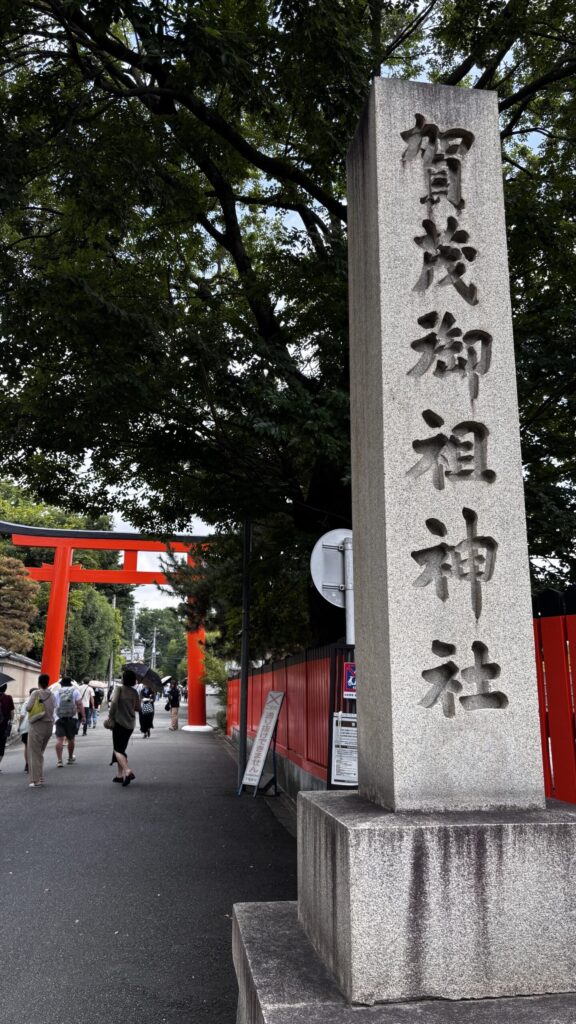
About a 12minute walk from Demachiyanagi Station, I arrived at Shimogamo Shrine, nestled in the greenery of the Tadasu no Mori forest. Officially known as Kamo Mioya Shrine, it is a venerable shrine registered as a UNESCO World Heritage Site. Summer at Shimogamo Shrine is synonymous with the famous Mitarashi Festival, held every year around the “Doyo no Ushi” day of midsummer.
Also known as the “footdipping ritual” (ashitsuke shinji), the Mitarashi Festival is a beloved summer tradition in which visitors wade into the shrine’s Mitarashi Pond to pray for health and protection from illness. Holding a candle in hand, you walk through the chilly spring water. The water is said to stay around 15°C even in summer — cold enough to make you gasp at first! But as I kept walking, it strangely began to feel pleasant, and I felt a refreshing sensation, as if all the impurities were being washed out of my body.
I offered my candle at the small shrine at the far end of the pond and prayed earnestly for good health. After drying your feet, you can also write a wish on an “ashigata kitogi” (foot-shaped prayer plaque) available at the shrine and dedicate it. And here’s a fun fact: this Mitarashi Pond is said to be the birthplace of mitarashi dango, the famous sweet soy-glazed dumplings! After your visit, be sure to try some at a nearby teahouse — the fragrant aroma of freshly grilled dango is irresistible.
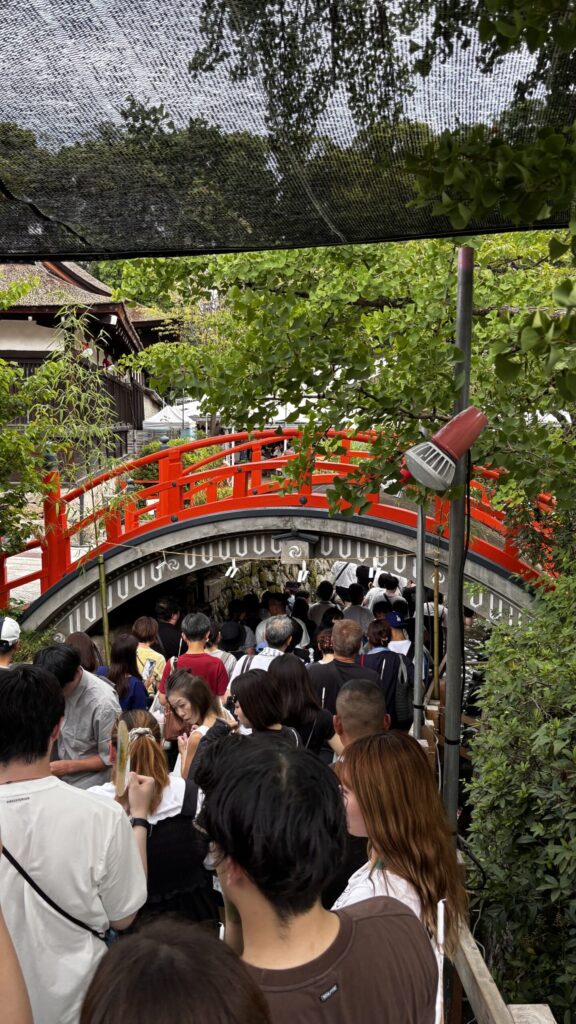
A word of advice: weekends during this period get extremely crowded. That said, the Tadasu no Mori forest provides plenty of shade, and the line moves quickly, so this is one ritual I wholeheartedly recommend experiencing.
Strolling Shijo and the Otabisho: Echoes of the Gion Festival
Leaving Shimogamo Shrine behind, I took the Keihan Line from Demachiyanagi to Gion-Shijo Station. In July, Kyoto is all about the Gion Festival. Even if you miss the grand float processions of the Saki Matsuri (early festival) and Ato Matsuri (later festival), the afterglow of the celebration lingers everywhere.
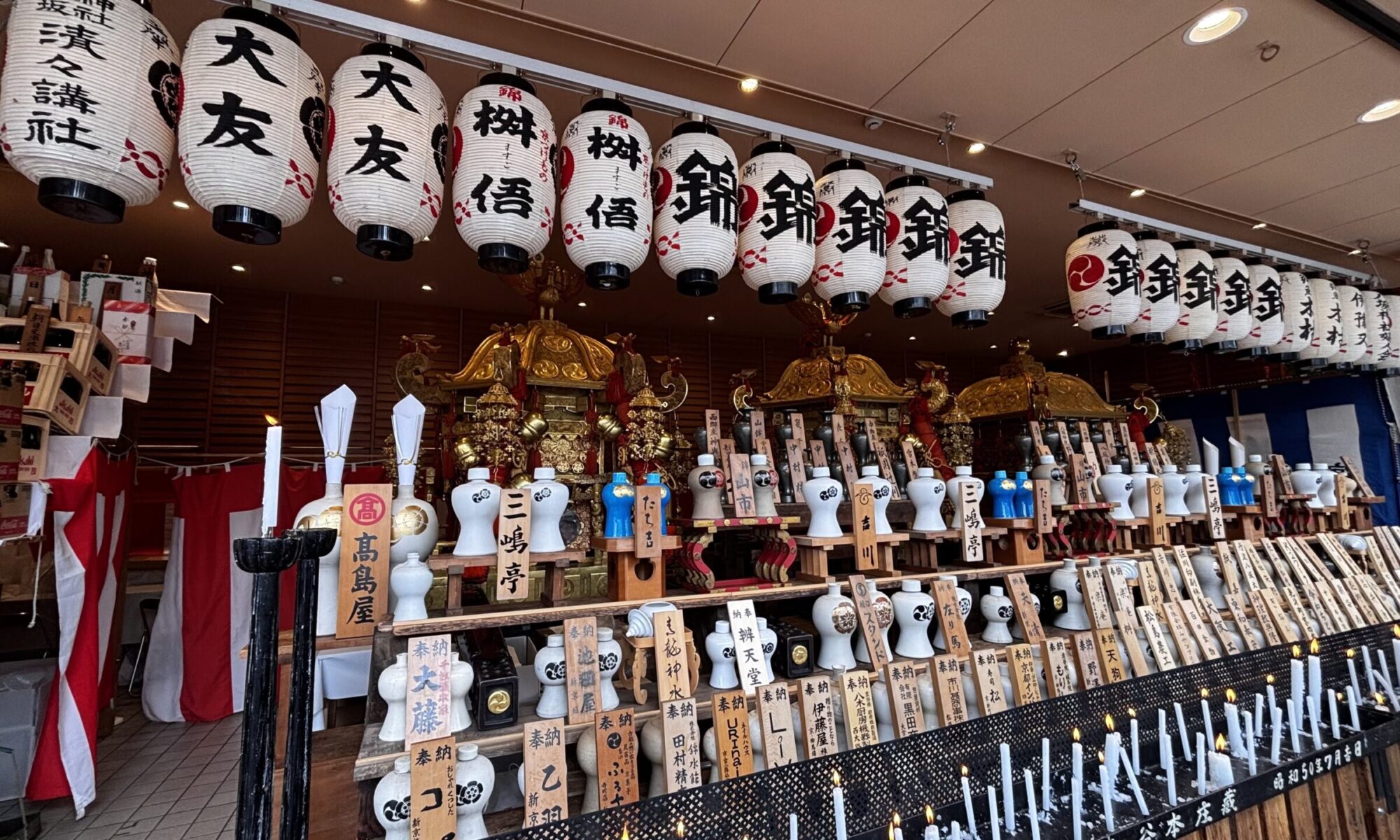
Walking along Shijo Street, I came across the Otabisho — the resting place where the portable shrines (mikoshi) of Yasaka Shrine are enshrined after the Shinkosai procession. Known as the Shijo Otabisho, it stands on Shijo Street just east of Teramachi Street. During the Gion Festival, the mikoshi remain here for seven days, receiving the prayers of the townspeople. Even when the mikoshi are absent, passing by the Otabisho you can sense the living history and tradition of the Gion Festival — I couldn’t help but stop and take it all in.
Step into the side streets off Shijo, and you’ll catch glimpses of how deeply the festival is woven into local life: machiya townhouses that retain the atmosphere of the historic float-building neighborhoods, residents putting away festival lanterns, and more. Visiting slightly off-peak lets you connect with Kyoto’s culture on a deeper level — one of the true joys of travel.
Honno-ji Temple and the Site of the Honno-ji Incident: Visiting a Turning Point in History
A short walk north from Shijo brought me to Honno-ji Temple on Teramachi Street. The temple is famous for the “Honno-ji Incident,” but here’s the thing: the present-day Honno-ji actually stands in a different location from where Oda Nobunaga met his end.
The current temple was relocated to this site in 1591 (Tensho 19) as part of Toyotomi Hideyoshi’s redevelopment of Kyoto. The grounds include a memorial tower for Nobunaga and a treasure museum displaying items connected to him — an absolute delight for fans of Sengoku-era history. After paying my respects at the main hall, I toured the museum and viewed Nobunaga’s personal effects and letters. The history you learned from textbooks confronts you here as vivid reality.
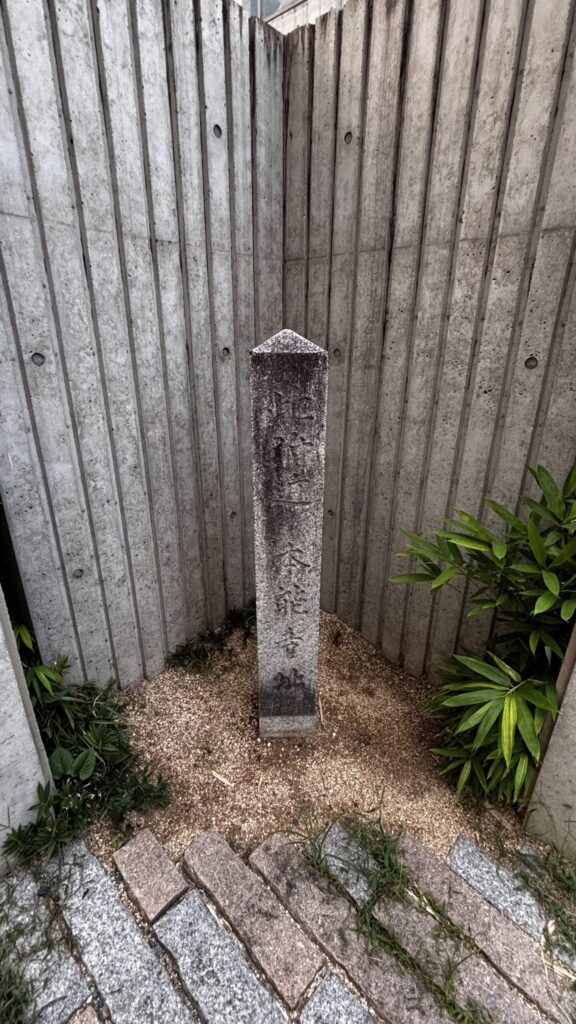
And there’s one more place I urge you to visit: the site of the original Honno-ji. The actual location of the Honno-ji Incident lies about one kilometer west of the current temple, near the intersection of Aburanokoji and Takoyakushi Streets. Today, only a stone marker and an information board remain, surrounded by apartment buildings and shops. Yet standing on that unassuming street corner, you can’t help but be moved by the thought that an event which changed the course of Japanese history happened right here. Visiting both the temple and the original site gave me a much deeper appreciation of the layers of history.
In Closing: Summer in Kyoto Is Best Enjoyed Chasing History and Cool Relief
This trip packed a lot into one day: a comfortable ride on the Keihan Rakuraku, cooling off at Shimogamo Shrine’s Mitarashi Festival while praying for good health, strolling the Shijo area still aglow with the spirit of the Gion Festival, and soaking in history at Honno-ji Temple and the site of the original temple.
Kyoto summers have a reputation for brutal heat, but there are plenty of places to stay cool — the chilly spring water of the Mitarashi Festival, the shade of the Tadasu no Mori forest, and more. And by timing your visit to avoid peak events like the float processions, you can enjoy the festival atmosphere without the crowds. History, nature, and living traditions — that’s summer in Kyoto. Hop on the Rakuraku and discover your own Kyoto journey!
The day I walked the back streets of Gion Matsuri is written up separately.
There is another way from Osaka to Kyoto: the Thunderbird limited express, 27 minutes for 450 yen