
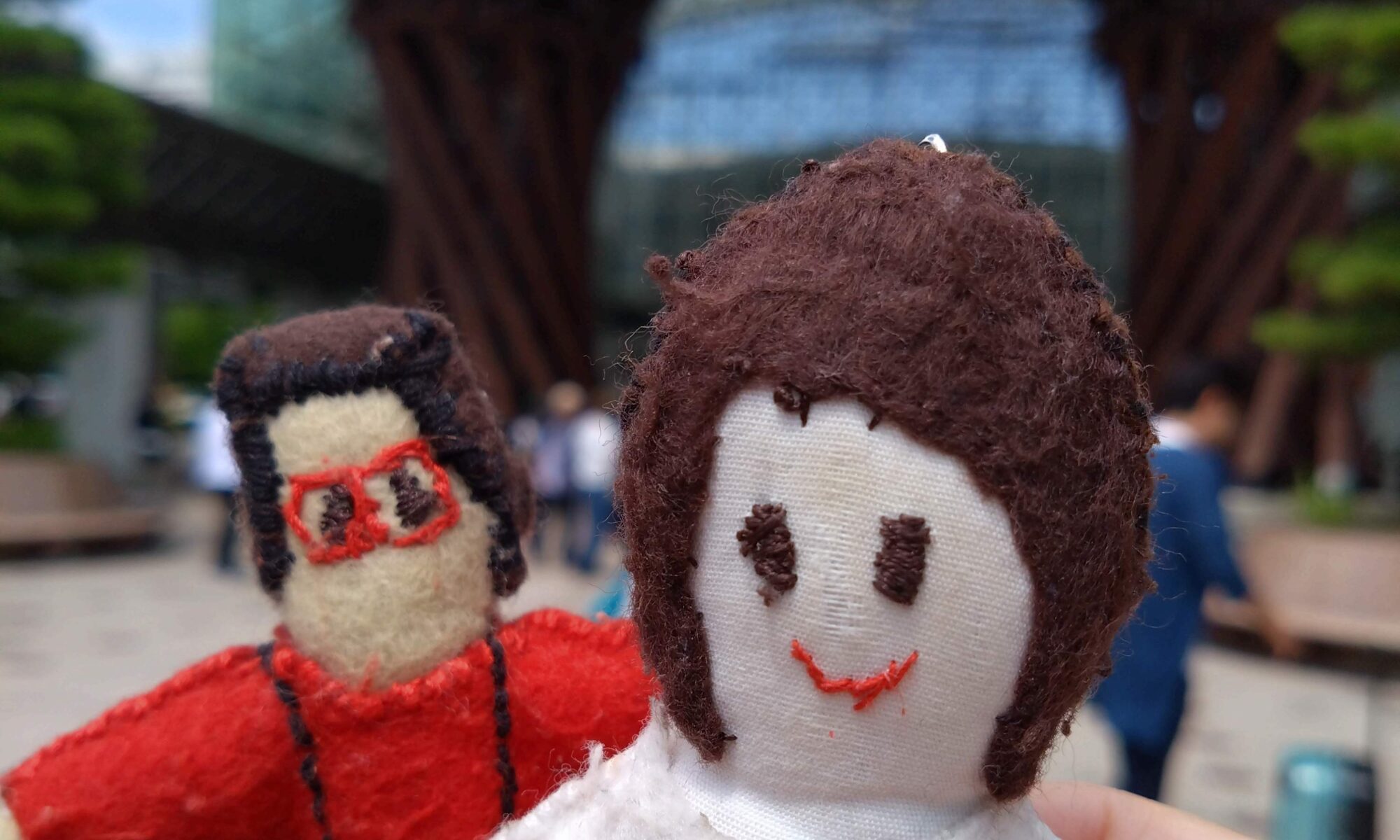
14 August 2024. Our summer trip began early in the morning at Nagoya Station. Day one was meant to be a straightforward run up to Kanazawa and nothing more. Then, that evening, a typhoon turned the whole plan upside down.
Leaving Nagoya at 7:51 — and a Surprising Fact About the Shirasagi No. 1
The first train of the trip was the Limited Express Shirasagi No. 1, departing Nagoya at 7:51.
“Number 1 must mean it’s the first run of the day,” we assumed. It turns out that isn’t the case. This set had already made a run that morning as a “Home Liner” commuter service before taking up its duty as the Shirasagi.
So “No. 1” doesn’t mean the train hasn’t been anywhere yet. We boarded the freshly turned-out Shirasagi No. 1 and set off along the shore of Lake Biwa toward Tsuruga.
Day one, on the rails Limited Express Shirasagi No. 1 — Nagoya 7:51 → Tsuruga 9:27 (Car 4, seats 1A and 1B) ‹ 19-minute connection at Tsuruga › Hokuriku Shinkansen Tsurugi No. 8 — Tsuruga 9:46 → Kanazawa 10:43 (Car 7, seats 9D and 9E) ¥18,960 for two adults = ¥9,480 per person (¥4,970 limited express charge + ¥4,510 base fare) As of August 2024
Turning the Seats Around by Hand at Maibara
Partway through the run, at Maibara Station, a small task landed on us.
The train reverses direction here, which means passengers turn their own seats around. On local rapid services this is a familiar sight, but the chance to do it on a limited express is increasingly rare.
The mascots were thrilled to try it for the first time. Once the seats were swung round and we sat back down, the scenery that had been receding behind us was suddenly rushing toward us. Same train, but from here on it felt like a different vehicle entirely.
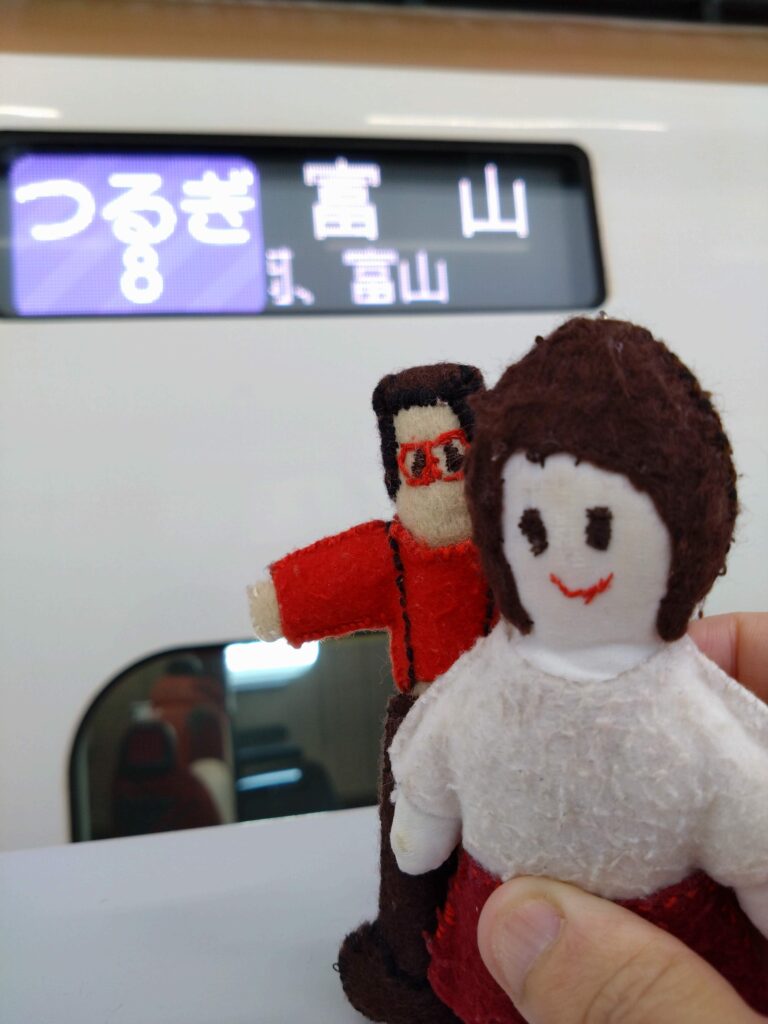
Changing to the Tsurugi No. 8 at Tsuruga
The connection at Tsuruga was 19 minutes — unhurried, with time to move without rushing.
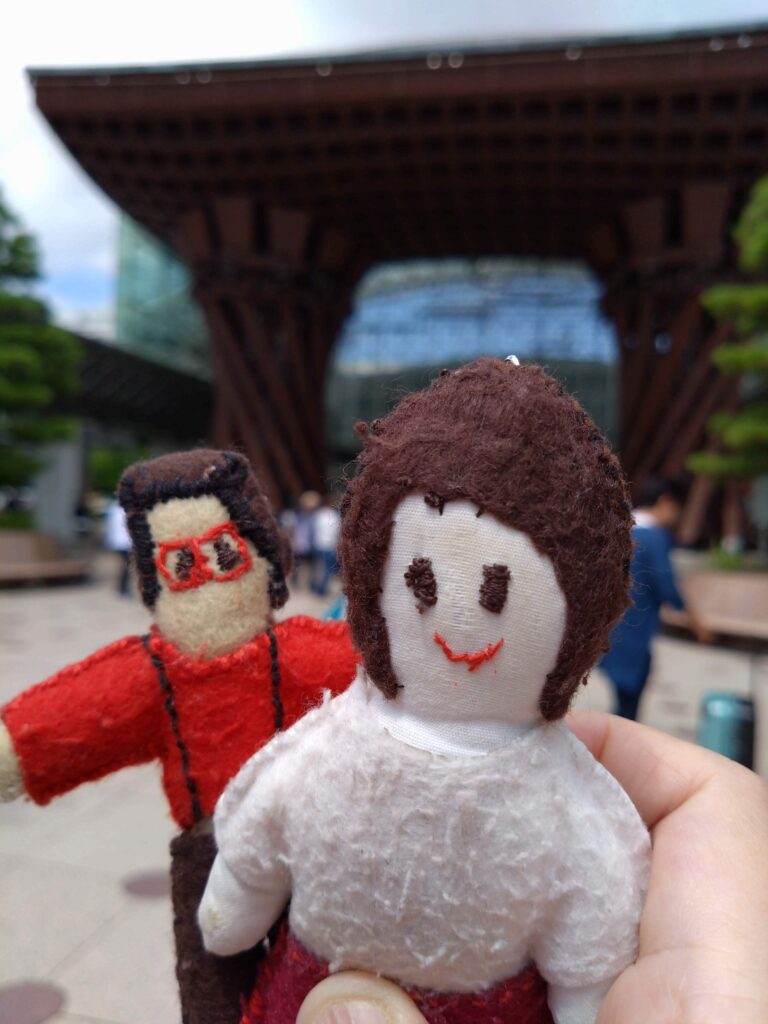
The Tsurugi runs on the Hokuriku Shinkansen between Tsuruga and Toyama, a service introduced when the line was extended in March 2024. We were riding it in the summer of its first year. We reached Kanazawa at 10:43, roughly three hours out of Nagoya.
Kanazawa: Gold Leaf, Salt Bread and the Castle
Applying gold leaf at Sakuda, in Higashiyama
Kanazawa means gold leaf. We had booked a gold leaf application workshop at Sakuda in Higashiyama for 1pm.
Working under a craftsman’s guidance, you apply the leaf yourself. It is thin enough that a single breath will send it flying, so you find yourself breathing shallowly without meaning to. It takes real concentration, and finishing a piece is genuinely satisfying.
Kenrokuen: we gave up because of the heat
An honest admission. We had intended to visit Kenrokuen, one of Japan’s three great gardens.
The August heat in Kanazawa was beyond anything we had planned for. There was no shade on the walk, our willpower ran out, and we simply gave up — turning back with one of the country’s most famous gardens within reach.
Instead we headed for Higashi Chaya District, the old teahouse quarter, which lies in the same direction as the Higashiyama workshop, so we could walk straight on from there.
And then a local craft beer at a Kanazawa pudding shop. That cold glass was the most effective thing that happened all day. Because the plan fell apart, this is the part we remember most clearly.
If you’re walking around Kanazawa in midsummer, we’d suggest building more indoor stops into your plan than you think you need. Japanese summer heat is not something to underestimate.
Salt bread from Kanazawa German Bakery
At Kanazawa German Bakery in the Kanazawa Hyakubangai Rinto shopping area inside the station, we came across shiopan — salt bread. Simple, but the balance of salt is just right, and we ended up buying more to take home. Being inside the station, it’s easy to grab on your way out.
Kanazawa Castle
Under a clear August sky, the contrast between the stone walls and white plaster was superb. Kanazawa’s strength is that gold leaf workshops, food and historic sites all sit within walking distance of one another.
A Typhoon, an Emergency Meeting, and Giving Up on Tokyo
Then, that evening, word came that a typhoon was likely to make landfall in the Kanto region.
The plan for the following day had been to travel to Tokyo. The purpose was a railway event at Tokyo Big Sight, and the whole itinerary had been built around it.
We held an emergency meeting in our Kanazawa hotel — comparing the typhoon’s track and timing against the rail suspension notices. The conclusion:
“We give up on Tokyo. Let’s eat fish in Toyama, eat Hida beef, and come back to Nagoya via Takayama.”
Rather than heading east, we would run west, away from it. Letting go of an event we’d looked forward to was a disappointment, but far better than being stranded in Kanto. A determinedly positive decision, in true mascot style.
The revised route Kanazawa →(Hokuriku Shinkansen Hakutaka No. 560)→ Toyama →(Limited Express Hida)→ Takayama → Nagoya
How that decision played out the next day is covered in the typhoon day article. In short: we ended up riding Gran Class for the first time, and our train was halted at Gifu.
Summary | Day One’s Trains
| Train | Section and times |
|---|---|
| Limited Express Shirasagi No. 1 | Nagoya 7:51 → Tsuruga 9:27 |
| Hokuriku Shinkansen Tsurugi No. 8 | Tsuruga 9:46 → Kanazawa 10:43 |
Day one was a quiet one — travel and sightseeing, nothing more. Trips don’t always go to plan, but it’s equally true that abandoning the plan is what led us somewhere else. Behind the Kenrokuen we gave up on were a teahouse district and a cold beer.
Read what happened on the typhoon day here:
→ Typhoon Travel Turned Luxury Adventure! Gran Class, Green Car & an Unexpected Meitetsu Bonus
What happened afterwards
The Tokyo railway event we abandoned here, we went back for in the summer of 2025. And from there we carried on into Tohoku, where this time we rode Gran Class for more than two hours. Homework, finally handed in a year late.
→ Visiting the 2025 Railway Convention | Theme: Freight Trains!