
At the start of 2026 we set ourselves a goal: to spend the year experiencing things that are real rather than reproduced. It came out of a single film we watched over the New Year.
What followed was three months of chasing one story — from a shrine in Osaka to a theatre in Kyoto.
3 January | A Film Called Kokuho, and a Goal
Kokuho (National Treasure) was widely talked about in 2025. We finally watched it over the New Year period, and it moved us considerably.
The goal we set afterwards was the one above: spend the year touching the real thing, not a copy or a description of it.
And the work featured in the film was “The Love Suicides at Sonezaki” (Sonezaki Shinjū), the classic tragedy by Chikamatsu Monzaemon. We wanted to see it performed live. That was where these three months began.
14 February | First, the Shrine Where the Story Is Set
Before the performance, we decided to visit the place the story is set in. That meant Ohatsu Tenjin, a short walk from Higashi-Umeda Station in Osaka.
Its formal name is Tsuyunoten-jinja, a shrine with around 1,300 years of history. It is known as the setting of Chikamatsu’s jōruri play “The Love Suicides at Sonezaki,” and is also popular as a shrine for matchmaking and romance.
In the grounds stands a statue of Ohatsu and Tokubei, the two lovers of the story, side by side to greet visitors.
It’s a quiet space that appears out of nowhere in the middle of a business district — an oddly separate place that lets you forget the city around it. Seeing the setting first genuinely changed how we received the performance in March.
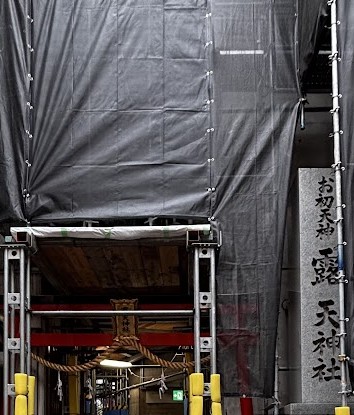
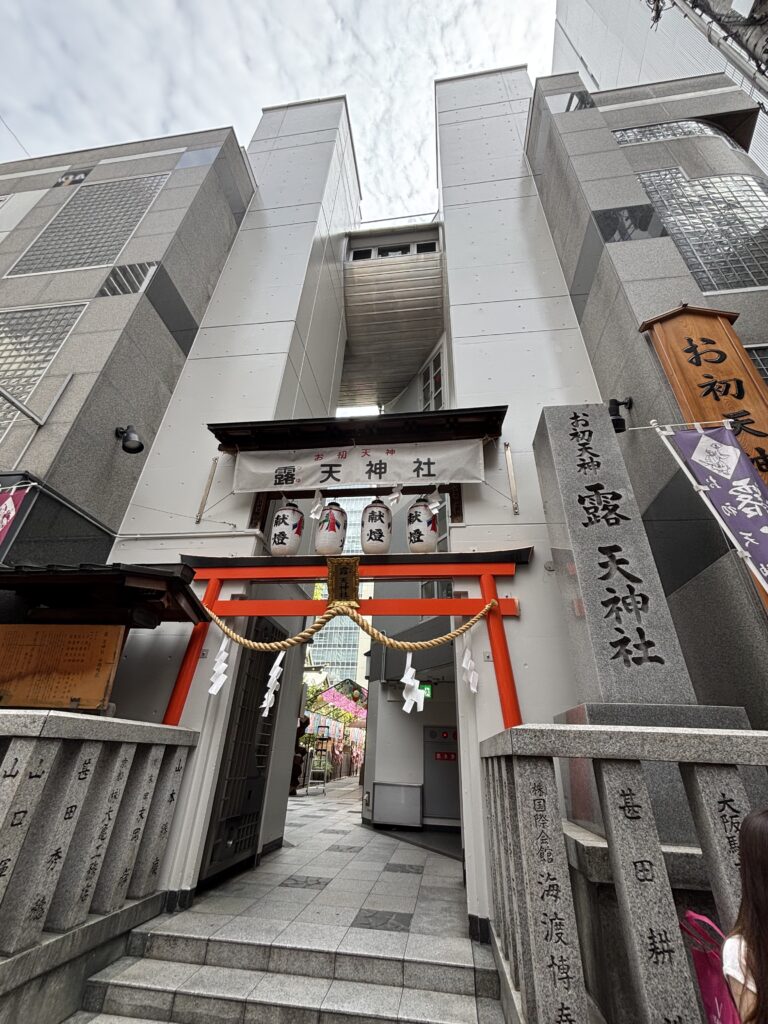
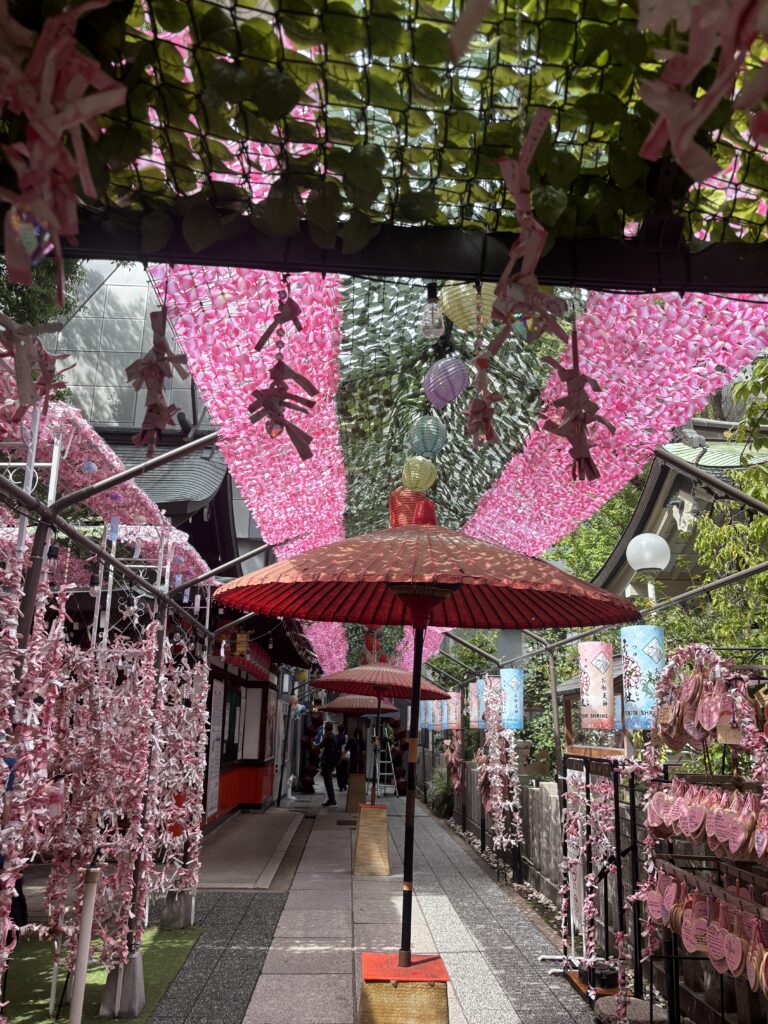
When we visited in February the shrine was mid-renovation, the hall hidden behind sheeting. We went back in September and the work was done: the torii and the approach were clear again, the path hung with pink decorations and heart-shaped ema — very much a shrine for matchmaking.
Ohatsu Tenjin — the basics
| Formal name | Tsuyunoten-jinja |
| Location | Sonezaki 2-chome, Kita-ku, Osaka |
| Access | About 5 minutes on foot from Higashi-Umeda Station |
| Known for | Matchmaking and romance |
| Date visited | 14 February 2026 |
21 March | “The Love Suicides at Sonezaki” at Minami-za
Then the main event. We found a listing at Minami-za in Kyoto and booked immediately. We attended the evening performance on 21 March.
What the tickets cost Second floor, left side, row 1, seats 11 and 12 ¥12,000 per person (¥24,000 for two) As of March 2026
It had been ten years since we last saw kabuki — the New Year performances at Asakusa in Tokyo. This was our first time seeing kabuki in the Kansai region.
We Skipped the Earphone Guide and Prepared with a Film Instead
Kabuki performances offer an earphone guide with commentary in modern Japanese. This time, we deliberately didn’t use one.
Instead, we prepared by watching a two-hour black-and-white film version of “The Love Suicides at Sonezaki” beforehand. With the plot already in our heads, we could follow the performance without any guide at all.
If you’d rather not have your ears covered — if you want to hear the stage as it is — we’d recommend this approach. Preparation takes time, but nothing competes for your attention on the day.
A note for visitors from overseas: guide options vary by performance, so it’s worth checking what’s offered for the show you’re booking.
Shijo-Kawaramachi, Where Couples Sit at Even Intervals
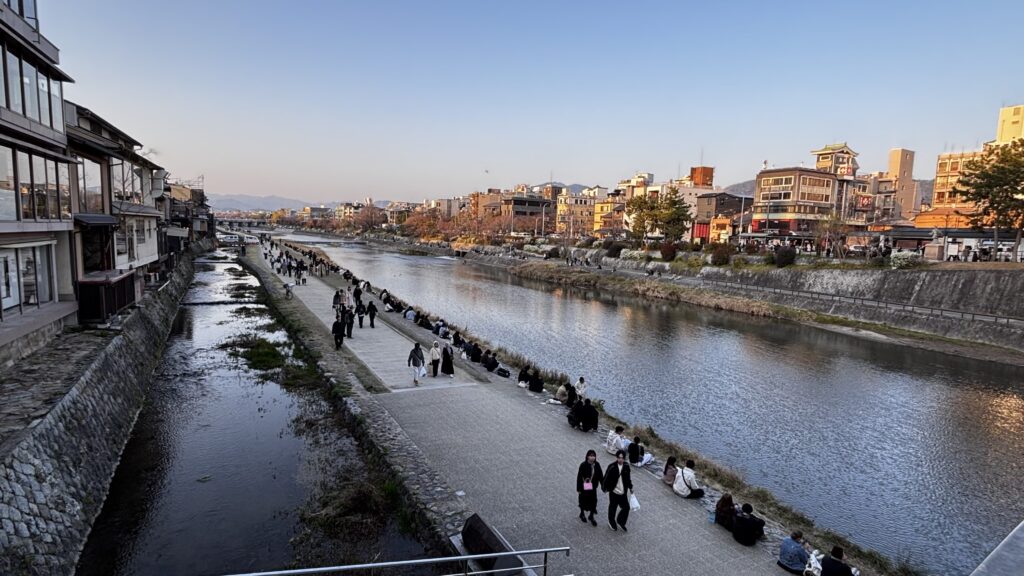
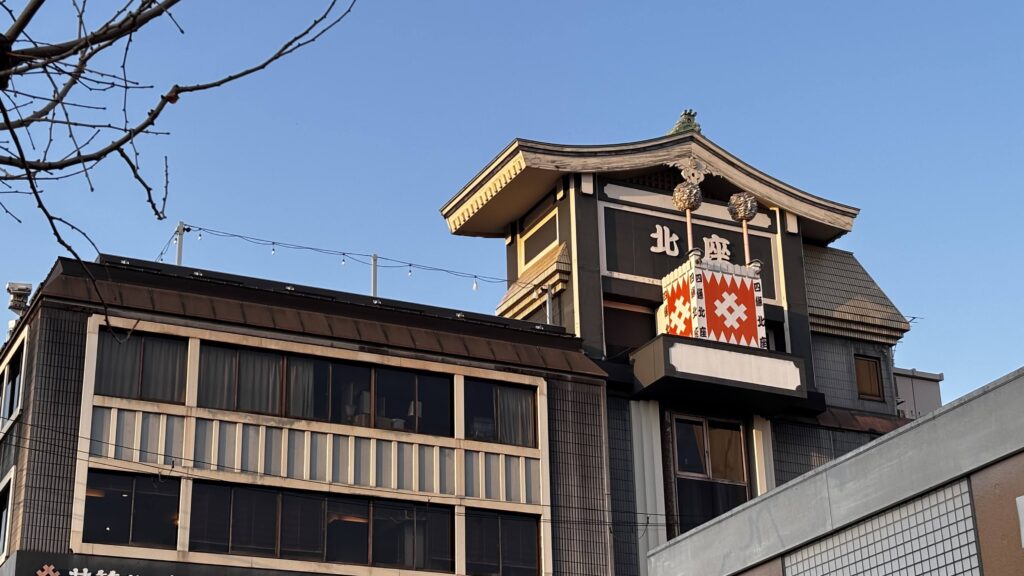
Walking to Minami-za, we passed the famous sight along the Kamo River: couples sitting at almost perfectly even intervals along the bank.
Watching present-day couples on the way to a play about a double suicide made for a strange sort of contrast.
Incidentally, across from Minami-za stands a building called Kita-za. This area once held a number of theatres, and the names are what remains of that.
Arriving at Minami-za — Worth Exploring Before the Curtain
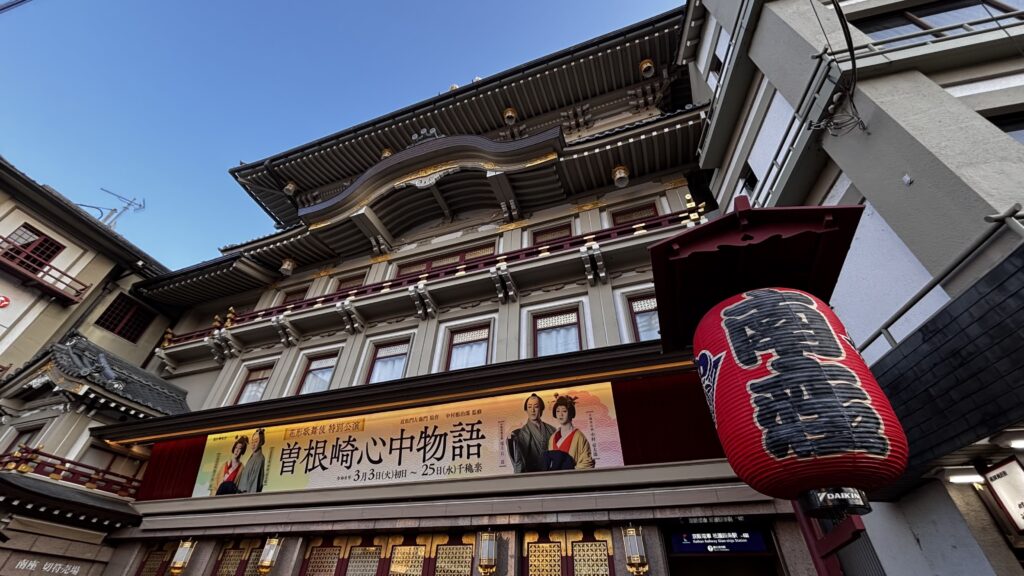
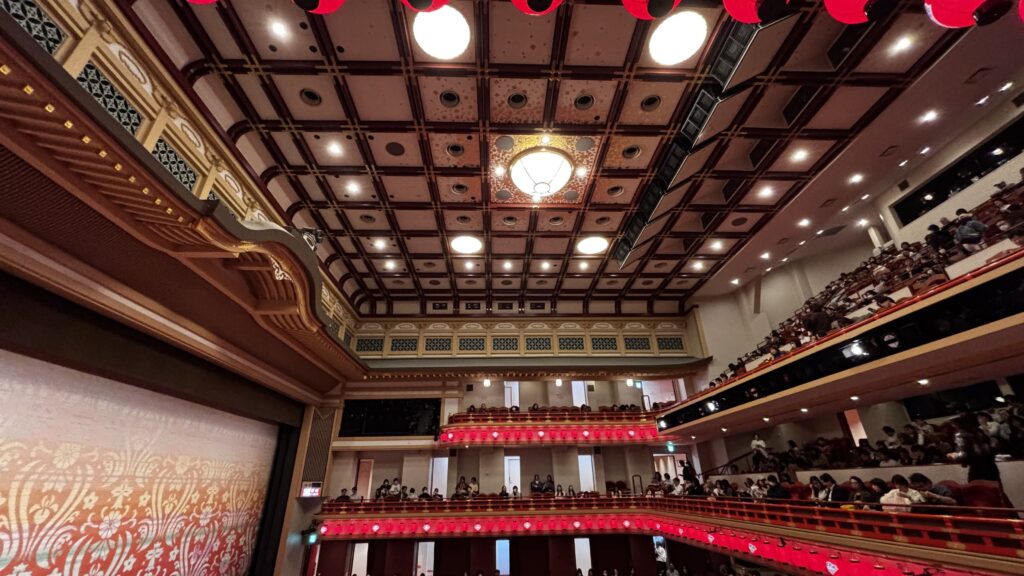
A Surprise: Minami-za Is a Western-Style Building
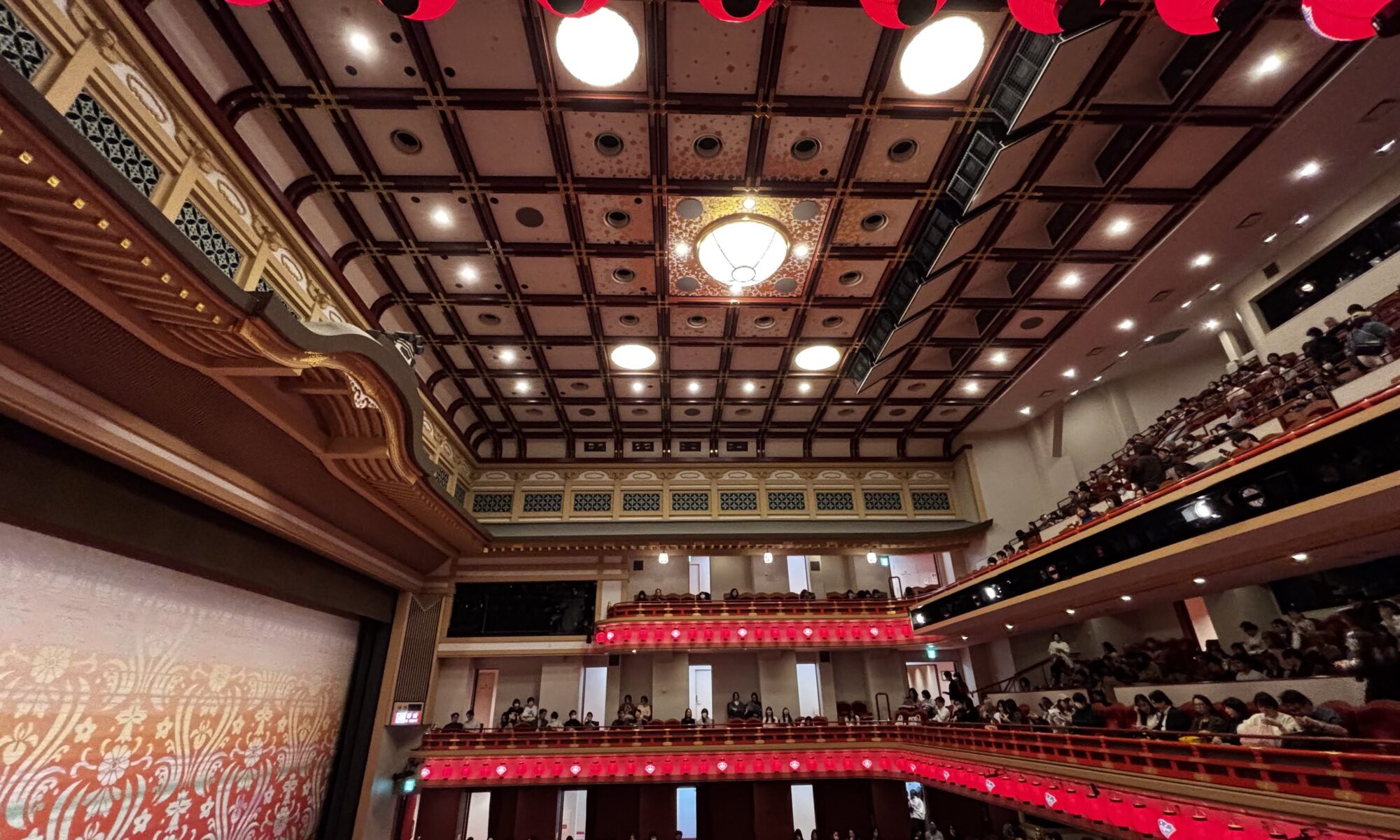
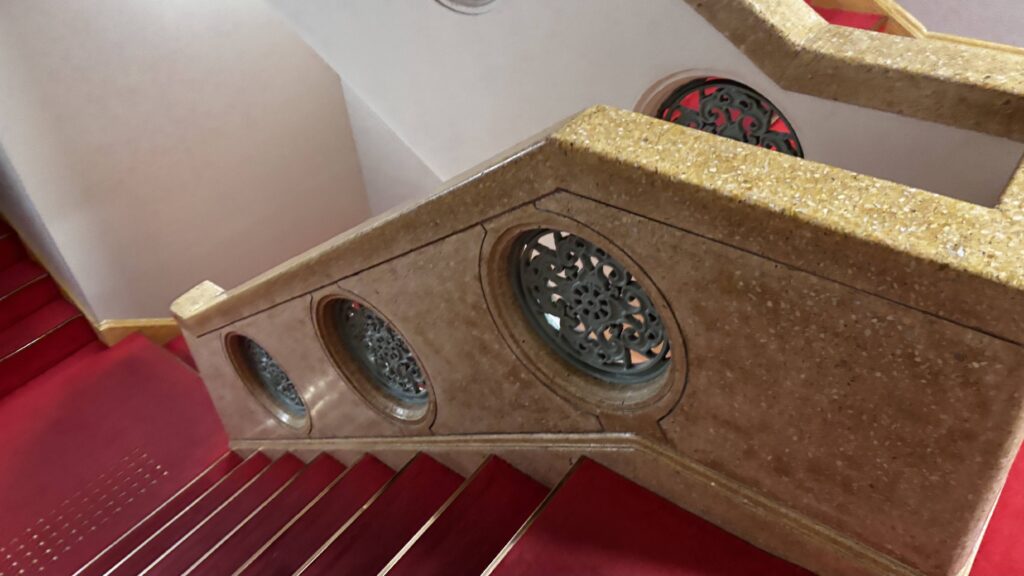
We had pictured something with tatami and traditional Japanese interiors. In fact Minami-za carries Western architectural features throughout.
The building is a nationally Registered Tangible Cultural Property (registered in 1996), and both the exterior and interior reward attention. Simply walking around inside before the performance was enjoyable in itself.
Chairs with Cushions — Comfortable Even Over a Long Performance
All the seating is proper chairs, and cushions are provided. There’s clear thought given to keeping people comfortable through a long sitting, which makes it an easy environment for a first-time kabuki audience.
Two Parts: an Hour of Drama, Then a Discussion
This was the biggest surprise of the day. The performance came in two parts.
Part one was “The Love Suicides at Sonezaki” itself, running about an hour. Kabuki has a reputation for length, but at this duration a newcomer can settle in without difficulty.
Part two was a discussion among the performers about the play and about the film Kokuho.
So the film that had started all of this came back to us, from the stage we had come to see. January’s film, February’s shrine, March’s performance — the three months closed neatly on themselves.
It struck us as an unusually accessible piece of kabuki for a younger audience. An hour of drama followed by a discussion that explains it — as a first experience, it would be hard to improve on.
Home on the Hankyu Kyoto Line
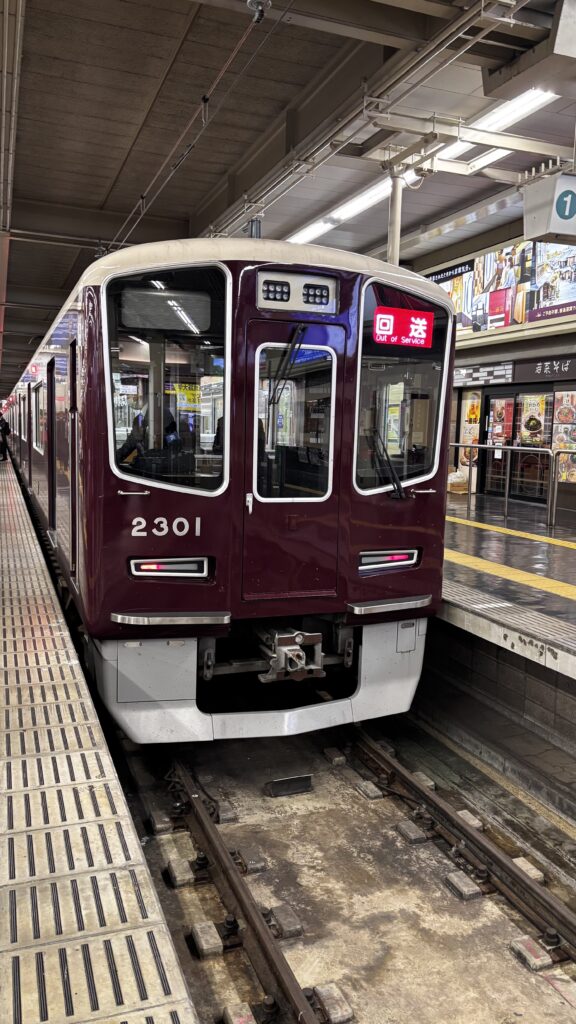
This being a railway blog, we did of course travel by train. The journey home was the Hankyu Kyoto Line from Kyoto-Kawaramachi to Osaka-Umeda.
Watching Kyoto’s streets go past from the window as we headed back to Osaka, the elegant maroon livery of the Hankyu carriages made a fitting end to the day.
The Hankyu Kyoto Line connects Osaka-Umeda and Kyoto-Kawaramachi, taking about 43 minutes by limited express. The maroon colour is Hankyu’s signature.
If you’d like to watch Hankyu trains at leisure, Aman Ruins Park in Takatsuki is a good spot
Summary | Three Months Spent Following One Story
| Date | What happened | Cost |
|---|---|---|
| 3 January | Watched Kokuho — the goal takes shape | — |
| 14 February | Ohatsu Tenjin (Tsuyunoten-jinja), Osaka | Free |
| 21 March | “The Love Suicides at Sonezaki,” evening performance, Minami-za, Kyoto | ¥12,000 per person (second floor) |
If you’re thinking about seeing kabuki
- Prepare in advance and you can follow it without an earphone guide
- Seating is chairs with cushions — comfortable over a long sitting
- The building itself is worth seeing, so arrive early
- A programme with a drama plus a discussion is a good way in for a first-timer
Letting a film decide where you travel is one of the better ways to plan a trip. Visit the setting, then go and see the real thing. It took some effort, and it was worth it. The year of experiencing real things continues.
What to do with an hour between trains at Shin-Osaka is written up separately.